You want siding that lasts and a contractor who does the job right. This guide points you to top Austin siding pros, what they do best, and how to pick the right team for your home.
You’ll find quick, honest reviews that compare quality, price, and customer service so you can choose with confidence. Short tips will help you spot good workmanship, fair estimates, and the best materials for Austin’s climate.
Key Takeaways
- Focus on proven contractors with strong local reviews and clear warranties.
- Look for services that match your project scope and preferred siding materials.
- Compare estimates, timelines, and communication before you hire.
Top Siding Contractors in Austin, TX
You can expect to find local teams with strong customer reviews, clear pricing, and expertise with common Austin siding materials like fiber cement and vinyl. Look for contractors who document warranties, show past project photos, and communicate timelines.
Highly Rated Local Professionals
When you shop for siding contractors in Austin, focus on those with multiple recent reviews and photos of completed jobs. Companies such as family-owned firms and long-running local crews often show those traits.
Check platforms like Yelp, BBB, and local listings to compare star ratings and read comments about timeliness, cleanup, and workmanship.
Ask for references for projects that match your siding type — vinyl, fiber cement (James Hardie), or engineered wood. Request photos of full installations, not just samples.
Get at least three written estimates that break out material, labor, and disposal. That helps you spot low bids that cut corners and high bids that add unnecessary services.
Common Qualities of the Best Contractors
The best Austin siding pros give clear written contracts that list scope, start and end dates, and payment schedule. You should see itemized costs and a change-order process for unexpected repairs.
Top teams protect your yard and windows during work and handle permitting when needed. They clean daily and dispose of old siding responsibly.
Look for contractors who explain local climate impacts — sun, humidity, and storms — and recommend materials that resist warping, fading, or insect damage. Good crews offer a written workmanship warranty and coordinate with your HOA or city codes if required.
Industry Certifications and Reputation
You should weigh certifications and manufacturer endorsements when choosing a contractor. Look for James Hardie Elite, GAF, CertainTeed, or similar badges that show product training and warranty backing.
BBB accreditation, A+ ratings, and consistent reviews across sites add confidence. Local trade associations and years in business also matter.
Verify license and insurance before signing. Ask to see proof of liability and workers’ comp.
Confirm any manufacturer-backed siding warranty is registered in your name so you can claim it later if needed.
Key Services Offered by Austin Siding Contractors
You can expect contractors to handle whole-home exterior work that improves weather resistance, energy performance, and curb appeal. Most teams offer siding installation, window and door upgrades, roof inspection and roofing work, and gutter solutions tailored for Austin’s climate.
Siding Installation and Replacement
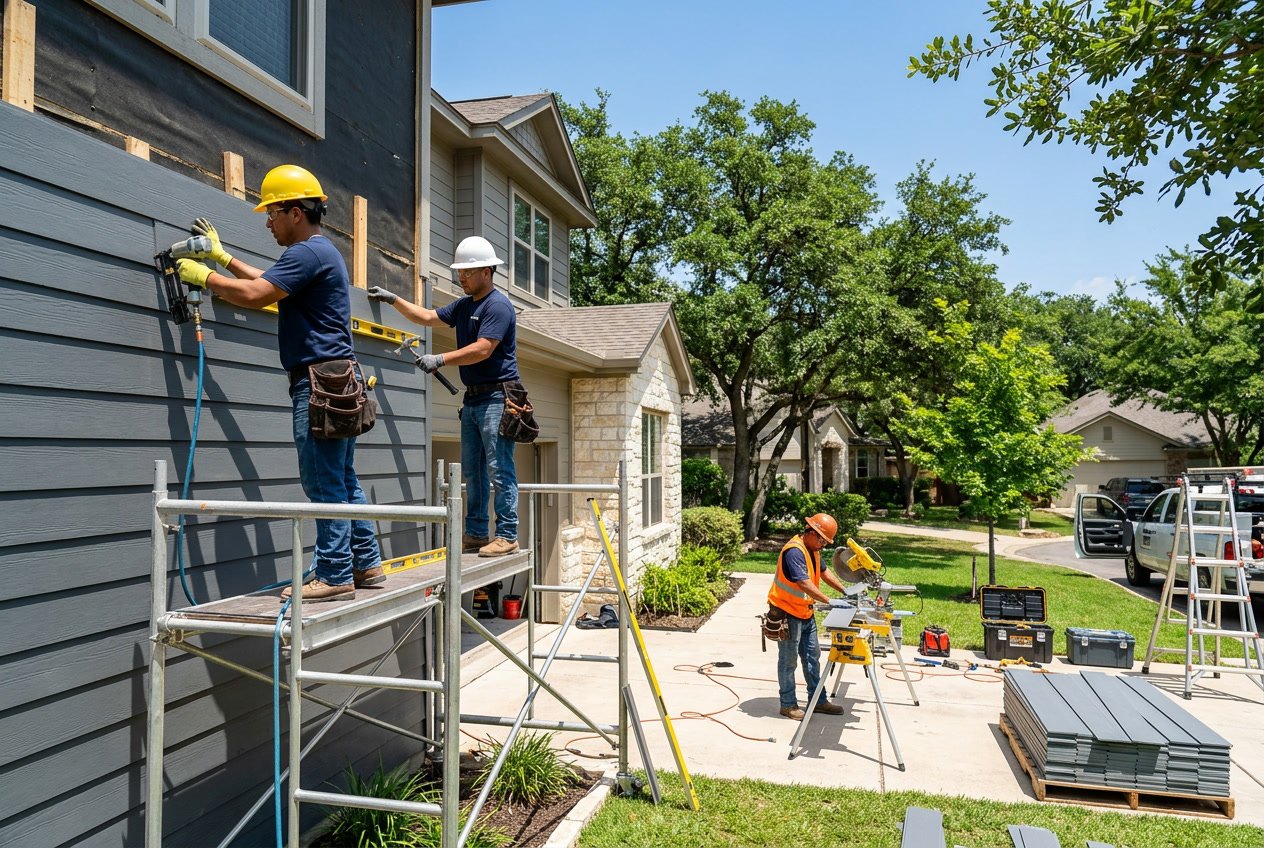
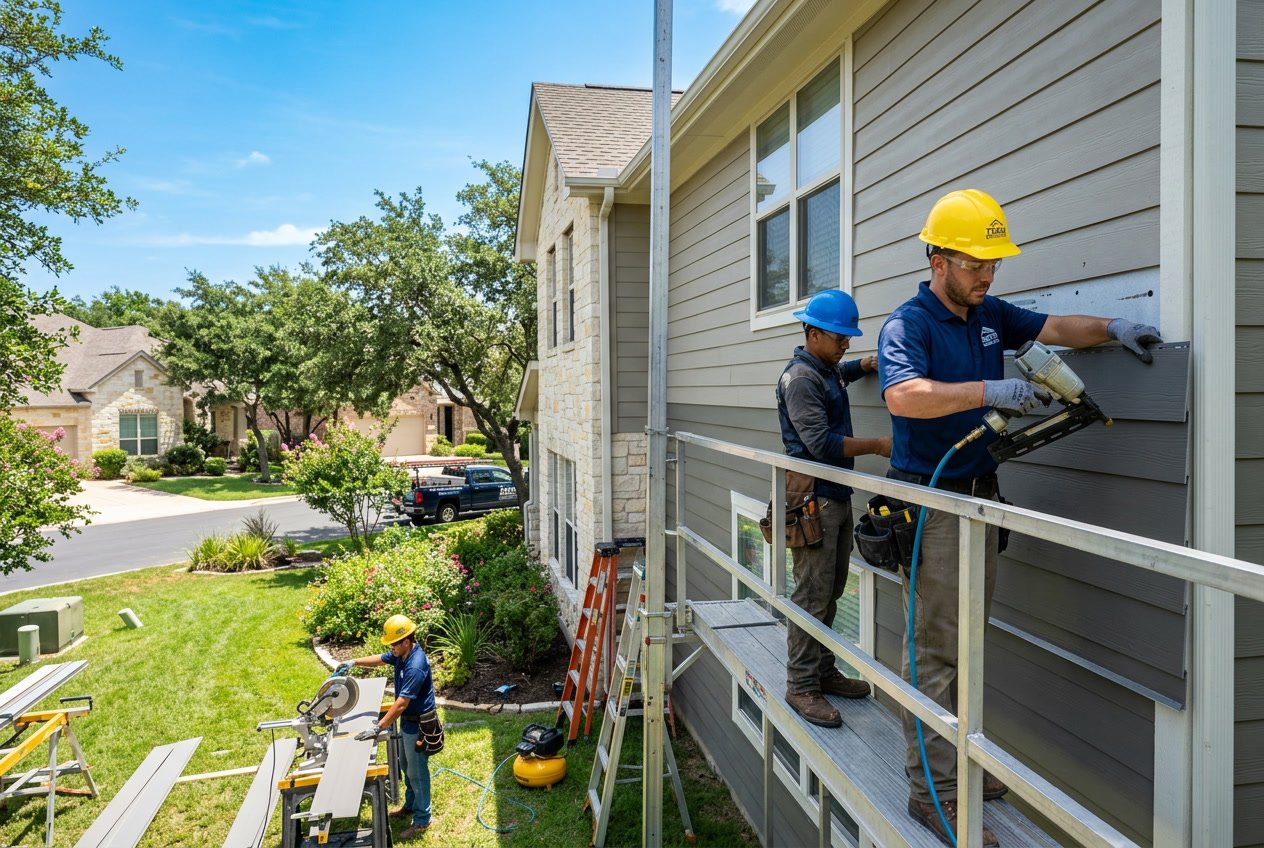
Contractors install many siding types: vinyl, fiber cement (James Hardie), wood, and composite panels. They will assess your existing cladding for rot, water damage, and insulation needs before recommending repair or full replacement.
You should get a written scope that lists materials, trim, flashing, and underlayment. Proper flashing and a weather barrier matter most in Austin’s heavy rain events.
Expect removal of old siding, inspection of sheathing, and corrective work like replacing damaged studs or adding insulation. Contractors often offer ColorPlus or factory-finished options to reduce painting and maintenance.
Ask about warranties on labor and materials, installation methods for trim and corners, and whether they handle permit pulls and disposal.
Window and Door Upgrades
Upgrading windows and doors improves energy efficiency and security. Contractors commonly install vinyl, fiberglass, and wood-clad windows from brands like Andersen or PlyGem, and replace entry and patio doors.
You should request U-factor and SHGC ratings for windows to know heat transfer and solar gain specifics. Proper flashing, head jambs, and sill pans prevent leaks where windows meet new siding.
Doors are typically replaced with prehung units or retrofits; contractors will check thresholds, frames, and locksets. Look for services that include trim replacement and final sealing to integrate windows and doors with the new exterior finish.
Roof Inspection and Roofing Services
Many siding contractors also inspect roofs and perform roofing work to coordinate full exterior projects. A roof inspection should cover shingles or metal panels, flashing at chimneys and vents, and attic ventilation.
If roofing work is needed, expect options like asphalt shingles, metal roofing, or full reroofs. Contractors will often identify storm damage, recommend temporary tarping, and document issues for insurance claims.
You should get a report with photos, estimated life remaining, and a repair vs. replace recommendation. Coordinated roofing and siding work helps ensure flashing and wall-to-roof transitions are sealed correctly.
Gutter Solutions
Gutters control water runoff and protect your new siding and foundation. Contractors offer seamless aluminum gutters, rain chains, and various gutter guards to reduce clogging.
During installation, they check fascia and soffit condition and may replace rotten boards before attaching gutters. Downspout placement and extensions help move water away from the foundation in heavy Austin storms.
Ask about material gauge, finish options, and warranty. Properly sized gutters and well-placed downspouts reduce splash-back onto siding and lower the risk of water intrusion around windows and doors.
Popular Siding Materials and Products
You’ll want siding that fits Austin’s heat, sun, and occasional storms. Key choices include long-lasting fiber cement, affordable vinyl, and metal options that resist wind and pests.
James Hardie Siding Advantages
James Hardie fiber cement siding resists heat, rot, and termites, which matters in Austin’s climate. It comes in prefinished ColorPlus options that keep color longer and cut repainting costs.
Installation requires experienced contractors because panels are heavier than vinyl and need precise seams and flashing. Many Austin siding firms list James Hardie on their service pages, and some are certified installers, which can affect warranty eligibility.
Expect pricing higher than standard vinyl, but lower long-term maintenance. If you want a traditional or modern look, James Hardie offers many textures and plank sizes to match your home exterior.
Vinyl Siding Choices for Austin Homes
Vinyl siding stays popular because it costs less and installs faster than fiber cement. You get many colors and profiles, including clapboard and shake styles, so you can match older or newer homes.
Pick thicker, insulated vinyl for better energy performance in hot months. Look for UV-resistant finishes to cut fading under strong Texas sun.
Vinyl can dent from hail and may expand or warp if not installed with correct fastener spacing. Choose a local contractor who handles trim, soffits, and proper ventilation to avoid moisture problems in your walls.
Fiber Cement and Metal Siding Options
Fiber cement includes James Hardie but also other brands with similar durability. It stands up to fire, insects, and moisture. You’ll pay more up front, but you’ll need fewer repairs over time.
Metal siding — often steel or aluminum — resists wind and reflects heat when finished with reflective paint. It works well for modern homes or commercial buildings and handles Austin storms better than many materials.
Both materials need skilled installers to seal joints and flash around windows and doors. Ask your contractor about local warranties, finish options, and how they protect siding during installation to keep your home exterior in good shape.
What to Consider When Choosing a Siding Contractor
Look for proven workmanship, clear pricing, and proof they follow Austin rules. Check reviews, compare detailed quotes, confirm warranties, and verify permits before you sign anything.
Review Ratings and Testimonials
Check customer reviews on multiple sites like Yelp, YP, BBB, and Angi to spot patterns. Look for repeated praise or complaints about punctuality, cleanup, and communication.
Give more weight to recent reviews and to those that include photos or specific project details. One-off extremes matter less than several similar reports.
Ask the contractor for local references you can call. Visit a finished job if possible to inspect seams, flashing, and trim.
Watch for contractors who avoid showing references or have mostly five-star ratings with no detail — that can be a red flag.
Comparing Quotes and Services
Get at least three written estimates that break down material, labor, disposal, and permit fees. Compare line-by-line, not just the final number.
Note differences in materials (vinyl vs. fiber cement), brand names, and installation steps like house wrap or venting. Cheaper bids often cut corners on underlayment or fasteners.
Ask how they handle unexpected findings (rot, insulation) and get pricing rules in writing. Confirm the project timeline, start date, and daily work hours.
Keep copies of all communications and make sure the contract states payment schedule tied to milestones.
Craftsmanship and Warranty
Inspect warranty details for both materials and labor. Manufacturers often cover materials; you need a separate workmanship warranty from the contractor.
Look for warranties with specific durations and clear terms about what triggers a repair or replacement. Avoid vague promises like “we guarantee our work.”
Ask about crew training and how the contractor enforces quality (lead carpenter checks, post-install inspections).
Review photos of past work for tight joints, consistent nail spacing, and neat trim. Proper flashing around windows and rooflines indicates skilled installation.
Local Regulations and Permits
Ask who pulls permits and confirms code compliance in Austin. A reliable contractor will handle permits and inspections and include the fees in the quote.
Verify the contractor’s license if required locally, and check for active insurance that lists your address or project type.
Understand local rules about historic districts, runoff, and disposal of old siding. Some neighborhoods require specific materials or color approval.
If the contractor resists pulling permits or asks you to sign permit-free paperwork, walk away. Permits protect you and ensure the work meets city standards.
Frequently Asked Questions
This section answers who rates highest, typical costs, common customer concerns, important company traits, the most durable siding types for Austin, and pros and cons of vinyl.
Who are the best-rated siding contractors in Austin, TX?
Local review sites and directories list several top-rated firms based on customer feedback and BBB ratings. Look for companies with many recent positive reviews, clear licensing, and responsive communication.
Check Yelp, Porch, and BBB listings to compare ratings and read detailed customer comments. Also verify any company claims on their own website and confirm current accreditation or complaints.
How much should I expect to pay for siding replacement in Austin, TX?
Typical costs vary by material, home size, and labor. Expect a wide range: small jobs may start in the low thousands, while full-house replacements commonly run from mid five figures and up.
Ask contractors for itemized estimates that show material, labor, removal, and permit fees. Get at least three bids to compare scope and pricing.
What are common concerns customers have with Austin siding contractors?
Customers often worry about hidden costs, missed timelines, and poor cleanup after work. They also report concerns about warranty clarity and whether installers follow local building codes.
Watch for vague contracts, pushy sales tactics, or demands for large upfront payments. Ask for references and proof of insurance before work begins.
What qualities should I consider when choosing a siding company?
You should check licensing, insurance, and written warranties. Prioritize companies that provide clear contracts, itemized estimates, and a local address.
Also look for experience with your chosen material and recent customer reviews that mention communication and timeliness. Verify permits and code compliance for your neighborhood.
Which type of siding material is most durable for homes in Austin?
Fiber cement and metal siding rank high for durability in hot, humid climates. They resist rot, insects, and sun damage better than many other options.
Engineered wood can perform well if properly maintained, but it needs regular painting or sealing. Match the material to your budget and maintenance willingness.
What are the pros and cons of vinyl siding for Austin residences?
Pros: Vinyl is cost-effective and low-maintenance. It resists rot and insects.
Vinyl comes in many colors and styles. It installs quickly, which can lower labor costs.
Cons: Vinyl can fade and warp under prolonged Texas heat. It may not match the longevity of fiber cement or metal.
It can also be harder to repair invisibly after impact damage.