Board and Batten Siding Installation in Austin, TX
Expert Board and Batten Siding Installation for Austin, TX Homes & Businesses
Get board and batten siding installed in Austin, TX. Materials, spacing, cost factors & free estimates from Barton Creek Siding Experts. Call (512) 634-8683.
- Service area
- Austin, TX & nearby
- Phone
- (512) 634-8683
- Hours
- Mon-Sun: 7:00 am – 7:00 pm
- Estimates
- Free, no obligation
Board and batten siding is one of the most requested exterior styles we install in Austin, TX — and for good reason: it delivers bold vertical lines, deep shadow detail, and a profile that works equally well on a Hill Country farmhouse, a modern infill build, or a classic Westlake Hills cottage. Barton Creek Siding Experts installs board and batten siding across Austin and surrounding communities including Bee Cave, Dripping Springs, Lakeway, West Lake Hills, Rollingwood, Circle C Ranch, Buda, and Oak Hill. If you're planning a full re-side or adding batten board exterior detail to just one elevation, this page walks you through everything: materials, spacing, installation steps, and what drives your cost — then shows you how to book a free estimate.
What is board and batten siding?
Board and batten is a vertical siding style in which wide, flat boards are fastened to the wall first, and then narrower strips — the battens — are nailed over the vertical seams between boards. The battens create a raised, rhythmic pattern that casts deep shadow lines and makes a wall read as taller than it is. Unlike horizontal lap siding, every element runs top to bottom, so water is shed along the grain rather than against it.
The look suits farmhouse, cottage, craftsman, and contemporary modern exteriors. It is equally at home on a full-height two-story façade or used as an accent band on a lower gable or porch skirt. Austin's mix of traditional Hill Country homes and newer transitional builds makes board and batten one of the most versatile exterior choices in the market.
Read moreShow less
The specific material you choose determines how the installation proceeds, how long the siding lasts, and what the finished surface needs from you over time — which brings us to the first real decision every homeowner faces.
At a glance
Which board and batten material is best for Austin homes?
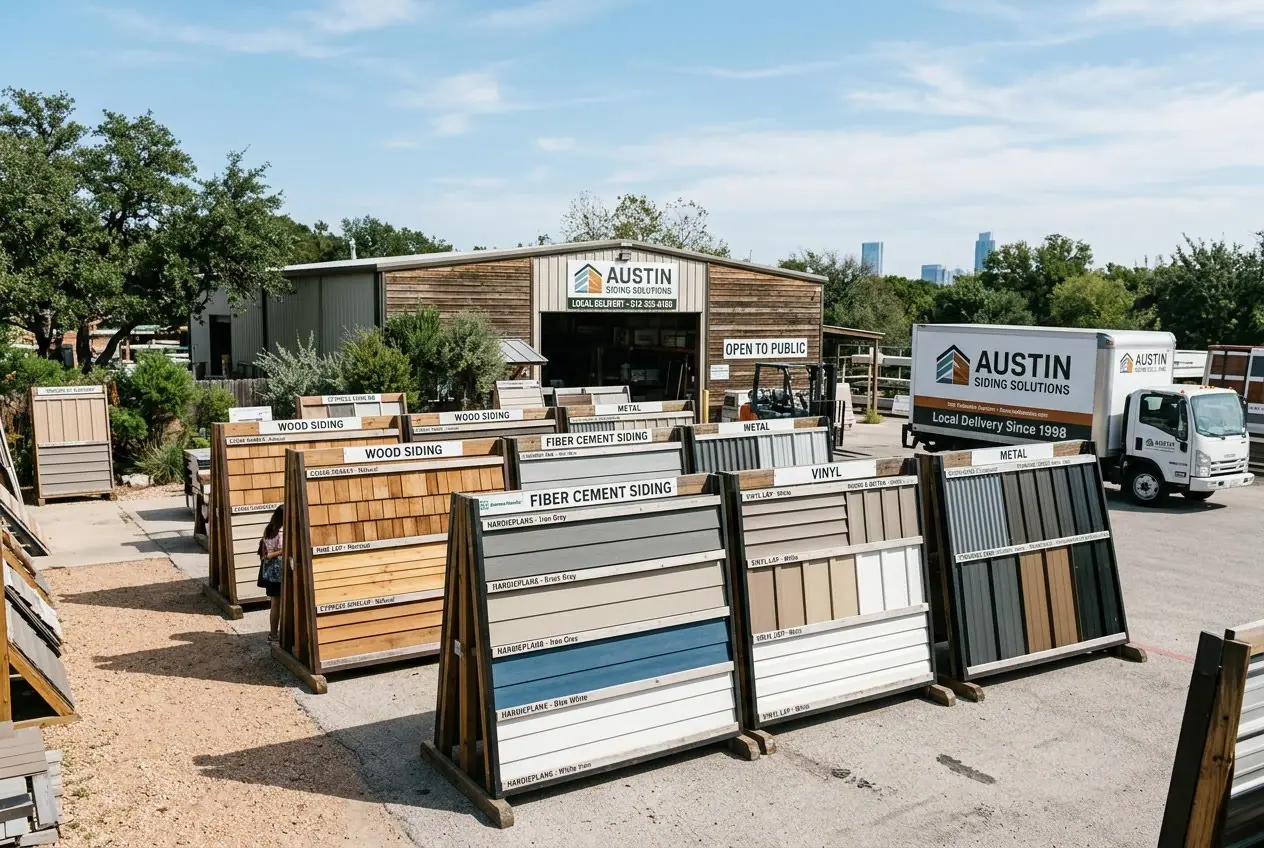
For most Austin homes, fiber cement — specifically James Hardie board and batten — is the strongest all-around choice because it handles the region's heat, humidity swings, and hailstorms without rotting, warping, or attracting insects. That said, the right material depends on your budget, maintenance appetite, and design goals.
| Material | Durability in Central TX Climate | Maintenance Level | Appearance | Relative Cost Tier |
|---|---|---|---|---|
| Wood (cedar, pine) | Moderate — susceptible to moisture and insects without upkeep | High — paint/stain every 3–7 years | Authentic grain texture; custom stain colors | Mid to high |
| Fiber cement (James Hardie) | Excellent — resists rot, fire, pests, and impact | Low — repaint every 10–15 years | Crisp, woodgrain or smooth; factory ColorPlus available | Mid to high |
| Vinyl | Good — fade and moisture resistant; can crack under hail | Very low — rinse with hose | Uniform; limited depth vs. wood or fiber cement | Lower |
| Metal / Steel | Excellent — impact and fire resistant; will not rot | Low — periodic inspection for fastener rust | Crisp, modern lines; industrial aesthetic | High |
Austin's summer temperatures regularly exceed 100 °F and the area sees periodic severe hail. Those two conditions make impact resistance and thermal stability important considerations that tip many homeowners toward fiber cement or metal over untreated wood.
Once you've narrowed your material preference, it helps to understand the properties and trade-offs of each in greater depth, starting with wood.
Free, no-obligation estimates
Talk to Barton Creek Siding Experts
Tell us what you need and we’ll take it from there.
What type of wood is used for exterior board and batten?
Cedar is the most common wood for exterior board and batten siding because its natural oils resist rot and insects better than most softwoods. Western red cedar, eastern white cedar, and redwood are all used. Pine and Douglas fir are less expensive alternatives but require more diligent priming and painting to hold up against moisture.
In Central Texas, wood board and batten faces two specific pressures: termite activity and wide seasonal moisture swings that cause the wood to expand and contract. Proper back-priming — sealing all six sides of each board before installation — is essential and is a step that shortcuts often skip. Without it, raw end grain absorbs moisture and paint peels from the bottom up within a few seasons.
Read moreShow less
Wood also allows fully custom profiles, widths, and stain colors that manufactured products cannot replicate, which is why it remains the choice for high-end custom homes and historic renovations. If wood's maintenance demands feel like too much, fiber cement offers a similar aesthetic with significantly less ongoing work.
Hardie (fiber cement) board and batten siding
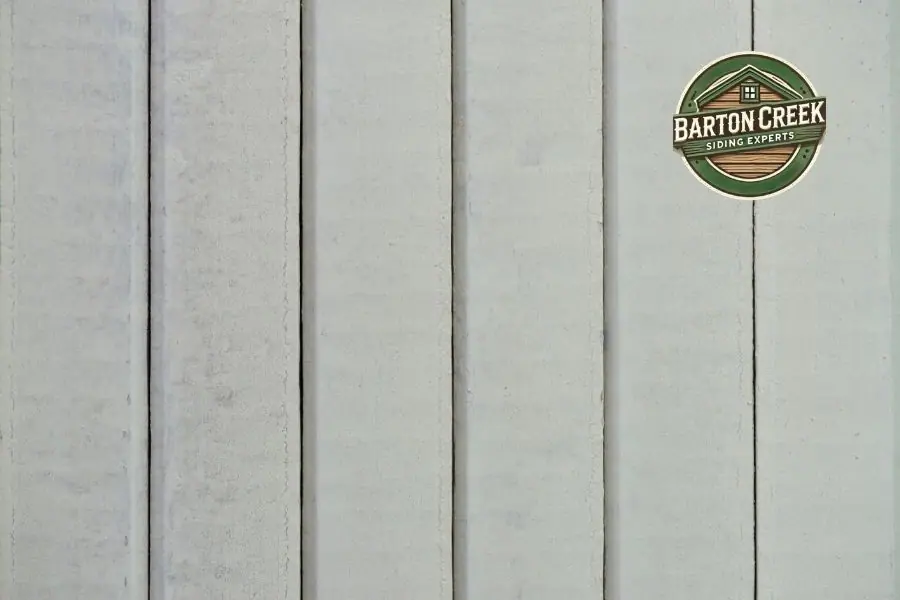
James Hardie board and batten siding — sold as HardiePanel vertical siding with HardieTrim battens — is the most requested fiber cement board and batten product we install in Austin. It is engineered specifically for regional climates; the HZ10 formulation used in Central Texas is designed for high heat and humidity. How James Hardie siding installation works across the rest of the product line is covered on its own page.
Fiber cement does not rot, does not burn through, and does not appeal to insects or woodpeckers. It arrives primed or factory-finished in James Hardie's ColorPlus Technology, which bakes color into the surface for a longer-lasting finish than field-applied paint. When installed correctly, Hardie board and batten siding holds paint significantly longer than wood and requires repainting far less frequently.
Read moreShow less
One trade-off worth knowing: fiber cement is heavy — roughly two to three times heavier per square foot than vinyl. That weight adds to labor time and requires proper framing and fastening. Hardie board board and batten also cannot be bent or curved, so highly irregular wall shapes may need supplemental trim solutions. The spacing and fastening requirements for this product are precise, which leads directly to the next question homeowners always ask.
Vinyl board and batten siding
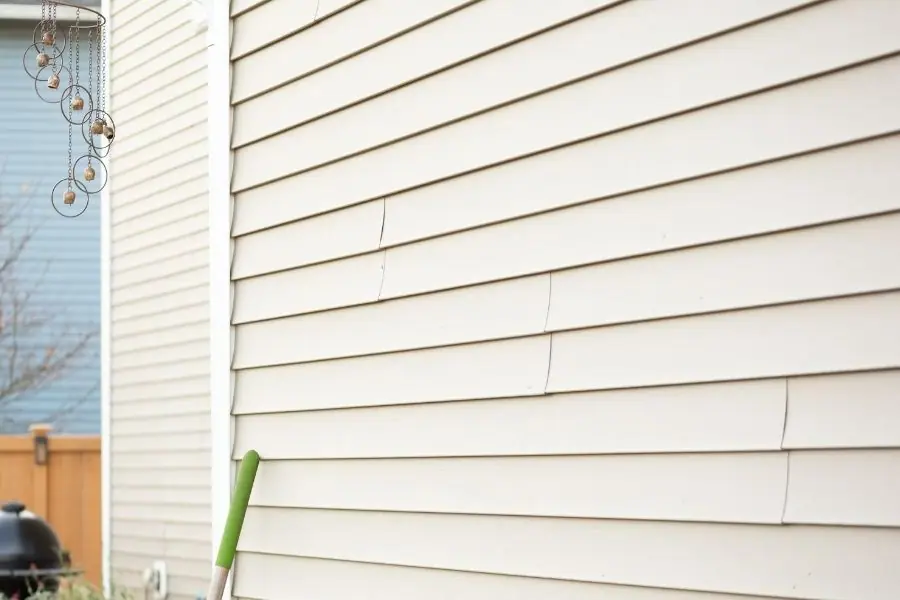
Vinyl board and batten siding is the most budget-accessible option and requires essentially no painting over its lifetime. Modern profiles — including 12 inch board and batten vinyl siding — deliver a wide-board look with relatively deep shadow lines that approximate the appearance of wood or fiber cement at a lower material cost.
Vinyl's primary limitation in the Austin climate is impact vulnerability. While quality vinyl holds up well to normal weathering, a severe hailstorm can crack or dent panels in ways that are more visible than damage to fiber cement. UV exposure can also cause color fading over decades, though better grades of vinyl board and batten vinyl siding include UV inhibitors that slow this significantly.
Read moreShow less
Vinyl board and batten is a strong choice for outbuildings, garages, additions, or any project where cost control is the primary driver. For the main façade of a home in a hail-prone corridor — which includes much of the Austin metro — we typically walk homeowners through the trade-offs so the decision is fully informed. Understanding those trade-offs starts with knowing exactly how the panels are spaced and fastened.
What is the recommended spacing for Hardie board and batten?
James Hardie's published installation instructions specify that HardiePanel vertical siding boards should be spaced with a 3/8-inch gap between panels at all joints, and battens should cover those gaps fully. Always follow the current manufacturer installation guide for your specific product and regional specification — instructions can be updated and vary by product line.
Spacing & Fastening Quick Reference — Hardie Board and Batten Panel-to-panel gap: 3/8 in. at vertical joints (covered by batten) Bottom clearance: minimum 6 in. above grade; 1 in. above hard surfaces (driveways, patios) Batten width: typically 1.5 in. to 2 in., fully overlapping the panel joint Stud spacing: panels must span to studs at 16 in. or 24 in. o.c. per local code Fastener placement: nails driven into framing, not just sheathing — see manufacturer specs for exact placement from panel edge Always consult the current James Hardie installation guide and your local building code before beginning any installation.
Read moreShow less
Austin's City of Austin building code adopts the International Residential Code with local amendments. Any re-side project that changes the building envelope may require a permit; we handle permit coordination as part of the installation process. The fastening method is just as important as the spacing, which is the subject of the next question.
Do you nail or screw a Hardie board?
James Hardie specifies hot-dipped galvanized or stainless steel nails — not screws — for attaching HardiePanel vertical siding under its standard installation requirements. Specifically, the manufacturer calls for 1-1/4 in. to 1-3/4 in. hot-dipped galvanized roofing nails or approved siding nails driven flush, not countersunk, into studs or approved sheathing.
Screws are not prohibited in all circumstances but are not the default fastener for field-nailed Hardie board installation. Using non-approved fasteners, countersinking nails, or missing framing members are among the most common installation errors that void manufacturer warranties and lead to cracking around the fastener point — a failure mode we see on competitor re-sides that come to us for repair.
Read moreShow less
Pneumatic nail guns are acceptable when calibrated correctly to avoid overdriving; an overdriven nail creates a stress fracture in the fiber cement that may not be visible immediately but opens a path for moisture. Once the panels are properly fastened, the remaining critical installation step is caulking.
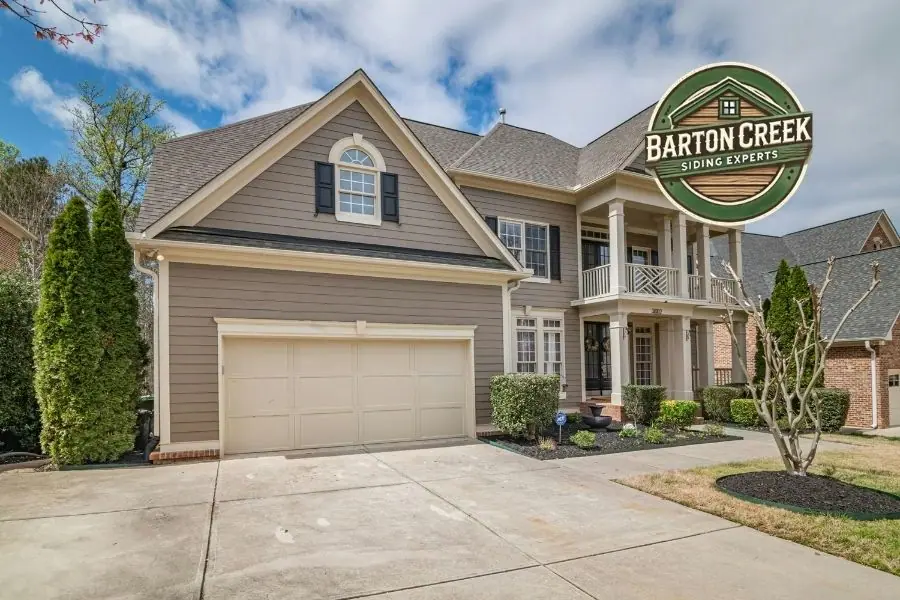
How to caulk board and batten exterior?
Caulk all horizontal joints, window and door head flashings, and trim intersections on a board and batten exterior — but do not caulk vertical panel-to-panel seams that are covered by battens, because those gaps are designed to allow drainage and movement. Use a siliconized acrylic caulk rated for exterior masonry and siding, or the caulk specified by your siding manufacturer.
For James Hardie installations, the company recommends a paintable, siliconized caulk at all butt joints that are not covered by battens, at penetrations (electrical boxes, hose bibs, light fixtures), and wherever siding meets a dissimilar material. The caulk line should be tooled smooth, fully adhered on both sides, and painted within the timeframe the caulk manufacturer allows — typically within 30 days.
Read moreShow less
A common Austin-specific issue: thermal cycling causes caulk joints to expand and contract more than in cooler climates. Using a low-modulus, flexible caulk rather than a rigid product reduces cracking over time. Inspect and re-caulk at penetrations every few years as part of routine maintenance. With installation methods clear, the logical next question is what all of this costs.
At a glance
How much does board and batten siding installation cost in Austin?
Board and batten siding installation cost in Austin depends on a combination of factors specific to your home and chosen material — no honest contractor can give you an accurate number without seeing the project first. We provide a written quote after a free on-site inspection, so there are no surprises.
| Cost Factor | Why It Affects Price |
|---|---|
| Wall area (sq ft) | More square footage means more material and more labor hours |
| Material choice | Vinyl carries the lowest material cost; fiber cement and metal run higher; custom wood highest |
| Tear-off of existing siding | Removing and disposing of old siding adds labor and dumpster cost |
| Substrate condition | Rotted sheathing, damaged housewrap, or missing flashing must be addressed before new siding goes up |
| Stories and roof pitch / access | Two-story walls require staging or lifts; steep-pitch rooflines add setup time |
| Trim complexity | Window surrounds, corner boards, and soffit intersections add material and time |
| Permits | City of Austin permit fees vary by project scope and valuation |
| Insurance claim coordination | Storm damage projects may be partially covered; we assist with the documentation process |
Financing is available for qualifying projects, and we help homeowners navigate insurance claims when storm damage is involved. The clearest path to an accurate number is a free estimate — which is exactly how the process starts.
How do you get a board and batten siding estimate in Austin?
Getting a board and batten siding estimate in Austin from Barton Creek Siding Experts starts with a free on-site inspection at no obligation. We serve homeowners throughout Austin and surrounding communities: Barton Creek, Bee Cave, Lakeway, Buda, Dripping Springs, West Lake Hills, Rollingwood, Zilker, South Lamar, Oak Hill, Shady Hollow, Sunset Valley, Bear Creek, Lost Creek, Village at Western Oaks, Circle C Ranch, and Downtown Austin.
During the inspection, our trained technicians assess your existing wall substrate, identify any moisture or structural issues that need to be addressed before installation, review material options suited to your home's style, and walk you through spacing and profile choices. You receive a written quote covering all scope items — no line items added later.
Read moreShow less
We offer 24/7 emergency service for storm-damaged siding, assist with insurance claim documentation, and offer financing for qualifying projects.
Call (512) 634-8683 or complete the free estimate form on this page to schedule your inspection.
Board and Batten Siding Installation Process
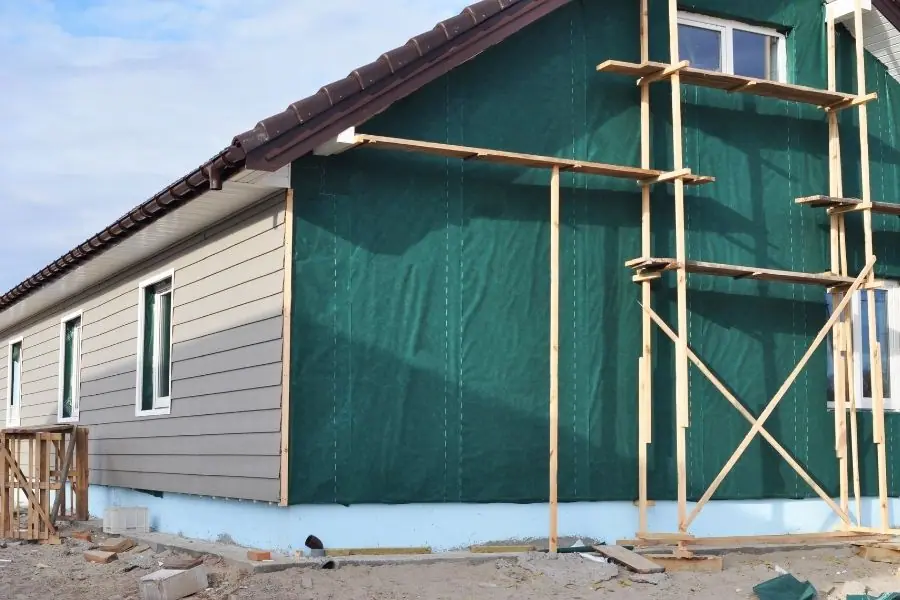
- Inspection and substrate assessment — Evaluate sheathing, housewrap, and framing for damage before any new material goes up.
- Permit pull — Obtain City of Austin building permits where required by scope.
- Tear-off and disposal — Remove existing siding and haul it away; inspect and repair substrate as needed.
- Housewrap and flashing installation — Install or replace weather-resistant barrier and all window/door flashing in correct order (flashing always laps over housewrap, never under it at horizontal joints).
- Layout and snapping lines — Establish plumb vertical lines for consistent panel alignment across the full wall height.
- Panel installation — Fasten wide boards to studs with approved fasteners at specified clearances from grade and from panel edges per manufacturer instructions.
- Batten installation — Align and fasten narrow battens over panel seams, fully covering the gap; nail into framing, not just panels.
- Trim and corner board installation — Install corner boards, window/door surrounds, and soffit trim at all intersections.
- Caulking — Caulk all specified joints, penetrations, and trim intersections with rated exterior caulk; leave designed drainage gaps uncaulked.
- Paint or finish coat — Apply field-paint where required (pre-primed or unfinished products); factory-finished products receive touch-up at cut ends per manufacturer guidance.
- Final inspection and cleanup — Walk the installation against permit requirements and manufacturer specifications; remove all job-site debris.
Before and After Photo Gallery
Our before and after project photos show the transformation board and batten siding delivers — from weathered or dated horizontal lap to clean vertical profiles in fiber cement, vinyl, and wood. [Gallery images load here — contact us to request examples of specific materials or neighborhood styles.]
FAQ
FAQ
What is the downside of a Hardie board?
Fiber cement's main drawbacks are weight and brittleness during handling. HardiePanel is significantly heavier than vinyl, which increases labor cost and requires more care during cutting and installation to avoid cracking panels. Field cuts must be made with fiber-cement-rated blades, and cut ends must be primed before installation. The material itself cannot flex around curves. Despite these trade-offs, most Austin homeowners find the durability and low maintenance of fiber cement board and batten siding justify the higher upfront investment compared to vinyl.
Is board and batten siding more expensive than horizontal lap siding?
Board and batten exterior siding is generally comparable in material cost to horizontal lap siding in the same product line — for example, James Hardie board and batten versus James Hardie lap. The installation labor can run slightly higher because vertical installations require more precise layout work and additional trim pieces at top and bottom. The gap in cost narrows when you factor in the aesthetic impact: board and batten typically adds more visual interest per dollar than standard lap profiles.
Can board and batten be used on only part of a house?
Yes. Using board and batten on a single elevation, a gable end, a lower half as a wainscot band, or an accent wall is a common and effective design strategy in Austin. Mixing board and batten on the lower story with horizontal lap above — or vice versa — creates the visual layering seen on many transitional and farmhouse-style homes in neighborhoods like West Lake Hills and Circle C Ranch. Transitions between materials require a proper water table or Z-flashing detail to prevent moisture intrusion at the seam.
How tall can board and batten siding run on a two-story home?
Board and batten vertical siding can run the full height of a two-story home with no inherent limitation from the style itself. Full-height installations — commonly 20 ft to 24 ft on a standard two-story — amplify the vertical effect and make a home appear taller. The practical considerations are staging and access for installation and future repainting, and ensuring that panel lengths available from the manufacturer are sufficient. James Hardie HardiePanel is available in lengths up to 10 ft, which typically requires a horizontal joint at the floor line; that joint must be detailed with proper flashing and a water table or trim band.
Does board and batten siding work on modern homes?
Board and batten works exceptionally well on modern and contemporary homes. When installed in smooth-finish fiber cement or metal with wide board spacing and minimal trim detail, it reads as a clean, architectural surface rather than a traditional farmhouse element. Many of Austin's newer infill homes in Zilker, South Lamar, and Downtown Austin use board and batten in dark fiber cement or Corten-inspired metal finishes to achieve a sharp modern exterior. The style's versatility is a large part of why it remains a consistently relevant design choice rather than a passing trend.
How long does board and batten installation take?
Installation time depends on the size of the home, the material, the number of stories, and substrate conditions discovered during tear-off. A single-story home with straightforward wall geometry typically takes several days from tear-off to final caulk. A two-story full re-side or a project requiring significant substrate repair will take longer. We give you a project timeline as part of the written quote after the free inspection, so you know what to plan for before work begins.
Barton Creek Siding Experts installs board and batten siding across Austin, TX and all surrounding communities. If you're ready to transform your home's exterior — or you need storm damage addressed right away — call us at (512) 634-8683 for a free inspection. We offer 24/7 emergency service, assist with insurance claims, and provide financing for qualifying projects. There is no obligation, and you will leave the inspection with a clear picture of your options and a written quote in hand.
Why choose us
Why choose Barton Creek Siding Experts?
Free estimates
Get a clear, no-obligation estimate before any work begins.
Licensed & insured
Your property and our crew are protected on every project.
Residential & commercial
One team for homes, multi-family and commercial properties.
Locally owned & operated
A local team serving your community and the surrounding area.
Get in touch
Find siding help near you
Request a free estimate online or give us a call — our team will follow up quickly.
- Call us(512) 634-8683
- Visit7500 Rialto Blvd suite 250 #07, Austin, TX 78735
- HoursMon-Sun: 7:00 am – 7:00 pm