You want siding fixed without paying too much or waiting too long. Austin’s weather can damage siding fast, but local contractors offer affordable repair options for vinyl, wood, fiber cement, and composite siding that stop leaks, fix warping, and restore curb appeal quickly.
Find pros who give free inspections, clear estimates, and work with local materials and codes so the job finishes right the first time. By focusing on common fixes and trusted contractors, you’ll avoid surprise costs and make the smartest choice for your home.
Key Takeaways
- Get a quick, clear estimate to compare costs and scope.
- Small repairs often prevent expensive replacements later.
- Choose local pros who know Austin materials and codes.
Affordable Siding Repair Services in Austin, TX
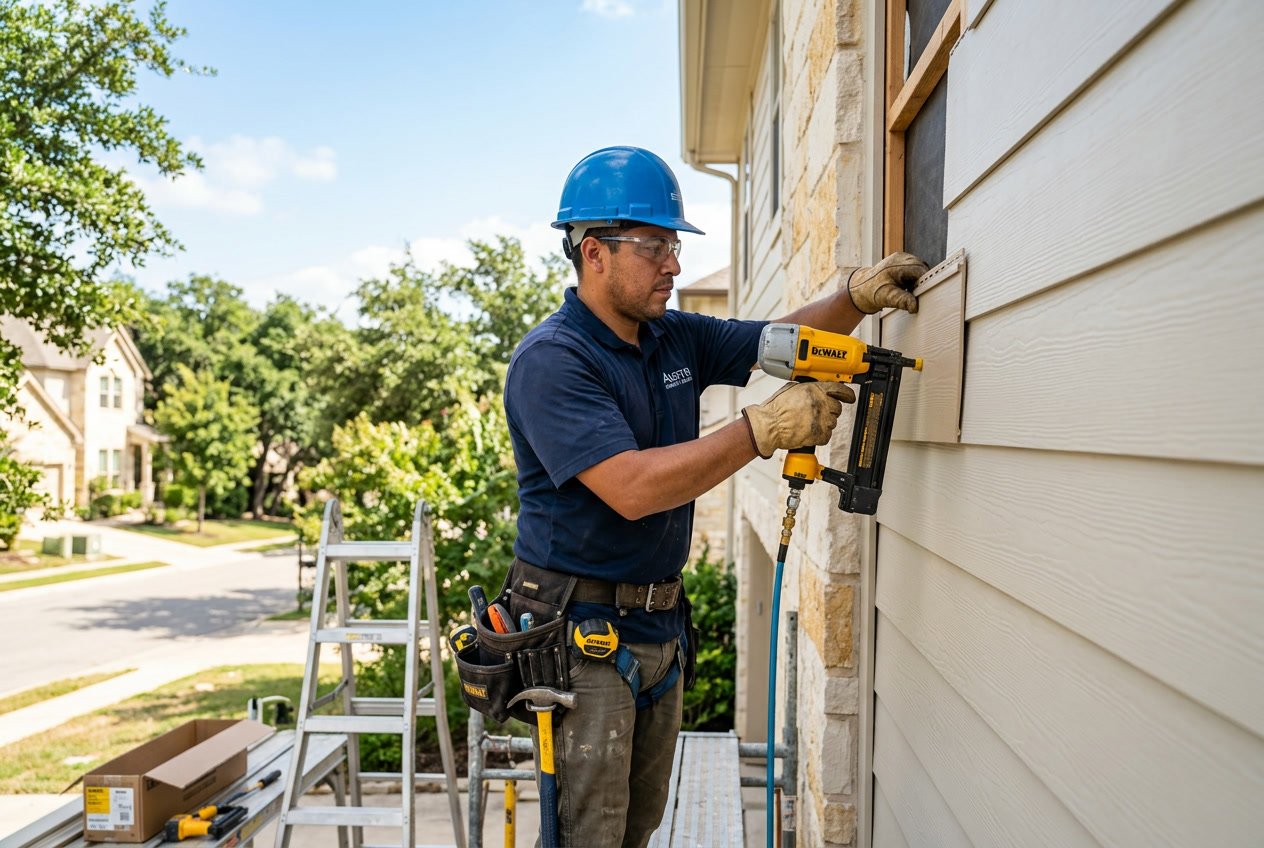
Find cost-effective options that stop leaks, match your existing exterior, and extend the life of your siding without a full replacement. You’ll learn what drives price, how to vet contractors, and which signs mean you need repair now.
What Makes Siding Repair Affordable in Austin
Affordability starts with fixing only the damaged sections instead of replacing whole walls. Small panel swaps, targeted caulking, and localized painting cut material and labor costs.
Material choice matters: vinyl and fiber cement panels differ in price and longevity. Vinyl repairs tend to cost less upfront, while fiber cement (Hardie) lasts longer and may reduce future spending.
Contractor practices affect price too. Companies that offer free inspections, accurate matching, and clear written estimates help you avoid surprise charges.
Look for contractors who handle both siding repair and home improvement work to bundle tasks like trim, soffit, or fascia fixes and save on mobilization fees. Ask about warranties. A limited workmanship warranty can protect you from repeat costs after a repair.
How to Evaluate Local Siding Contractors
Start with a written estimate that lists labor, parts, and prep work. Compare at least three local bids for the same scope of repairs.
Check licensing, insurance, and local reviews specific to Austin jobs. Positive references about siding restoration projects and color-matching show practical experience.
Inspect examples of past work or recent project photos. Confirm whether the crew is in-house or subcontracted; in-house crews often give more consistent results.
Ask about material sourcing and whether they offer color matching for your existing siding. Get timelines and a cleanup policy in writing.
Finally, verify warranty terms and who guarantees the work: the contractor or the material manufacturer.
Common Signs Your Siding Needs Repair
Look for cracks, splits, or holes in siding panels. These let moisture and pests into walls and speed up structural damage.
Check for warping, buckling, or loose panels after high winds. These issues often need immediate repair to prevent water infiltration.
Watch for peeling paint, soft spots, or visible mold on wood or fiber cement. Soft areas mean rot and may require section replacement rather than simple patching.
Inspect trim, soffits, and flashing around chimneys and windows. Damaged or missing flashing is a frequent cause of leaks and a common target in siding restoration work.
Types of Siding Repairs and Materials
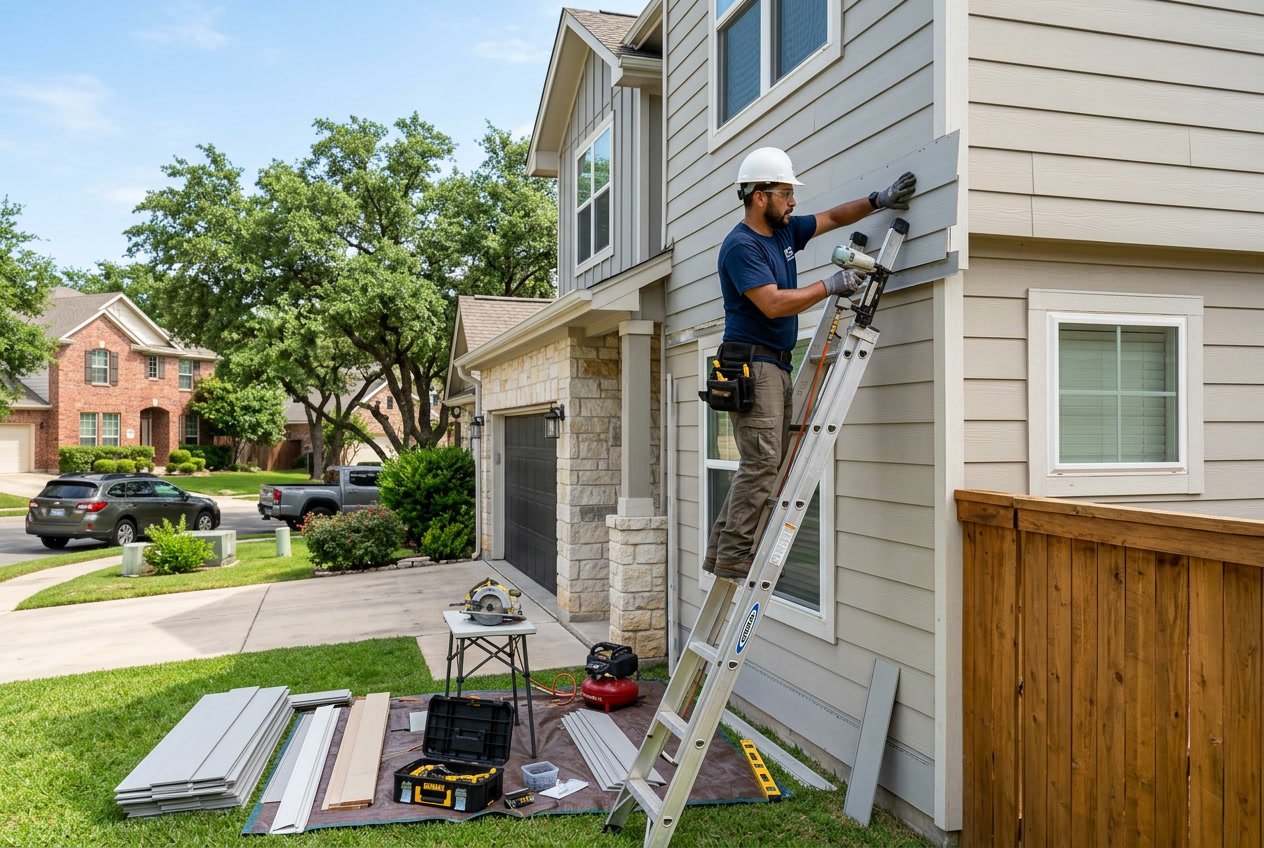
You will learn how common siding materials fail and which repairs keep water out, match appearance, and last through Texas weather. The three materials below cover typical damage, repair steps, and what to expect for cost and longevity.
Fiber Cement Siding Repair and Benefits
Fiber cement siding resists rot, insects, and fire better than wood. If you find cracks, deep chips, or swollen boards, replace only the damaged panels when possible to save money.
Small cracks can be patched with a cement-based filler, sanded, primed, and painted to match the surrounding boards. When panels need full replacement, remove trim carefully to preserve flashing and weather barriers.
Use corrosion-resistant fasteners and seal seams with an exterior-grade caulk to prevent water intrusion. Expect the repair to handle rain and heat well and to hold paint longer than vinyl, though paint touch-ups can be needed every 10–15 years.
Costs run higher than vinyl but lower than specialty materials. If your siding shows signs of moisture under the surface, have a contractor check the moisture barrier and sheathing before installing new fiber cement panels.
Vinyl Siding Repair Solutions
Vinyl siding often warps, cracks, or comes loose from wind and impact. You can often replace single panels rather than whole walls, which keeps costs down.
To fix: unlock the damaged panel, slide it out, and snap in a color-matched replacement. For minor cracks, specialized vinyl repair kits use adhesives and color-matched fillers that blend in from a short distance.
Make sure panels are reinstalled with the correct expansion gap; improper nailing causes buckling in heat. If you have faded or mismatched panels, consider replacing full runs for a consistent look.
Vinyl is low maintenance and resists rot, but it can be damaged by hail and UV over time. Keep an eye on flashing and seals around windows to stop water from getting behind the panels.
Metal Siding Fixes and Considerations
Metal siding, including aluminum and steel, resists fire and pests but can dent, corrode, or lose fasteners. Small dents can sometimes be pushed out and repainted with rust-inhibiting primer.
For rusted areas, cut out the affected sections, treat the metal, and splice in new panels with matching gauge and profile. Fastener replacement is a common repair.
Use neoprene-washered screws and place them in the same locations to maintain panel alignment. Check for oil-canning (wavy surface appearance) and tighten or replace clips that anchor the panels to reduce movement.
Metal repairs should preserve the original panel profile to keep water shedding and to match roof or trim lines. If you notice corrosion at seams or near dissimilar metals, address sacrificial flashing and use compatible fasteners to avoid accelerated rust.
Professional Siding Installation and Restoration
You will learn when replacement beats repair, how restoration fixes weather and storm damage, and ways new siding boosts curb appeal. The next parts give clear actions, costs to expect, and material choices to help you decide.
When to Choose Siding Replacement over Repair
Choose full replacement when damage covers large areas, materials are near the end of their life, or repeated repairs add up. If more than 25–30% of a wall shows rot, warping, or detached panels, replacement usually costs less over time than patching.
Also replace siding if you find mold inside wall cavities or if insulation and sheathing need upgrading. Consider material age: vinyl older than 20–25 years or fiber cement with many cracks should be replaced.
Replacement lets you upgrade to more durable options, improve insulation, and install weather barriers. Ask for written estimates that separate labor, materials, disposal, and permit fees so you can compare bids.
Restoration for Weather and Storm Damage
Restoration focuses on fixing specific damage from hail, wind, or heavy rain without full replacement. Contractors will inspect underlayment, fasteners, and trim, then replace broken panels, seal gaps, and reinstall loose flashing.
Document damage with photos and get a contractor who works with insurance claims if storms are involved. Expect to pay for new panels, caulk, and labor; sometimes you may also need new trim or paint.
A good restoration includes moisture testing and a clear warranty for repaired areas.
Enhancing Curb Appeal with New Siding
New siding makes the biggest visible change to your home’s exterior. Choose materials and colors that match your neighborhood while improving durability and reducing maintenance.
Fiber cement and engineered wood offer modern textures and long service life; vinyl gives you many color choices and lower upfront cost. Think beyond panels: new trim, soffits, and matched window siding create a finished look.
Upgrading siding also lets you add insulation or a rain screen, which improves comfort and can lower energy bills. Get color samples and a mock-up, and insist on neat transitions at corners and openings for the best visual impact.
Frequently Asked Questions
This section answers common cost, timing, inspection, and rule questions about siding repair in Austin. You will find clear guidance on material choices, when to hire a pro, damage signs, inspection schedules, repair steps, and local rules.
What are the most cost-effective materials for siding repair in the Austin area?
Vinyl siding often costs the least for repairs and replacement. It resists fading and handles Austin heat reasonably well.
Fiber cement (like James Hardie) costs more up front but lasts longer and holds up to sun and storms. For small, visible repairs, matching existing material may raise costs if the home has older or specialty siding.
Wood can be cheap for small patch jobs but often needs more maintenance. Choose materials that match your budget and how long you want the repair to last.
How can I identify if my siding requires professional repairs or if it’s a DIY fix?
You can handle small cracked panels or a few loose nails if you have basic tools and no moisture behind the siding. Replace single vinyl panels or reseal small gaps yourself if access is safe and the damage is limited.
Hire a pro if you see soft or rotting boards, mold growth, large areas of damage, or signs of moisture inside your walls. Also call a pro for high work areas, complex trim, or when you need help matching old siding.
What are the signs of potential siding damage that homeowners should be aware of?
Look for cracked, split, or warped panels and faded or chalky surfaces from UV exposure. Check for loose or missing pieces after storms, especially in wind-prone neighborhoods.
Watch for soft spots, bulging, or paint that bubbles; these often mean moisture is present. Inside, look for new stains, drafts, or higher-than-normal humidity near exterior walls.
How often should siding be inspected or maintained to prevent costly repairs?
Inspect your siding at least once a year, ideally after the severe-weather seasons. Do a quick visual check after big hailstorms or high-wind events.
Professionals recommend a full inspection every 2–3 years to catch hidden moisture or fastener issues. Clean siding annually and trim vegetation away from walls to reduce wear.
Can you list the steps involved in a typical siding repair process?
A typical repair starts with an inspection to find damage, moisture, and any underlying issues. The contractor will decide if repair or replacement works best for your situation.
Next comes material matching and preparation: remove damaged pieces and prep the surface. Then install replacement panels, fix the moisture barrier if needed, and seal joints and fasteners.
Finish with a final inspection to confirm weather tightness and appearance.
Are there local regulations in Austin, TX that affect siding repair projects?
You may need to follow city building codes that cover exterior repairs, fastening methods, and weather barrier standards.
Historic neighborhoods like Hyde Park or Tarrytown often have design rules or HOA requirements that affect material choice and appearance.
Always check with the City of Austin building permits office or your HOA before large exterior work.
Small repairs usually don’t need permits, but any change that affects structure or historic character might.