James Hardie Siding Installation in Austin, TX
Expert James Hardie Siding Installation for Austin, TX Homes & Businesses
Learn how James Hardie siding installation works in Austin, TX — process, cost factors, timeline, and FAQs. Get a free estimate from Barton Creek Siding Experts.
- Service area
- Austin, TX & nearby
- Phone
- (512) 634-8683
- Hours
- Mon-Sun: 7:00 am – 7:00 pm
- Estimates
- Free, no obligation
James Hardie siding installation gives Austin homeowners a fiber cement exterior that holds up against Central Texas heat, humidity, and hailstorms far longer than wood or vinyl. Barton Creek Siding Experts, a siding company serving Austin, TX and surrounding communities, handles every stage of hardie board installation — from removing the old cladding to the final paint-ready finish. Whether you are replacing aging wood siding or upgrading a vinyl exterior, this page walks you through exactly how the process works, what it costs, and how to get a written quote.
What is James Hardie siding installation?
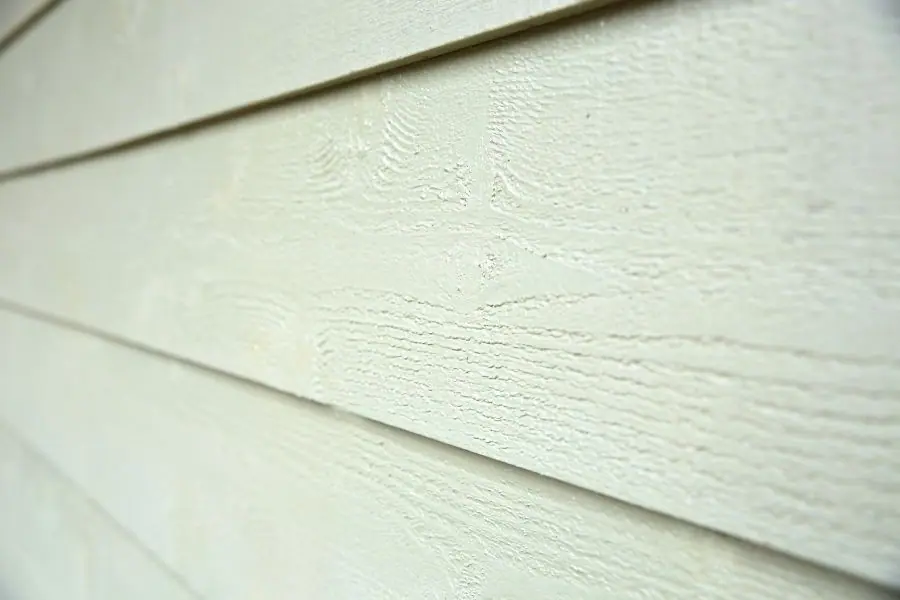
James Hardie siding installation is the process of fastening fiber cement panels, planks, or boards made by James Hardie to the exterior wall framing of a home, following the manufacturer's published installation instructions to protect the structure from moisture, pests, and fire. The product line includes hardie lap siding, hardie plank, hardie panel (vertical sheets), and hardie board and batten — each installed using a distinct sequence of prep, waterproofing, fastening, flashing, caulking, and finishing steps. Austin's climate adds specific demands: summer surface temperatures regularly exceed 150 °F on south- and west-facing walls, so correct flashing and paint selection matter as much as the fiber cement itself.
Read moreShow less
The full installation process follows six stages:
- Prep and tear-off. We remove existing cladding (or install over it where code allows), inspect sheathing for rot or moisture damage, and repair any structural issues before anything new goes up. Skipping this step is the single most common reason new siding fails early.
- Water-resistive barrier (WRB). A code-required house wrap or building paper goes over the sheathing, lapped correctly so water drains away from the wall cavity. In Austin's climate, where afternoon thunderstorms are common, a continuous WRB is non-negotiable.
- Fastening. Panels are nailed or screwed to studs per James Hardie's installation guide — specific fastener type, penetration depth, and edge distances vary by product and local wind load requirements.
- Flashing. Metal or flexible flashing is installed at every horizontal transition: windows, doors, roof-wall intersections, and band boards. Properly lapped flashing prevents the most common source of water intrusion behind fiber cement.
- Caulking and sealing. Manufacturer-approved, paintable caulk seals all vertical joints, butt joints, and penetrations. James Hardie specifies which gaps must be caulked and which must remain open for drainage.
- Finishing. Primed hardie board receives two coats of 100% acrylic exterior paint, or the factory-painted ColorPlus® finish is touched up at field cuts. Paint is the moisture barrier for fiber cement; unsealed cut edges invite swelling.
Understanding what goes beneath the siding surface is just as important as knowing what goes on the outside — which brings us to the substrate question most homeowners ask next.
What is the downside of a Hardie board?
Hardie board's main downsides are weight, brittleness during handling, and paint maintenance. Fiber cement weighs roughly two to three times as much as vinyl, which requires structurally sound sheathing underneath and adds labor. Our page on installation cost explains how these factors affect what you pay. Panels can crack if dropped or struck at an angle, so trained technicians handle and score-cut each piece carefully rather than relying on a circular saw alone (which also kicks up silica dust, requiring respiratory protection under OSHA guidelines). Paint maintenance is real: unlike factory-finished vinyl, field-painted hardie board typically needs repainting every 10–15 years depending on sun exposure. South- and west-facing walls in Austin face intense UV that can shorten that interval. The tradeoff is a material that resists rot, pests, and fire in ways no vinyl or wood product can match.
Knowing the trade-offs helps you decide whether hardie board is right for your home — but the answer also depends on what is behind your current siding, which is the next practical question.
Free, no-obligation estimates
Talk to Barton Creek Siding Experts
Tell us what you need and we’ll take it from there.
What goes under hardie board siding?
A continuous water-resistive barrier — house wrap (such as a Grade D building paper or a housewrap product meeting ASTM E1677) — goes directly over the structural sheathing beneath hardie board siding. James Hardie's installation guide requires a WRB on all installations; it is also required by the International Residential Code as adopted in Texas. The sheathing itself must be sound: OSB or plywood with no soft spots, delamination, or active moisture. We inspect the sheathing during tear-off; damaged sections are replaced before the WRB goes on, because fiber cement holds moisture against anything porous beneath it and will accelerate rot if the substrate is already compromised. A foam insulation layer can be added between the WRB and the siding for thermal performance, provided fastener length is adjusted to reach framing through the extra thickness.
Once the substrate is confirmed solid and the WRB is in place, the question becomes how to fasten the panels properly.
Do you nail or screw Hardie siding?
James Hardie's installation instructions specify corrosion-resistant nails as the standard fastener for most hardie lap siding and hardie plank installations; screws are permitted in specific applications, including some engineered wood substrates and re-siding situations. For Austin's wind environment, the manufacturer requires fasteners to penetrate at least 1 inch into wood framing or structural sheathing. Nails must be hot-dipped galvanized or stainless steel — standard bright nails will rust and stain the paint surface within a few seasons. Pneumatic nail guns set to the correct depth prevent overdriving, which cracks the fiber cement face. Underdriving leaves fastener heads proud and creates a stress point that cracks panels during thermal expansion. Each fastener must land a minimum of ⅜ inch from panel edges and hit a stud, not just sheathing. Spacing requirements vary by product: hardie lap siding typically requires a fastener every 16 inches on center matching stud spacing.
Fastener placement also affects how gaps and overlaps are managed across the wall, which connects directly to the spacing question.
Do you leave a gap between hardie board siding?
Yes — James Hardie's installation guide requires specific clearances at every termination point, and these are not optional. At the bottom of the wall, hardie board must sit at least 6 inches above grade and at least 1 inch above roof or deck surfaces to prevent wicking. Vertical butt joints between panels require a 1/8-inch gap, which is then filled with approved caulk. Hardie panel (vertical sheet) installations require a 3/16-inch gap at all joints before caulking. Clearance from the ground, roofline, and horizontal trim is especially important in Austin because standing water from heavy spring rains can wick up into the bottom course if the siding sits too low. Gaps that are too tight trap moisture; gaps that are too wide allow wind-driven rain behind the panel edge. Following manufacturer clearances exactly protects the warranty and the wall.
Gaps and caulk work together as a system, which is why the question of where to caulk — and where not to — matters as much as the gap itself.
Are you supposed to caulk the bottom of a Hardie board siding?
No — the bottom edge of each hardie lap siding course must remain open and uncaulked so that any water that penetrates behind the panel can drain out. Caulking the bottom edge traps moisture in the wall cavity and defeats the purpose of the water-resistive barrier beneath. James Hardie's installation guide explicitly identifies which joints require caulk (vertical butt joints, inside corners, penetrations, door and window head flashing) and which must stay open (bottom lap edges, some outside corners depending on product). Approved caulk is a paintable, flexible, exterior-grade product — not standard interior latex or silicone, which does not bond reliably to fiber cement. We use only manufacturer-compatible caulk on every job, applied after priming cut edges, so the seal lasts as long as the paint film above it.
With installation technique covered, the next practical question is how much time the full project takes from start to finish.
At a glance
How long does James Hardie siding installation take?
| Phase | Typical Duration | What Happens |
|---|---|---|
| Free inspection and quote | 1–2 days | We measure the home, inspect sheathing, and deliver a written estimate. |
| Permit (if required) | 3–10 business days | Austin Development Services reviews and issues the permit. |
| Material lead time | 3–7 business days | Products are ordered and staged at the job site. |
| Tear-off and substrate prep | 1–2 days | Old siding removed, sheathing inspected and repaired, WRB installed. |
| Siding installation | 2–5 days | Fastening, flashing, and caulking — varies with home size and profile complexity. |
| Paint or finish | 1–2 days | Two coats acrylic paint applied; touch-up on ColorPlus® factory-finished product. |
| Final inspection | 1 day | City inspection (if permitted) and our own quality walkthrough. |
Most full-exterior hardie board installations on a standard Austin single-story home are complete in 7–14 calendar days once permits are in hand. Two-story homes, complex rooflines, or significant sheathing repair add time. Austin's summer heat means we schedule exterior work in early-morning windows to protect crews and ensure paint cures properly — a practical scheduling note that affects your project calendar.
Once you understand the timeline, the next natural question is what drives the total project cost.
At a glance
How much does it cost to have James Hardie siding installed in Austin?
The cost of hardie siding installation varies based on several factors specific to your home and project scope; we do not publish flat rates because a written quote after a free on-site inspection is the only accurate way to price fiber cement work.
| Cost Factor | Why It Affects Price |
|---|---|
| Total square footage | More surface area means more material and more labor hours. |
| Product line selected | Hardie lap, hardie panel, hardie board and batten, and hardie trim each have different material costs and labor rates. |
| Stories and roof pitch | Multi-story homes or steep pitches require scaffolding, which adds time and equipment cost. |
| Tear-off and disposal | Removing existing siding adds labor and dumpster fees; some re-siding installations skip tear-off where code and substrate allow. |
| Sheathing condition | Rotted or water-damaged sheathing must be replaced before installation — extent discovered during tear-off. |
| Flashing complexity | Homes with many windows, doors, dormers, or roof-wall intersections require more flashing material and time. |
| Paint or ColorPlus® finish | Factory-finished product costs more upfront but reduces on-site painting labor. |
| Austin permit fees | Permit cost depends on project valuation as calculated by Austin Development Services. |
| Accessibility | Tight lot lines, landscaping, or limited staging area slow installation and affect cost. |
Call (512) 634-8683 or complete our free estimate form to schedule an on-site inspection. We provide a written, itemized quote — no guesswork, no hidden line items.
Before you request a quote, it helps to know how to evaluate the company doing the work, which is what the final section covers.
How do you choose a James Hardie siding contractor in Austin?
Choose a hardie siding contractor who follows James Hardie's published installation guide, carries current general liability and workers' compensation insurance, and provides a written scope of work before you sign anything. Here is what to verify before hiring anyone for hardie board installation in Austin:
- Written installation plan. Ask whether the contractor follows James Hardie's installation instructions for your specific product. A contractor who cannot name the gap, fastener, and caulk requirements for the product they are installing is a risk.
- Insurance documentation. Request certificates of general liability and workers' comp coverage. Fiber cement work involves cutting tools, elevated scaffolding, and silica dust — uninsured work leaves the homeowner exposed.
- Permit knowledge. Austin requires permits for full siding replacements. A contractor who suggests skipping the permit to save time is putting you at risk at resale and during future insurance claims.
- Itemized written quote. Compare quotes line by line: material, labor, tear-off, sheathing repair allowance, permit, and paint are separate cost drivers. A suspiciously low quote usually omits one of these.
- James Hardie preferred contractor or certified installer status. James Hardie maintains a network of contractors who have completed their training program. Ask directly whether the contractor holds preferred or certified status and what that means for your project's eligibility for extended product support.
- Local references and Google reviews. Ask for recent jobs in your neighborhood — Austin's soil movement and UV exposure are specific, and local experience matters. We invite you to check our Google reviews directly.
Read moreShow less
Barton Creek Siding Experts, a siding company based in Austin, TX, is licensed, insured, and bonded, and our trained technicians follow James Hardie's installation requirements on every project. We serve homeowners across Austin and surrounding communities and offer 24/7 emergency service when storm damage leaves your home exposed.
Service Area
We provide James Hardie siding installation throughout the greater Austin area, including: Barton Creek, Austin, Buda, Lakeway, Bee Cave, Shady Hollow, Sunset Valley, Bear Creek, Dripping Springs, Lost Creek, Oak Hill, Rollingwood, Zilker, West Lake Hills, Circle C Ranch, Downtown Austin, South Lamar, and Village at Western Oaks.
Before and After Photo Gallery
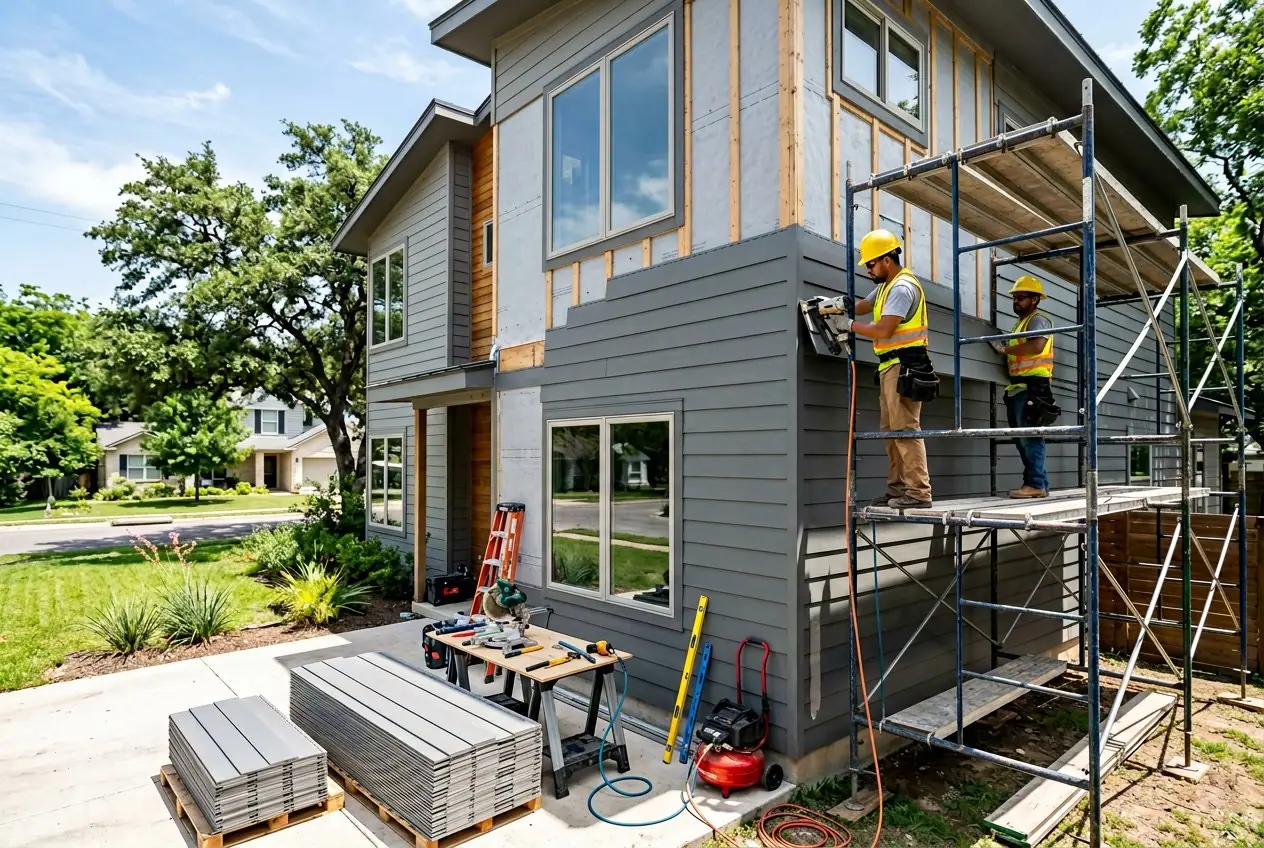
We document every James Hardie installation project with before and after photos so homeowners can see the full scope of work — including sheathing conditions uncovered during tear-off, WRB installation, and the finished exterior. When you're ready for a quote, contact us and ask to see project photos from homes in your neighborhood.
FAQ
FAQ
Can Hardie siding be installed over existing siding?
In some cases, yes. James Hardie's installation guide permits installation over existing wood lap siding if the substrate is flat, structurally sound, and the total wall assembly meets local code requirements. Installation over vinyl or other fiber cement is generally not permitted because it creates an uneven nailing surface and may trap moisture. We inspect your existing siding during the free estimate to determine whether a re-side or full tear-off is appropriate for your home.
Do you need a permit to install Hardie siding in Austin?
Yes, in most cases. Austin Development Services requires a building permit for full siding replacements that involve structural sheathing or change the exterior cladding material. Permit requirements can vary by project scope, so we confirm permit needs for each project and handle the submission process on your behalf.
Can Hardie board and batten be installed?
Yes. Hardie board and batten installation uses vertical hardie panel sheets with battens applied over the vertical joints. James Hardie manufactures HardiePanel vertical siding specifically for this profile. The installation sequence — WRB, panel fastening, batten fastening, flashing, caulking, and paint — differs from lap siding, and our trained technicians are experienced with both profiles.
Is Hardie siding installation covered by insurance after storm damage?
Hardie siding damage caused by hail, wind, or falling debris is typically covered under a standard homeowner's insurance policy, subject to your deductible and policy terms. We help homeowners in Austin and surrounding areas work through the insurance claims process, document damage, and provide documentation insurers need to process a siding claim.
Do you offer financing for James Hardie siding?
Yes, financing options are available. When you contact us for a free estimate, ask about current financing plans so you can move forward with your project without waiting.
How should Hardie siding be prepared for painting?
All field cuts must be primed with a James Hardie-approved primer before the panel goes up, because cut edges expose the fiber cement core to moisture. The full surface receives two coats of 100% acrylic exterior paint — not oil-based, not standard latex. For factory-primed (non-ColorPlus®) product, paint must be applied within 180 days of installation per James Hardie's requirements. In Austin's UV environment, choosing a high-quality acrylic with a UV-inhibiting formula extends the repaint interval on south- and west-facing walls.
Ready to get started? Contact Barton Creek Siding Experts for a free inspection and written estimate on your James Hardie siding installation in Austin, TX. Call us at (512) 634-8683 — we offer 24/7 emergency service when storm damage can't wait.
Why choose us
Why choose Barton Creek Siding Experts?
Free estimates
Get a clear, no-obligation estimate before any work begins.
Licensed & insured
Your property and our crew are protected on every project.
Residential & commercial
One team for homes, multi-family and commercial properties.
Locally owned & operated
A local team serving your community and the surrounding area.
Get in touch
Find siding help near you
Request a free estimate online or give us a call — our team will follow up quickly.
- Call us(512) 634-8683
- Visit7500 Rialto Blvd suite 250 #07, Austin, TX 78735
- HoursMon-Sun: 7:00 am – 7:00 pm