
Siding Replacement Cost in Austin, TX
Transparent Siding Replacement Cost Pricing for Austin, TX Homeowners — Free Estimates
Learn what siding replacement costs in Austin, TX. Barton Creek Siding Experts provides free estimates for vinyl, James Hardie & fiber cement siding. Call (512) 634-8683.
- Service area
- Austin, TX & nearby
- Phone
- (512) 634-8683
- Hours
- Mon-Sun: 7:00 am – 7:00 pm
- Estimates
- Free, no obligation
Siding replacement is the process of removing damaged, outdated, or failing exterior cladding from your home and installing new materials that protect your structure, improve energy efficiency, and enhance curb appeal. In Austin, TX, where summer temperatures routinely exceed 100°F and violent hailstorms roll through the Hill Country corridor each spring, the condition of your home’s siding is not a cosmetic concern — it is a structural one.
At Barton Creek Siding Experts, we specialize in helping Austin homeowners understand exactly what siding replacement costs in their specific neighborhood, for their specific home size, and with their chosen materials. From Zilker bungalows to Circle C Ranch two-stories, we bring local knowledge and hands-on craftsmanship to every project. Understanding the true cost of siding replacement in Austin begins with a transparent, detailed conversation — and that is exactly what we offer.
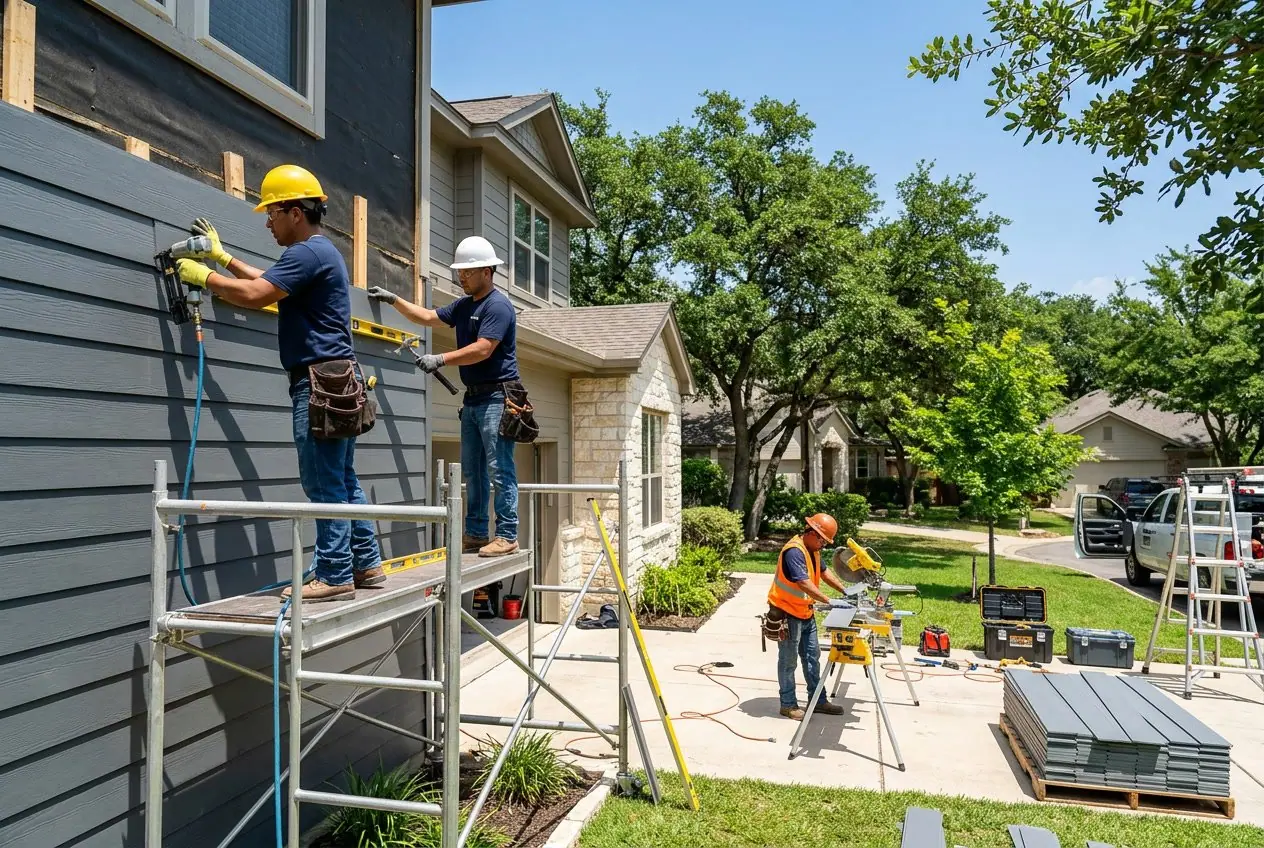
Understanding Siding Replacement Cost in Austin
Siding replacement cost refers to the total investment required to remove existing exterior cladding and install new siding materials across some or all of a home’s exterior walls. This figure encompasses material costs, labor, disposal of old siding, any necessary sheathing or moisture barrier repairs, trim work, and finishing details such as caulking and paint on certain material types.
Nationally, siding replacement has been a major home improvement category since the post-World War II housing boom, when manufacturers began offering affordable aluminum and early vinyl alternatives to traditional wood clapboard. By the 1980s and 1990s, vinyl siding dominated the market due to its low maintenance profile. Today, fiber cement products — particularly James Hardie siding — have captured enormous market share in Sun Belt cities like Austin, where UV exposure, heat cycling, and moisture fluctuations demand materials engineered for durability rather than simply affordability.
Read moreShow less
In Austin, the siding replacement market has grown significantly alongside the city’s explosive population growth. The Austin metropolitan area added over 50,000 residents per year between 2015 and 2023, driving intense new construction activity and placing older homes in neighborhoods like South Lamar, Oak Hill, and West Lake Hills into sharper focus for renovation. Many homes built in Austin between 1975 and 2000 were constructed with T1-11 plywood siding, hardboard composite, or early-generation vinyl that has now reached the end of its functional life.
Multi-family properties, single-family ranch homes, two-story suburban builds, and the mid-century modern style homes prevalent near Zilker Park all present unique siding replacement challenges. Wall configurations, window placement, architectural details like board and batten accents, and existing moisture damage levels all factor into the final cost equation. Understanding the variables specific to Central Texas homes is essential to budgeting accurately for your project.
Learn more about our full siding replacement services
Why Siding Replacement Is Needed in Austin, TX
Extreme Heat and UV Radiation
Austin averages 228 sunny days per year and regularly records summer temperatures between 98°F and 106°F from June through September. The Texas Department of Transportation weather monitoring stations in Austin recorded 72 days above 100°F during the summer of 2023 alone. This prolonged UV exposure causes vinyl siding to fade, warp, and become brittle over time. South- and west-facing walls in neighborhoods like Circle C Ranch and Village at Western Oaks bear the brunt of afternoon sun exposure and typically show UV degradation 3 to 5 years faster than north-facing walls on the same home.
Hailstorms and Severe Weather Events
The Hill Country corridor funneling through Austin is one of the most hail-active regions in the United States. The April 2021 hailstorm that struck Central Austin produced hailstones measuring 2.5 inches in diameter across zip codes including 78704 (South Lamar and Zilker neighborhoods), causing tens of millions of dollars in residential damage. The March 2022 storm system produced significant hail impacts across Bee Cave, Lakeway, and West Lake Hills, with insurance claims data showing siding damage as the second most-filed residential claim after roof damage. Hail impact cracks in vinyl siding and fiber cement panels allow moisture infiltration that compounds rapidly in Austin’s humid spring and fall weather.
Expansive Clay Soils and Foundation Movement
Austin sits atop a combination of Austin Chalk limestone and expansive Blackland Prairie clay soils, particularly in areas east of the Balcones Escarpment. The Texas Geological Survey designates much of the Austin metro area as having moderate to high shrink-swell soil potential. When these clay soils contract during drought — as occurred during the record 2022 drought when Austin Water reported reservoir levels at 35% capacity — and then rapidly expand with rain, home foundations shift. This movement transmits stress into wall framing and siding, causing gaps at panel joints, cracked caulk lines, and buckling that is commonly observed on older homes in neighborhoods like Shady Hollow and Oak Hill.
Humidity and Moisture Cycling
Despite its hot reputation, Austin experiences significant moisture events. Average annual rainfall is 34.2 inches, and spring thunderstorm seasons bring intense localized precipitation. The combination of heat and humidity creates ideal conditions for mold, algae, and wood rot behind older siding installations, particularly on homes in tree-heavy neighborhoods like Lost Creek and Barton Creek where canopy shading retains surface moisture for extended periods.
Schedule a siding inspection to assess weather-related damage
Free, no-obligation estimates
Talk to Barton Creek Siding Experts
Tell us what you need and we’ll take it from there.
Signs You Need Siding Replacement in Austin
Visual and Structural Warning Signs
- Warping or buckling panels: Siding panels that bow outward or ripple indicate heat damage or moisture infiltration behind the wall surface.
- Hail dents or impact cracking: Circular dents on vinyl or cracked surface layers on fiber cement panels are evidence of storm impact requiring assessment.
- Fading and chalking: Severe color loss or a chalky white residue when you rub vinyl siding indicates UV degradation that compromises material integrity.
- Visible gaps at joints or corners: Gaps wider than 1/8 inch at panel seams allow water and insects to enter wall cavities.
- Rotting or soft sections: Soft spots when you press against wood-based siding materials indicate active moisture damage and possible structural compromise.
Interior Warning Signs
- Unexplained increases in energy bills: Failed siding allows conditioned air to escape, which is especially costly during Austin’s peak cooling months of June through August.
- Interior wall moisture or mold: Staining on interior drywall adjacent to exterior walls signals siding failure allowing water infiltration.
- Pest activity near exterior walls: Carpenter ants and termites exploit gaps in deteriorated siding, a common issue in tree-dense areas like Barton Creek and West Lake Hills.
Urgency Indicators
If you observe any combination of structural gaps, interior moisture, or active pest infiltration, replacement should be treated as urgent. Delayed action in Austin’s climate allows damage to accelerate significantly within a single wet season.
Our process
Our Siding Replacement Process in Austin, TX
At Barton Creek Siding Experts, our replacement process is designed to be thorough, transparent, and adapted to the specific demands of Central Texas construction and climate conditions.
- 01
Free On-Site Assessment and Estimate (Day 1 — 1 to 2 Hours)
Our estimator visits your home, measures all exterior wall surfaces, documents existing siding conditions, photographs damage, and reviews your material preferences. We evaluate foundation movement indicators that may require special installation accommodation
- 02
Material Selection and Proposal Review (Days 2–5)
We present a detailed written proposal itemizing labor, material quantities, disposal fees, and any anticipated substrate repairs. We walk you through vinyl, fiber cement, James Hardie, and board and batten options with Austin-specific performance data for eac
- 03
Permitting (Days 5–14, When Required)
Austin’s Development Services Department requires permits for full siding replacement on most residential structures. We manage the permit application process, which typically takes 5 to 10 business days for residential projects in Travis County.
- 04
Old Siding Removal and Substrate Inspection (Day 1 of Installation — 1 to 2 Days)
We carefully remove existing siding panels, inspect the housewrap and sheathing for moisture damage, and replace any compromised sections before new installation begins. Austin’s humidity makes this inspection step non-negotiable.
- 05
Moisture Barrier Installation (Day 2 — 1 Day)
We install or replace housewrap to current International Residential Code standards, paying special attention to window and door flashings where Austin homes most commonly experience water infiltration.
- 06
New Siding Installation (Days 3–7 — 2 to 5 Days Depending on Home Size)
Panels are installed following manufacturer specifications and adapted for Texas thermal expansion requirements. Expansion gaps are calibrated for Austin’s 60°F temperature differential between winter lows and summer highs.
- 07
Final Inspection, Cleanup, and Walkthrough (Final Day)
We conduct a thorough quality inspection, complete all trim and caulking details, remove all debris from your property, and walk you through the finished installation.
Siding Replacement Methods and Material Approaches
Vinyl Siding Installation
Vinyl siding remains a cost-effective option for Austin homeowners seeking low maintenance and a variety of color options. Modern vinyl formulations incorporate UV inhibitors designed for high-sun environments. Vinyl is best suited for homes in neighborhood associations with flexible aesthetic guidelines and for homeowners seeking the lowest upfront investment. Explore our vinyl siding installation services
James Hardie Fiber Cement Siding
James Hardie’s HardiePlank and HardieShingle products are engineered specifically for regional climate zones. Hardie’s HZ10 product line is engineered for hot, humid climates like Central Texas and carries a 30-year limited warranty. James Hardie siding is the most popular premium replacement material we install in West Lake Hills, Rollingwood, and Lakeway, where home values justify the higher material investment. Learn about James Hardie siding installation
Fiber Cement Siding Installation (Non-Hardie Brands)
Alternative fiber cement products offer similar durability profiles to James Hardie at varied price points. These are appropriate for renovation projects where cost optimization is a priority without sacrificing longevity. View our fiber cement siding options
Board and Batten Siding Installation
Board and batten is experiencing a significant design renaissance in Austin, particularly in new construction and renovation projects in Circle C Ranch and Dripping Springs. This vertical panel installation method pairs well with Austin’s Hill Country farmhouse aesthetic and can be executed in wood, fiber cement, or vinyl substrates. Discover board and batten installation details
Learn morePartial Siding Replacement and Repair
When damage is isolated — such as post-hailstorm impact on a single elevation — targeted panel replacement can restore performance without full-home cost. We assess whether partial replacement is structurally appropriate or whether hidden substrate damage makes full replacement the more cost-effective long-term choice. Learn about our siding repair services
Siding Replacement Cost in Austin, TX — What to Expect
Understanding the realistic cost range for siding replacement in Austin helps homeowners budget accurately and evaluate contractor proposals with confidence.
Typical Cost Ranges in Austin
- Vinyl siding replacement: $6 to $12 per square foot installed, or approximately $9,000 to $18,000 for an average 1,500 square foot single-story Austin home.
- Fiber cement siding replacement: $10 to $18 per square foot installed, or approximately $15,000 to $27,000 for the same footprint.
- James Hardie siding replacement: $12 to $22 per square foot installed, or approximately $18,000 to $33,000 for a 1,500 square foot home.
- Board and batten siding (fiber cement): $14 to $24 per square foot installed, reflecting additional labor for vertical installation and batten detailing.
Read moreShow less
Key Cost Factors in Austin
- Home size and story count: Two-story homes in West Lake Hills or Lakeway require additional staging and safety equipment, adding 15% to 25% to labor costs.
- Substrate and sheathing condition: Homes with T1-11 or deteriorated OSB sheathing — common in Austin builds from 1978 to 1995 — often require $1,000 to $4,000 in sheathing replacement.
- Architectural complexity: Gables, dormers, arched windows, and decorative trim features common in Circle C Ranch and Bear Creek homes increase installation hours and material waste factors.
- Current Austin labor market: Austin’s construction labor market remains tight due to sustained residential growth, keeping labor rates 8% to 12% above national averages.
- Permit fees: Travis County residential siding permits typically range from $150 to $450 depending on project valuation.
Get a detailed quote for your siding installation project
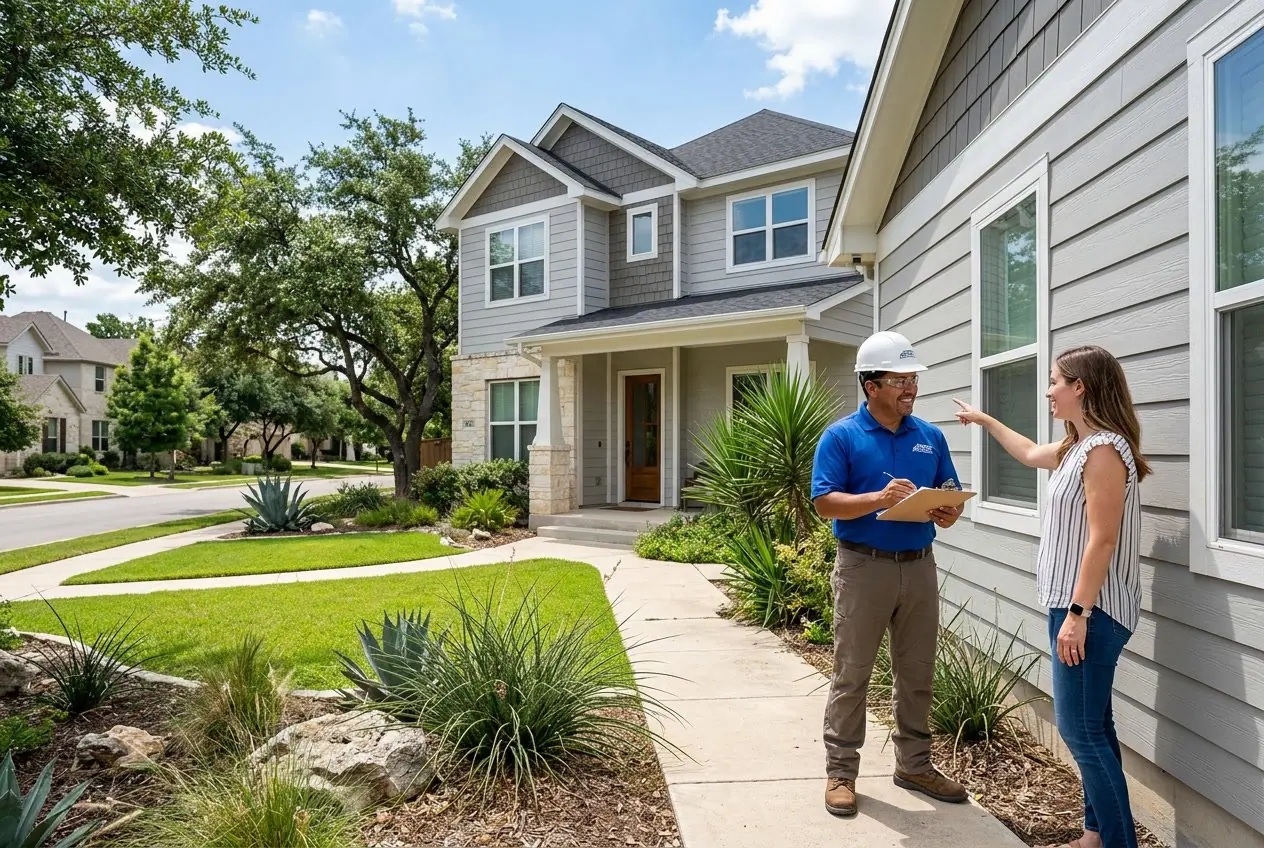
Austin Neighborhoods We Serve
West Lake Hills and Rollingwood (Built 1960s–1990s)
These established Hill Country communities feature custom homes with complex rooflines and multi-material exterior designs. Many homes have original cedar or redwood siding that has reached the end of its serviceable life. Steep lot grades complicate staging logistics and are reflected in our project planning process.
Circle C Ranch and Village at Western Oaks (Built 1990s–2010s)
Planned community builds in Southwest Austin often feature large two-story homes with hardboard or early fiber cement siding that is now showing moisture-related failures. HOA color and material guidelines are a factor we navigate carefully in these neighborhoods.
South Lamar and Zilker (Built 1940s–1970s, with Significant Renovation Activity)
These urban Austin neighborhoods feature a mix of original mid-century homes and heavily renovated properties. T1-11 plywood siding is common, and many renovation projects involve transitioning to board and batten or fiber cement to align with the neighborhood’s evolving aesthetic.
Dripping Springs and Bee Cave (Built 2000s–Present)
Rapidly growing communities west of Austin along the Highway 71 and 290 corridors. Many newer builds use lower-cost vinyl that is now showing UV fading and hail damage from repeated severe weather events in the Hill Country transitional zone.
Siding Maintenance Tips for Austin Homeowners
Proper maintenance extends the life of your new siding investment and is especially important given Austin’s demanding climate conditions.
- Annual cleaning: Rinse siding with a garden hose and mild detergent each spring to remove pollen, dust, and mold spores — Austin’s April and May pollen seasons are among the most intense in the southern United States.
- Post-storm inspection: After any hailstorm, walk your home’s perimeter and photograph any dents, cracks, or displaced panels. Document damage within 30 days for insurance claim purposes.
- Caulk inspection: Inspect caulk lines around windows, doors, and trim annually. Austin’s heat cycling causes caulk to fail within 5 to 7 years and should be refreshed proactively.
- Vegetation management: Trim tree branches and shrubs to maintain a minimum 6-inch clearance from siding surfaces. This is critical in wooded areas like Barton Creek and Lost Creek where canopy moisture retention accelerates mold growth.
- Sprinkler system positioning: Ensure irrigation heads are not directing water spray onto siding surfaces, which accelerates material degradation.
- Paint maintenance (fiber cement): Repaint fiber cement siding every 10 to 15 years using exterior-grade latex paint rated for high-UV environments.
- Foundation monitoring: Watch for new gaps at siding panel joints following drought periods, which can indicate foundation movement requiring professional assessment before siding repairs.
Learn more about our siding maintenance programs
Why Choose Barton Creek Siding Experts in Austin, TX
Barton Creek Siding Experts is a locally focused siding contractor serving Austin and the surrounding Hill Country communities. Our team works exclusively in the greater Austin market, which means we understand the specific soil conditions, weather patterns, HOA requirements, and building eras that define each neighborhood we serve.
We offer a comprehensive range of services including siding repair, siding installation, siding replacement, siding inspection, and siding maintenance, so we can meet your needs at any point in your home’s exterior lifecycle.
We are proud to install James Hardie certified products and work with top vinyl and fiber cement brands that carry strong manufacturer warranties. Our installation processes follow current IRC standards and Austin Development Services Department requirements.
Read moreShow less
Our customers in West Lake Hills, Circle C Ranch, Dripping Springs, and across the Austin metro consistently highlight our transparent pricing, responsive communication, and clean jobsite practices. We provide detailed written estimates, honor our quoted prices, and stand behind our workmanship.
Call us at (512) 634-8683 to speak with a local siding specialist today.
FAQ
Frequently Asked Questions About Siding Replacement Cost in Austin, TX
How much does siding replacement cost for an average home in Austin?
For a typical single-story Austin home of approximately 1,500 square feet of wall surface, siding replacement costs range from $9,000 for basic vinyl installation to $33,000 for premium James Hardie fiber cement. Most Austin homeowners investing in fiber cement products spend between $15,000 and $25,000 for a complete replacement. Two-story homes in neighborhoods like West Lake Hills or Lakeway typically run 20% to 30% higher due to additional labor and staging requirements.
Does homeowner’s insurance cover siding replacement in Austin?
Yes, if the damage was caused by a covered peril such as hail or wind, your homeowner’s insurance policy typically covers siding replacement minus your deductible. Following Austin’s frequent hailstorms — including the significant events of April 2021 and March 2022 — many homeowners successfully filed claims for full or partial siding replacement. We recommend requesting a professional siding inspection report to support your insurance claim documentation.
How long does siding replacement take in Austin?
A typical single-story Austin home takes 3 to 5 days for complete siding replacement once materials are on-site. Two-story homes or homes with complex architectural features may require 5 to 8 days. Permit processing through Austin’s Development Services Department adds 5 to 10 business days to the pre-installation timeline.
What is the best siding material for Austin’s climate?
James Hardie fiber cement siding, specifically the HZ10 climate-zone product line, is engineered for the heat, UV exposure, and moisture cycling conditions of Central Texas and is widely considered the premium choice for Austin homeowners. Vinyl siding formulated with UV inhibitors is a cost-effective alternative for homeowners seeking lower upfront investment with reasonable longevity in Austin’s climate.
Do I need a permit for siding replacement in Austin?
Yes, Austin’s Development Services Department requires a building permit for full siding replacement on most residential structures. Permit fees typically range from $150 to $450 for residential projects depending on project valuation. Barton Creek Siding Experts manages the permit application process on behalf of our customers as a standard part of our project workflow.
How do I know if I need siding repair or full replacement?
When damage is isolated to a single elevation or a limited number of panels — such as hail impact on one side of a home — targeted repair is often appropriate and significantly more cost-effective. When damage is widespread, when the existing siding is at or past its expected lifespan, or when substrate moisture damage is detected during inspection, full replacement delivers better long-term value. We provide honest assessments and never recommend full replacement when repair is genuinely sufficient.
How do Austin’s clay soils affect siding replacement projects?
Austin’s expansive Blackland Prairie clay soils cause foundation movement that can stress wall framing and create gaps in siding installations. Before new siding is installed, we assess whether existing foundation movement has affected wall plumb and make installation accommodations accordingly. On older homes in Shady Hollow, Oak Hill, and East Austin, we frequently find that proper siding replacement requires reframing sections of deteriorated or shifted wall framing.
Can you match new siding to existing siding for partial replacement?
Exact matches for discontinued siding profiles from the 1980s and 1990s — common in Austin’s established neighborhoods — can be challenging but are often achievable through specialty distributors. During our initial assessment, we evaluate whether a seamless material match is possible or whether a complementary accent approach delivers better aesthetic results. For homes where matching is not achievable, we discuss design options that make the replacement intentional rather than conspicuous.
Get Your Free Siding Replacement Estimate in Austin, TX
Whether your siding has been damaged by one of Austin’s severe hailstorms, compromised by years of intense Texas sun, or has simply reached the end of its serviceable life, Barton Creek Siding Experts is ready to help you understand your options and your costs — clearly and honestly.
We serve homeowners across Austin, West Lake Hills, Circle C Ranch, Dripping Springs, Bee Cave, Lakeway, Zilker, South Lamar, Barton Creek, and all surrounding communities. Our team provides free, no-obligation on-site estimates with detailed written proposals that include material specifications, labor breakdowns, and project timelines.
Call us at (512) 634-8683 to schedule your free estimate today. Protect your home’s exterior with siding built for Austin’s demanding climate, installed by experts who know this city inside and out.
Contact Barton Creek Siding Experts to request your free quote
Get in touch
Find siding help near you
Request a free estimate online or give us a call — our team will follow up quickly.
- Call us(512) 634-8683
- Visit7500 Rialto Blvd suite 250 #07, Austin, TX 78735
- HoursMon-Sun: 7:00 am – 7:00 pm