
You can expect siding installation in Austin to typically cost between about $4,000 and $28,000 depending on your home size and material choice.
A common range for a standard house is roughly $6 to $12 per square foot for many materials, with vinyl at the low end and fiber cement or stone at the high end.
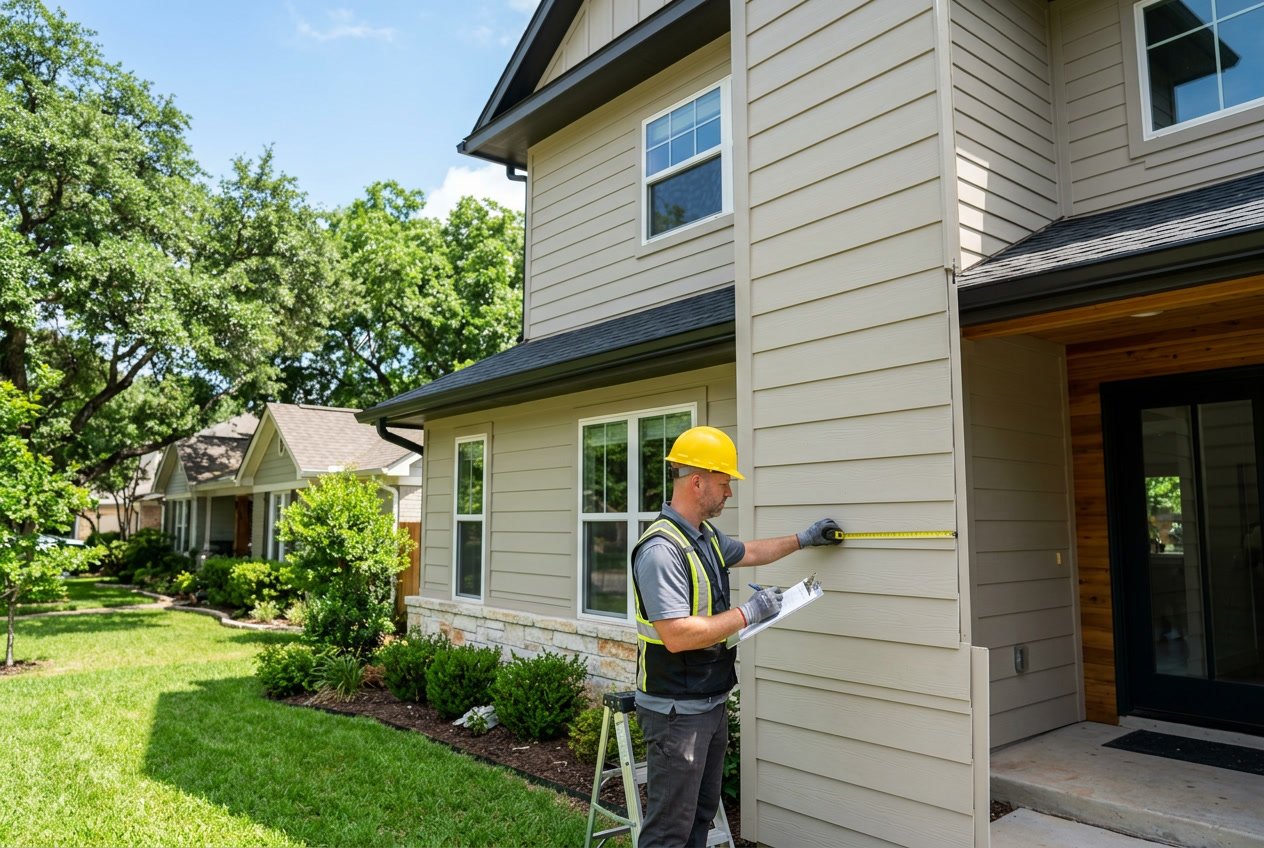
This post breaks down what drives those numbers so you can pick the right material, plan for permits and labor, and get smarter contractor estimates.
You’ll learn which siding holds up best in Austin’s heat and storms and where you can save money without risking performance.
Key Takeaways
- Cost varies mainly by material, home size, and local labor rates.
- Choose siding for durability in Austin’s climate to reduce long-term expenses.
- Get multiple quotes and confirm permit needs before hiring.
Average Siding Installation Cost in Austin, TX
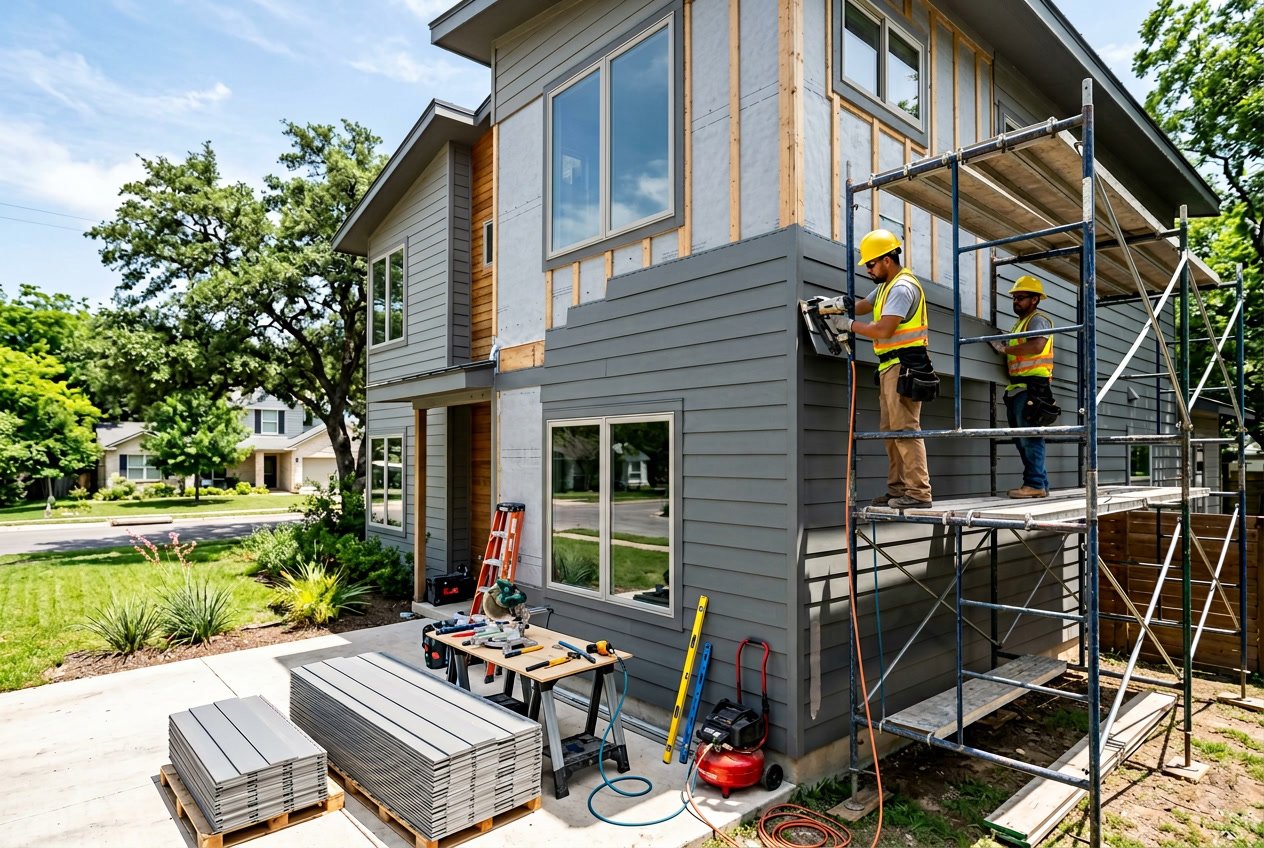
Expect typical Austin siding prices to vary by material, house size, and whether you need a full tear-off or just a partial panel replacement.
Local labor rates and climate-related prep, like moisture barriers and extra flashing, also push costs up or down.
Typical Price Ranges for Siding Installation
Most full siding installations in Austin run between about $4,000 and $18,000 depending on home size and material choice.
Small homes or partial re-sides can start near $1,500, while large homes with premium materials can exceed $20,000.
Labor and removal matter.
A tear-off, new sheathing, and moisture barrier add several hundred to several thousand dollars.
Permits, trim work, and painting push the total higher.
Expect quotes from local Austin siding contractors to reflect these items separately.
Get at least three written bids.
Compare line items like tear-off, disposal, underlayment (Hardie Wrap or similar), and trim to avoid surprise costs.
Ask if quotes include warranty and paint.
Cost Per Square Foot by Siding Material
Siding prices per square foot in Austin typically fall in these ranges:
- Vinyl: $3.50–$11.50/sq ft
- Fiber cement (James Hardie): $5.00–$13.00/sq ft
- Wood: $2.10–$12.00/sq ft
- Metal/aluminum: $2.80–$8.10/sq ft
- Composite/insulated vinyl: $3.90–$11.60/sq ft
Choose based on durability and maintenance.
Vinyl gives lower upfront cost and low maintenance.
Fiber cement costs more but resists fire, rot, and termites, which matters in Austin’s climate.
Wood looks classic but often needs more upkeep and can raise long-term costs.
Ask contractors for a per-square-foot breakdown that includes materials, labor, flashing, and trim so you can compare apples to apples.
Complete Project vs. Partial Replacement Costs
A complete siding replacement usually costs more per project but often less per square foot when done at scale.
Expect a full replacement on a typical Austin home (1,500–2,500 sq ft exterior) to land between $7,000 and $18,000 depending on material and scope.
Partial replacements or spot repairs cost less upfront—often $1,500–$5,000—but can hide compatibility issues.
Mixing old and new siding can create visible color and texture mismatches.
Patching without replacing underlying sheathing risks recurring water damage.
Full replacement lets you upgrade to a better moisture barrier and insulation, which can lower energy bills.
Partial work may be cheaper now but could cost more later if unseen rot or poor flashing remains.
Factors That Impact Siding Installation Cost
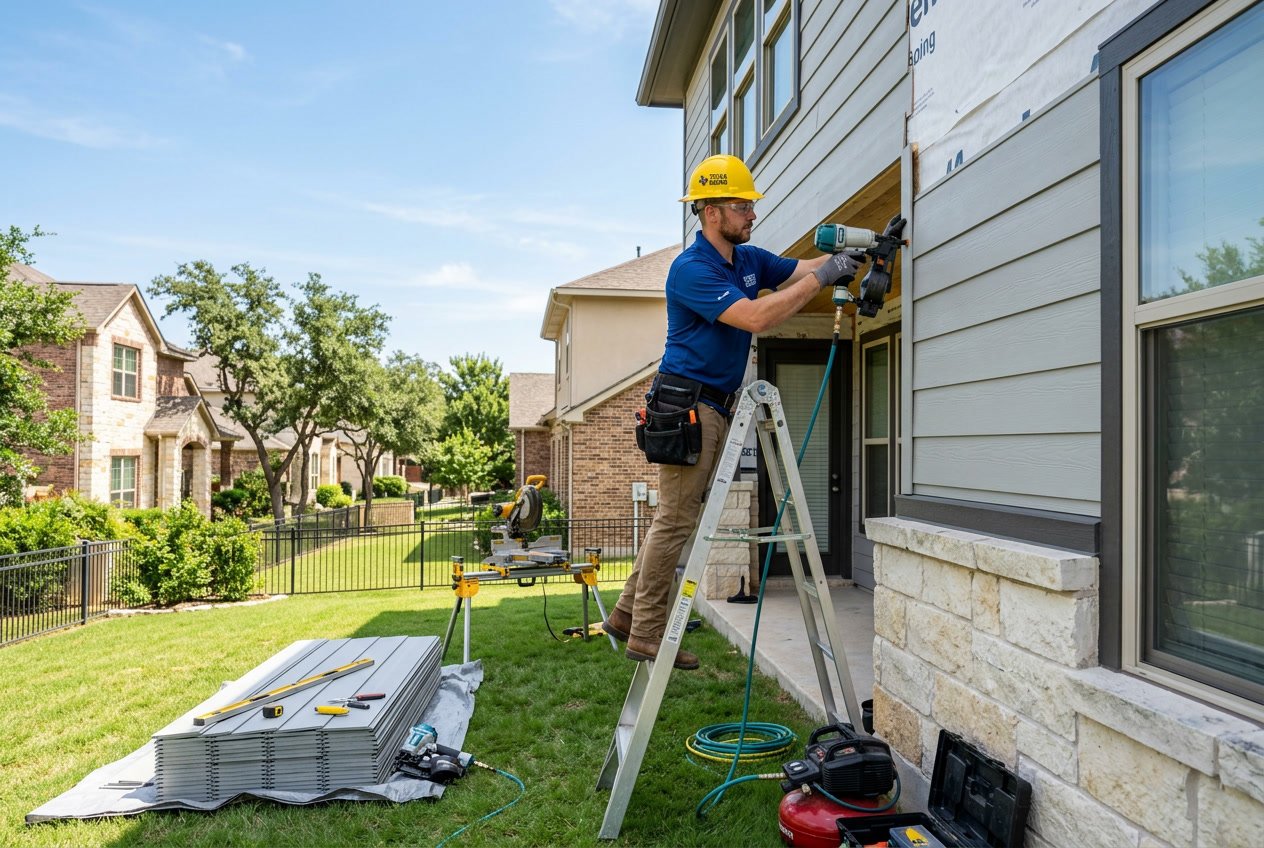
Siding costs in Austin depend on how much surface you cover, which material you pick, local labor rates, and whether you remove old siding.
Each factor can change your bid by hundreds to thousands of dollars.
Home Size and Wall Area
Your home’s square footage and wall area drive the material and labor totals.
Measure all exterior walls, including gables and bump-outs, to get an accurate square-foot figure for quotes.
Two-story homes usually cost more because of scaffolding, safety gear, and extra crew time.
Complex rooflines, many windows, and wrapped porches add cuttings and trim work.
Those features raise labor time and waste, so contractors often charge higher per-foot rates.
For siding replacement in Austin, expect higher totals if you have dormers, bay windows, or decorative trim.
Don’t forget attic walls, garage faces, and any detached structures you plan to match.
Accurate wall-area numbers reduce change orders and help you compare Austin siding installation bids evenly.
Material Choice and Quality
Material choice is one of the biggest cost levers.
Vinyl runs low-to-mid cost and often sits around $3–$12 per sq ft installed, while fiber cement, wood, or engineered products cost more.
Brick or stone veneer can push prices much higher per square foot.
Within each material, quality varies.
Thicker vinyl, pre-primed fiber cement, or factory-coated engineered wood costs more but lasts longer and needs less maintenance.
Insulated siding adds upfront cost but can reduce HVAC loads in Austin’s heat.
Also compare warranties and expected lifespan.
Cheaper siding may save now but lead to repairs or replacement sooner.
Match your material choice to your budget and how long you plan to stay in the house.
Labor Rates and Austin Market Conditions
Labor rates in Austin reflect local demand, season, and crew skill.
In busy months contractors book months ahead and may charge premium rates.
Expect hourly or per-square-foot labor charges; typical labor portions range from $1 to $4 per sq ft but vary with complexity.
Specialized crews cost more for high-end materials or custom installs.
If you hire a licensed subcontractor for insulated siding or fiber cement, plan for higher labor but smoother installs.
Also factor permit time and inspection schedules; delays can add labor hours.
Get at least three local estimates and check contractor reviews.
For Austin siding installation, comparing bids helps you spot outliers and ensures you pay a fair local rate.
Removal and Disposal of Old Siding
Removing old siding adds cost and time, but it reveals hidden damage that affects your final price.
Simple overlaying can lower upfront cost, but it’s not always allowed and can hide rot or insulation issues.
Removal costs vary by material and disposal rules.
Expect dumpsters, hauling fees, and labor for stripping and surface prep.
If your old siding contains lead paint or asbestos (rare, but possible on older homes), abatement raises costs sharply and requires certified crews.
Plan a separate line item in bids for old-siding removal and for any sheathing or insulation repairs uncovered.
That avoids surprise charges during your Austin siding replacement project.
Best Siding Options for Austin’s Climate
Austin’s hot summers, high humidity, and occasional storms mean you should pick siding that resists heat, moisture, and pests while fitting your budget and maintenance plans.
Vinyl Siding: Affordability and Performance
Vinyl is one of the least expensive siding choices for Austin.
You’ll pay less per square foot and get low maintenance—no painting and simple cleaning with a hose.
Modern vinyl comes in thicker, UV-stable profiles that resist fading in Austin’s strong sun.
Install quality-backed vinyl with proper ventilation and a moisture barrier.
Poor installation or skipping house wrap can trap humidity and cause mold or rot on sheathing.
Choose insulated vinyl if you want better energy performance; it adds R-value and helps keep attic and wall temps lower in summer.
Fiber Cement Siding: Durability and Benefits
Fiber cement siding combines cement, sand, and cellulose fibers for a hard, dense panel.
You’ll get strong resistance to rot, termites, and fire—useful given Austin’s humidity and wildfire risk in some areas.
It holds paint well, so you can pick long-lasting colors and a smooth or textured finish.
Expect higher material and labor costs than vinyl, but lower long-term repair needs.
Proper flashing, caulking, and an experienced installer matter; gaps or poor joints invite moisture.
If you want a durable, low-decay option that mimics wood without the same upkeep, fiber cement is a strong choice.
Material Suitability in Hot-Humid Conditions
In Austin’s hot-humid climate, prioritize materials that resist moisture, UV, and pests.
Vinyl and fiber cement perform well when installed with a breathable house wrap, proper flashing, and a one-inch drainage plane where possible.
That prevents trapped moisture and lets walls dry.
Avoid untreated wood unless you commit to regular sealing, painting, and inspections—wood can warp, stain, and host termites here.
Metal siding can reflect heat but may dent and transfer heat to the wall without insulation.
Use insulated siding or add continuous exterior insulation to improve comfort and lower cooling costs.
Permits, Quotes, and Choosing a Contractor
You need permits in many Austin neighborhoods, accurate written quotes, and a contractor who knows local siding rules and common Austin weather issues.
Focus on required permits, exact line-item quotes, and contractors with local experience in Austin siding installation and siding replacement.
Permit Requirements and Local Codes
In Austin, many siding jobs require a building permit when you replace more than 10% of exterior cladding or change structural components.
Check the City of Austin Development Services website or call 311 to confirm for your address.
Historic districts and homes with overlays often need design review or a Certificate of Appropriateness before work starts.
Your contractor should pull permits and schedule inspections.
Permit fees vary by project size, often a few hundred dollars for typical siding replacement.
Provide plans showing material, flashing details, and insulation if you add it.
Keep copies of permits and final inspection approval; lenders and buyers may request them later.
Getting Accurate Quotes in Austin
Ask for at least three written quotes that list materials, labor hours, waste removal, permit costs, and warranty details.
Insist quotes show cost per square foot and the total square footage covered for apples-to-apples comparison.
Request brand names and product lines (for example, fiber cement brand or vinyl profile) to avoid surprises.
Have contractors inspect your home in person—drive-by estimates often miss rot or required sheathing replacement.
Ask for an itemized change-order policy so you know how unforeseen repairs (rot, insect damage, or sheathing replacement) will be handled.
Compare project timelines and start dates as part of the quote.
Selecting a Qualified Siding Contractor
Choose contractors licensed for Austin work, insured (general liability and workers’ comp), and with local references.
Verify license and insurance by asking for policy numbers and checking with the Texas Department of Licensing or local trade groups.
Favor companies with experience in Austin siding installation and siding replacement, since they know local climate impacts and common problem areas like flashing around windows.
Check recent, local job photos and request three customer references.
Ask about crew size, lead installer experience, and who will supervise daily work.
Get warranty terms in writing: manufacturer warranties plus a minimum one-year labor warranty from the contractor.
Frequently Asked Questions
This section gives specific cost ranges and local rules you should expect.
It covers per-square-foot prices, material gaps, climate impacts, home size effects, labor roles, and Austin rules that can change bids.
What is the average cost per square foot for siding installation in Austin, Texas?
Expect typical installed costs from about $2 to $13 per square foot depending on material and job complexity.
Many common jobs fall in the $3–$11 per square foot band for vinyl, metal, and fiber-cement options.
Can the local climate in Austin affect the cost of siding installation?
Yes.
Austin’s hot, humid summers and occasional severe storms push homeowners toward more durable materials and better moisture barriers.
Choosing weather-resistant products and adding proper flashing or insulation raises material and labor costs.
What are the price differences between various siding materials in Austin?
Vinyl tends to be the least expensive, often $3–$11 per square foot installed.
Fiber cement and engineered products usually run $5–$13 per square foot.
Natural materials like wood or stone cost more, with wood often in the mid-to-high range and stone or full masonry much higher per square foot.
Does the size of the home impact the total cost of siding installation in the area?
Yes. Larger homes need more material and longer labor time, which raises the total cost.
Smaller houses sometimes have higher per-square-foot prices because fixed costs—like setup and scaffolding—spread over fewer square feet.
How do labor costs influence the overall expense of installing siding in Austin?
Labor makes up a significant share of the total price and varies with contractor experience and demand.
Complex details, tall walls, trim work, and removal of old siding increase labor hours and thus your final bill.
Are there any Austin-specific regulations that may affect siding installation costs?
Local building codes, permit fees, and historic district rules can raise costs.
If your property sits in a historic or protected area, you may need approved materials or designs. Those approvals and inspections add time and expense.