
Replacing siding in Austin typically runs between about $9,600 and $28,800 for a standard home, with many projects landing near $16,000 depending on size and materials.
Expect your final price to change based on the siding type you pick, whether you need old siding removed, and how easy it is for crews to access your home.
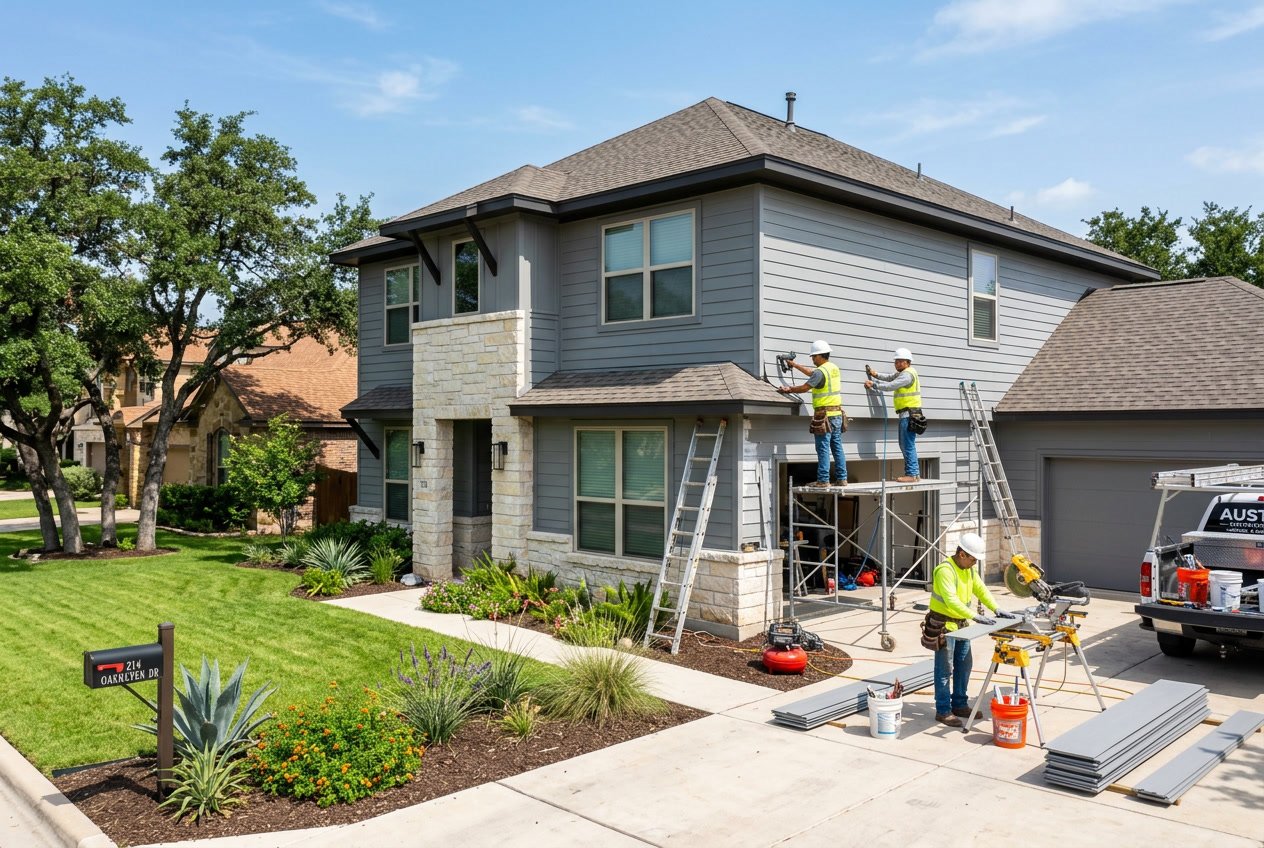
You want a siding choice that fits your budget, climate, and maintenance plan.
This post breaks down average costs, compares common materials, and shows the biggest cost drivers so you can pick the best option and get fair contractor quotes.
Key Takeaways
- Most projects fall in a midrange budget, but scope and materials shift the price.
- Material choice and site conditions are the top drivers of your total cost.
- Get multiple written quotes and compare scope line-by-line before hiring.
Average Cost to Replace House Siding in Austin, TX
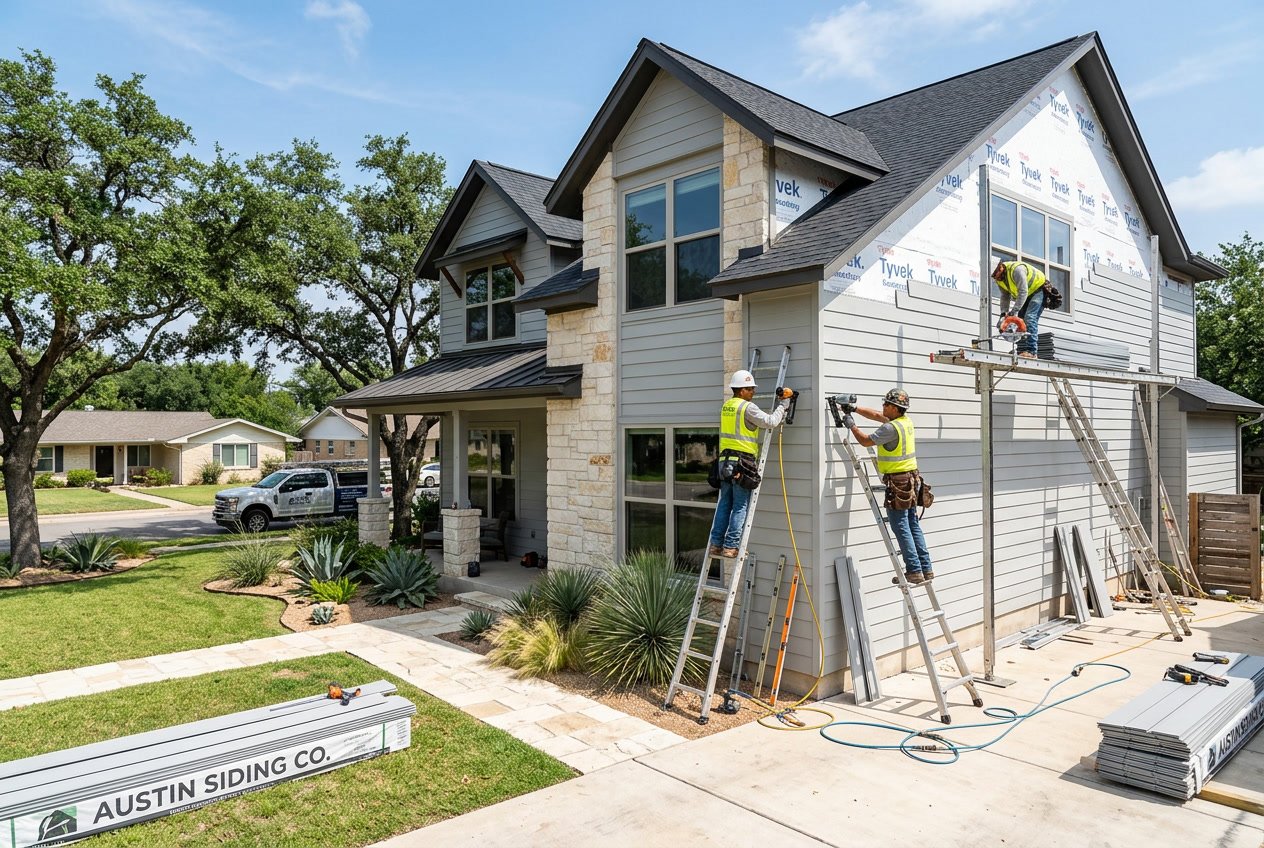
Expect to pay more than the national average in Austin.
Local labor rates and popular material choices push per-square-foot prices up, while project size and prep work drive total costs.
Local Price Per Square Foot
In Austin, typical local pricing runs about $3 to $12 per square foot for common materials.
Vinyl siding often falls on the low end ($3–$7/sq ft installed), while fiber cement and higher-end engineered wood sit around $5–$12/sq ft.
Stone, brick veneer, and specialty claddings can cost $20+ per square foot.
Local labor demand and permit fees affect the per-foot rate.
If your walls need old siding removal, sheathing repair, or added insulation, plan on higher hourly labor or per-foot charges.
Ask contractors for a line-item per-square-foot price so you can compare materials versus labor costs clearly.
Total Replacement Cost Range
For an average 1,800–2,200 sq ft home in Austin, expect total replacement costs roughly between $8,000 and $30,000.
Budget vinyl projects typically start near $8,000–$12,000.
Mid-range fiber cement or engineered wood projects commonly land in the $15,000–$25,000 range.
Premium options like stone veneer or custom composite systems can exceed $30,000.
Costs rise with complexity: multi-story roofs, steep grades, or extensive rot repair add several thousand dollars.
Dumpster rental, permit fees, and trim or window flashing replacement each add hundreds to low thousands.
Get at least three written estimates that break out material, labor, disposal, and permit costs.
Austin vs. National Siding Costs
Austin prices sit about 5% above the national average, mainly due to higher local wages and a competitive construction market.
National averages vary by material, but Austin’s tight labor market nudges final bids upward compared to many regions.
If you compare national quotes, adjust for Austin-specific factors: local permit costs, potential hail or wind-rated materials, and contractor availability.
Use local references and recent project photos to validate that a lower bid still meets Austin code and climate needs.
Factors That Influence Siding Replacement Costs
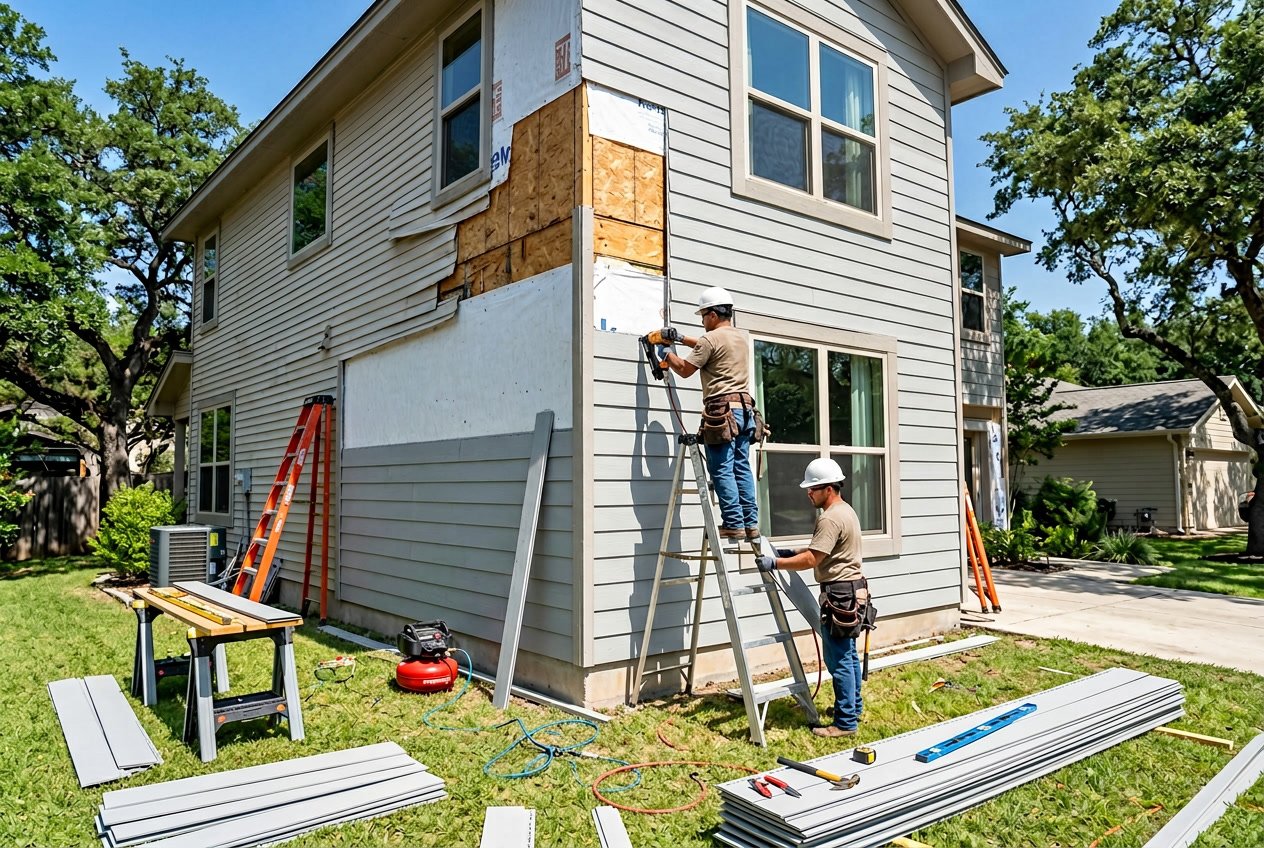
Your final price will depend most on how big and complex your house is, which siding material you choose, local labor conditions, and whether old siding must be removed and hauled away.
Each of these factors directly affects bids you get from siding contractors and the overall siding installation cost.
Home Size and Design Complexity
The total square footage of your exterior walls drives material and labor costs.
Measure wall length × height, subtract windows and doors, then add 10–15% for waste.
A 1,500–2,000 sq ft single-story home usually needs less labor and scaffolding than a 2-story or custom home.
Complex rooflines, gables, dormers, and many windows increase labor hours and cutting time.
Expect contractors to add premiums for high work (scaffolding, safety gear) and tight access areas.
If your home needs trim work or custom flashing, those line items will raise the siding replacement cost on estimates.
Material Selection Impact
Material choice changes both material and installed cost per square foot.
Vinyl often has the lowest siding installation cost and broad availability, while fiber cement and cedar cost more but last longer.
Stone veneer and brick are the most expensive options.
Ask contractors for a per-square-foot installed price for each material.
Factor in long-term upkeep: wood needs repainting and sealing, while fiber cement resists rot and fire.
Warranties differ by material and manufacturer; a lower upfront cost can mean higher maintenance over time, which affects lifetime cost to you.
Labor Market and Contractor Availability
Local labor rates vary across Austin neighborhoods.
In busy seasons (spring–summer), contractors may charge more or have longer lead times.
Get at least three written quotes from licensed siding contractors to compare labor and timeline.
Contractor experience matters.
A crew experienced with fiber cement or complicated trim often works faster and produces fewer errors, which can lower your total cost despite higher hourly rates.
Verify contractor insurance and permits; missing paperwork can delay installation and add unexpected expenses.
Removal and Disposal of Old Siding
Removing old siding adds labor and disposal fees.
Full removal uncovers sheathing issues, rot, or code problems that require repair.
If contractors find damaged sheathing, expect additional line items for repair and possible structural work.
Some contractors can install new siding over sound existing siding; that saves removal costs but may hide problems and limit insulation upgrades.
Disposal costs in Austin can range based on volume and landfill fees, so confirm whether your siding replacement cost quote includes removal, hauling, and debris disposal.
Comparing Siding Materials in Austin
Choose siding based on weather resistance, upfront cost, and long-term maintenance.
Expect higher upfront cost for materials that resist heat, hail, and moisture, and lower ongoing maintenance with factory-finished products.
Fiber Cement Siding (Including James Hardie)
Fiber cement resists heat, rot, and hail better than most alternatives.
James Hardie is the most common brand in Austin; its boards come with factory-applied ColorPlus finishes that cut repainting needs.
Installation costs run higher than vinyl because crews must cut and fasten heavier panels, and proper flashing and clearances are critical to avoid water issues.
You get long lifespan and strong warranty coverage, often 30 years on substrate.
Expect higher material and labor per square foot but lower maintenance over 10–20 years.
If you plan to sell later, fiber cement often improves curb appeal and holds value better than low-end options.
Vinyl and Alternative Options
Vinyl siding costs far less up front and installs faster, which lowers labor bills.
Mid-grade vinyl in Austin will handle sun and mild storms, but it can fade, warp in extreme heat, and perform poorly after severe hail.
Alternatives include engineered wood and metal panels.
Engineered wood gives a closer wood look for less than real wood but needs good sealing and paint cycles.
Metal panels resist impact well and shed heat if painted light colors, but they can dent and may need special trim work.
If budget is tight and storms are infrequent, vinyl or engineered wood can be practical.
For frequent hail or long-term resale goals, choose higher-durability materials.
Climate and Durability Considerations
Austin’s strong sun, occasional hail, and humidity shape your choice.
Pick siding with UV-stable finishes and impact resistance if your neighborhood sees hail or tree debris.
Moisture management matters: use quality housewrap, proper flashing, and correct fastening to prevent hidden rot regardless of material.
Fire resistance can matter in some suburbs; fiber cement offers better fire performance than vinyl.
Think lifecycle cost: cheaper materials save money now but can cost more in repainting, repairs, or earlier replacement.
How to Choose and Work With Siding Contractors
You need contractors who know Austin building codes, can handle permits, and give clear, itemized bids.
Focus on local experience, proof of insurance, and written agreements that list materials, labor, schedule, and cleanup.
Selecting Reputable Local Pros
Look for siding contractors with a Texas contractor license or registration and at least three recent Austin-area jobs you can inspect.
Ask for local references and photos that show full-wall work, not just small patches.
Verify liability insurance and workers’ comp; call the carrier to confirm coverage and policy dates.
Check online reviews, but weigh patterns over single complaints.
Prefer companies with a physical office in the Austin metro area and crews familiar with hot, humid summers and occasional freeze events.
Get contact info for a project manager, and confirm they’ll handle subcontractors and disposal.
A short written timeline and daily work hours prevent surprises.
Permitting and Inspections
Siding replacements in Austin usually require a city permit; some suburbs like Pflugerville or Round Rock have separate rules.
Ask the contractor which permits they will pull and whether permit costs are included in the bid.
Confirm who will schedule required inspections and when the final sign-off is expected.
Require the contractor to list permit fees and inspection steps in the contract.
Keep copies of all permits and inspection receipts.
If your home is in a historic district, check with Austin’s historic preservation office first; special materials or review can add time and cost.
Never assume a contractor will handle permits—get it in writing.
Getting Accurate Quotes
Request at least three written bids that break out: materials, labor, removal of old siding, sheathing or insulation replacement, trim, flashing, permit fees, and cleanup.
Ask contractors to specify brand names, product lines, and profile (e.g., 7″ vinyl lap, fiber cement plank).
Compare the same scope across bids to spot low-ball offers.
Include change-order rules: how additional work is priced and approved.
Ask about warranties—material and workmanship—and get warranty details in writing.
Schedule a walk-through with each bidder to point out problem areas (rot, vents, gutters) so quotes reflect reality.
A final price should include contingency (typically 10–15%) for discovered damage.
Tips to Save on Siding Replacement
Buy mid-grade materials in bulk through the contractor to lower unit cost, but confirm brands and colors before ordering.
Time your project for late fall or winter in Austin for modest discounts and shorter lead times.
Keep existing trim and shutters if they’re sound; replacing fewer elements cuts labor costs.
Get multiple quotes and ask each contractor for a value-engineered option showing cheaper material choices and labor savings.
Combine work—replace soffit or add insulation—only if it increases energy efficiency or prevents future repairs.
Avoid paying large upfront deposits; a common schedule is 30% deposit, 40% mid-project, 30% on completion.
Frequently Asked Questions
This section gives specific cost ranges and the main reasons prices change in Austin.
You will find numbers for per‑square‑foot costs, how materials and labor drive totals, seasonal timing, added features, and how house size or design affects bids.
What is the average cost per square foot for replacing house siding in Austin, Texas?
Expect typical installed costs around $8 to $15 per square foot for many projects.
Midrange jobs often land near $10–$12 per square foot, while premium materials or tough site conditions push toward the high end.
Some contractors price whole jobs instead of per‑square‑foot rates.
For a 1,600 sq ft example, common total estimates fall near $16,000, but your quote may vary with scope and details.
How does the cost of siding materials impact the total replacement cost in Austin?
Material choice strongly changes your budget.
Vinyl and engineered wood sit at the low to mid end, fiber cement is mid to high, and natural wood or specialty cladding costs the most.
Higher‑cost materials raise both material line items and labor time for cutting and finishing.
Warranties, finish options, and trim pieces also add to material costs.
What factors influence the labor costs for siding installation in Austin?
Labor depends on crew rates, project size, and installation complexity. Tight access, multiple stories, steep roofs, and trim or detail work increase hours and per‑job labor charges.
Local demand and contractor overhead affect bids, too. Permit handling, cleanup, and disposal may also appear as labor‑related line items.
Are there seasonal discounts or optimal times of year to replace siding in Austin, Texas?
Late fall and winter often bring slower contractor schedules, which can mean better availability and modest price flexibility. Spring and early summer are busy, so expect higher demand and fewer scheduling discounts.
Weather matters: avoid rainy periods that delay work. Plan for lead times on popular materials to get the date window you want.
How do additional features such as insulation or decorative elements affect the overall siding replacement cost?
Adding exterior insulation (continuous foam) increases material and labor costs and changes the wall assembly. Expect an added cost per square foot for insulation plus sealing and flashing work.
Decorative elements like trim, corner boards, shingle accents, or board‑and‑batten add material and detail labor. Each feature raises the bid depending on complexity and finish level.
Can the size or architectural complexity of a house in Austin affect the cost of siding replacement?
Yes. Larger homes give some economy of scale, but total costs rise with area.
Complex rooflines, many corners, bay windows, and multiple elevations increase cutting, flashing, and trim work.
Small, simple rectangles cost less per square foot than irregular or highly detailed homes.
Stair‑step walls, porches, and lots of penetrations (vents, chimneys) all push price higher.