You want siding that fits Austin’s heat, occasional hail, and your budget. Choosing between fiber cement and wood affects upkeep, look, and long-term cost, so pick the material that matches how you live and care for your home.
Fiber cement gives you low maintenance and strong weather resistance, while wood delivers natural grain and higher upkeep.
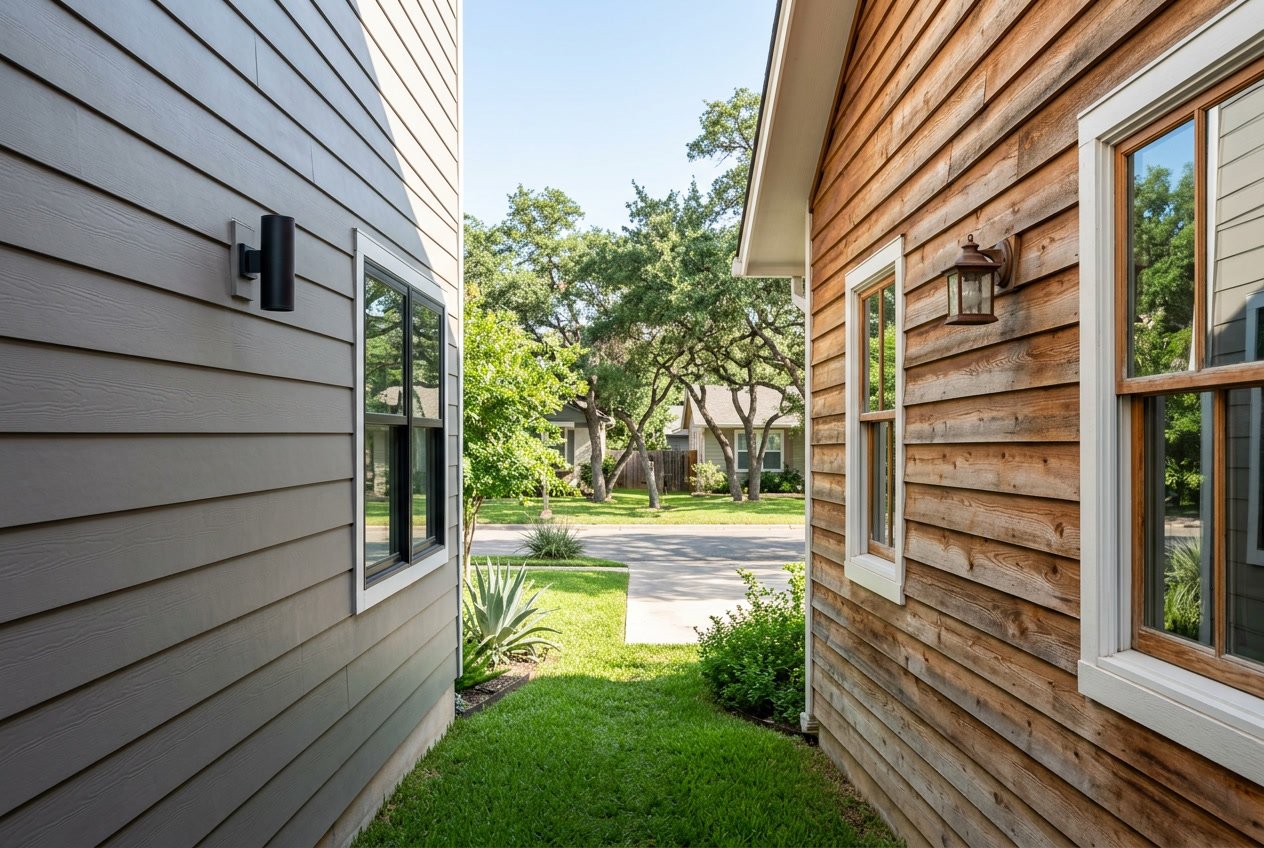
This article breaks down the real differences you’ll care about: durability in Texas sun and storms, how much time and money you’ll spend on maintenance, and which option keeps your home looking the way you want.
Use the details to decide which siding matches your priorities and property.
Key Takeaways
- One option needs less upkeep and holds up better in harsh weather.
- The other option offers a natural look but requires regular maintenance.
- Balance cost, curb appeal, and long-term durability for the best choice.
Fundamental Differences Between Fiber Cement Siding and Wood Siding
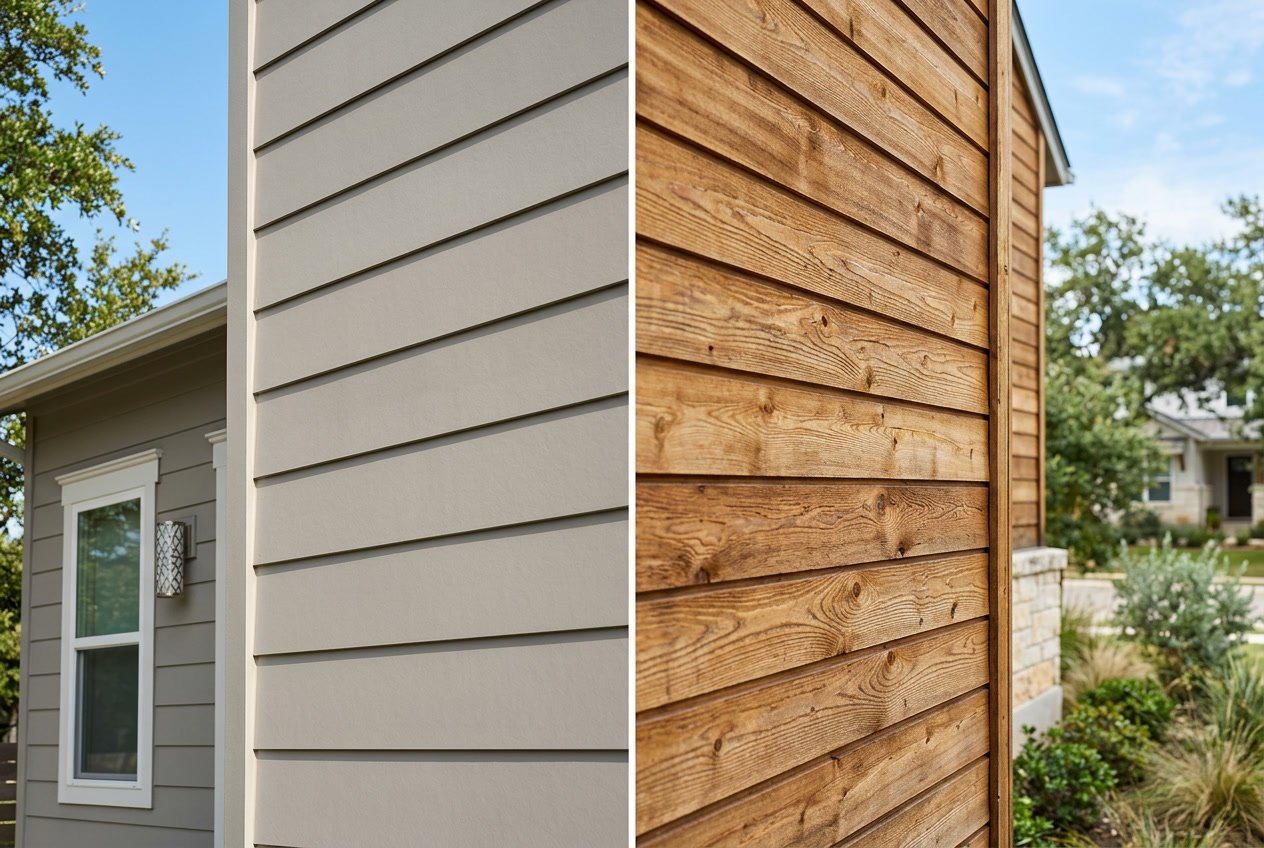
You need to pick a siding material that matches Austin’s heat, sun, occasional hail, and local codes. The two main choices differ in makeup, maintenance needs, and how they handle Texas weather.
Composition and Material Properties
Fiber cement combines cement, sand, and cellulose fibers into dense boards. It resists rot, termites, and fire better than natural wood.
Brands like James Hardie add factory priming and textures that mimic wood grain, so you get a wood look with lower moisture sensitivity.
Wood siding includes solid options (cedar, pine, hardwoods) and engineered wood products. Solid wood offers natural grain and can be milled into many profiles.
Engineered wood uses adhesives and treated wood fibers to improve stability and cut costs. Wood needs regular sealing or staining in Austin to avoid sun bleaching, checking, and insect damage.
Installation differs too. Fiber cement is heavier and needs special tools and fasteners; it may chip if mishandled.
Wood nails and fasteners are easier to work with, but wood boards can warp or twist if not installed with proper flashing and ventilation.
Overview of Siding Options in Austin, TX
In Austin, you’ll find fiber cement, natural wood, and engineered wood as common choices. James Hardie fiber cement is widely used because local contractors know the product and it holds up to UV and occasional hail.
Fiber cement often meets city fire and building codes with fewer questions. Wood siding appears on older homes and high-end new builds for its warm look.
Cedar and cypress resist decay better than softwoods, but you must plan for yearly checks, stain reapplication every 3–5 years, and termite inspections. Engineered wood gives a middle ground: better dimensional stability than raw wood and usually a manufacturer warranty, but it still needs painted or sealed surfaces to last in Austin’s sun and humidity.
Cost and labor matter. Fiber cement has higher material and labor costs up front.
Wood materials vary widely in price; installation can be faster but maintenance raises lifetime costs.
Durability, Maintenance, and Weather Resistance
You need siding that stands up to Austin heat, heavy rain, and occasional hail while keeping maintenance low and performance high. This section compares how fiber cement, engineered wood, and traditional wood handle moisture, pests, fire risk, and long-term lifespan in Austin’s climate.
Resistance to Moisture, Mold, and Rot
Fiber cement siding, including James Hardie products, resists water penetration because it’s made from cement, sand, and cellulose. It won’t swell or warp when humid air and heavy rains hit.
You still need proper flashing, a water-resistant barrier, and good installation to prevent leaks at trim, windows, and eaves. Wood siding and engineered wood absorb moisture if paint or sealant fails.
That leads to swelling, mold, and rot in as little as a few years in poorly ventilated or shaded areas. With wood, plan routine inspections and repainting or resealing every 3–7 years to limit moisture damage.
Maintenance tip: wash fiber cement occasionally and touch up caulk. For wood, follow a strict staining/painting schedule and replace any boards that show soft spots or mildew.
Pest and Fire Protection
Fiber cement is non-combustible and does not feed termites or wood-boring insects. Choosing James Hardie or similar brands gives you material that resists pest damage and helps meet higher fire-safety expectations in vulnerable neighborhoods.
Wood siding can be attractive to termites, carpenter ants, and other pests unless treated and maintained. Engineered wood has chemical treatments that improve resistance, but the protective coatings must stay intact.
In case of brush fires or nearby burns, wood will pose a higher fire risk than fiber cement. Practical step: combine fiber cement with noncombustible trim near the ground and keep mulch and wood piles away from siding to lower pest and fire risks.
Expected Lifespan in Austin Climate
Fiber cement siding commonly lasts 30–50 years in Texas weather when installed correctly and painted with durable, factory-applied finishes like ColorPlus® from James Hardie. Expect lower repainting frequency and fewer lifecycle repairs compared with wood.
Well-maintained wood siding can last 20–40 years, but that requires disciplined upkeep: regular repainting, prompt repair of damaged boards, and vigilance against moisture and insects. Engineered wood often sits between wood and fiber cement on lifespan — better than raw wood if you maintain coatings and flashing.
Budget for these realities: fiber cement costs more up front but typically lowers long-term repair and repainting bills. Wood or engineered wood may cost less initially but can need more frequent maintenance in Austin’s heat and storms.
Aesthetics and Curb Appeal
Your siding choice sets the look of your home and affects resale value. Think about texture, color stability, and how the style fits Austin neighborhoods.
Style and Texture Options
Fiber cement siding, such as James Hardie products, gives you crisp, uniform lines and can mimic lap, shingle, or board-and-batten profiles. It holds sharp edges and straight seams, which suits modern and Craftsman homes in Austin.
Installation yields a consistent finish across large facades, so your street-facing elevations read as intentional and tidy. Wood siding offers natural grain, knots, and variation that add warmth and organic character.
Species like cedar or engineered wood show real texture and take stain or paint differently, so two adjacent walls can look slightly different. If you want a rustic, cottage, or high-end tropical look, wood delivers unique visual depth that fiber cement can only replicate, not fully reproduce.
Color Selection and Longevity
Fiber cement accepts paint well and keeps color longer with less maintenance. You can choose high-quality exterior paints and expect less frequent repainting than with most wood.
Brands like James Hardie often pair with manufacturer color guides to maintain coverage for years, which helps curb appeal in Austin’s sun and heat. Wood siding gives you rich natural tones when stained and can be painted any color, but it fades or weathers faster.
You’ll likely need more frequent staining or repainting to keep crisp color, especially on south- and west-facing walls exposed to Texas sun. If you prefer long-lasting color with less upkeep, fiber cement is the more practical pick.
Design Versatility for Austin Homes
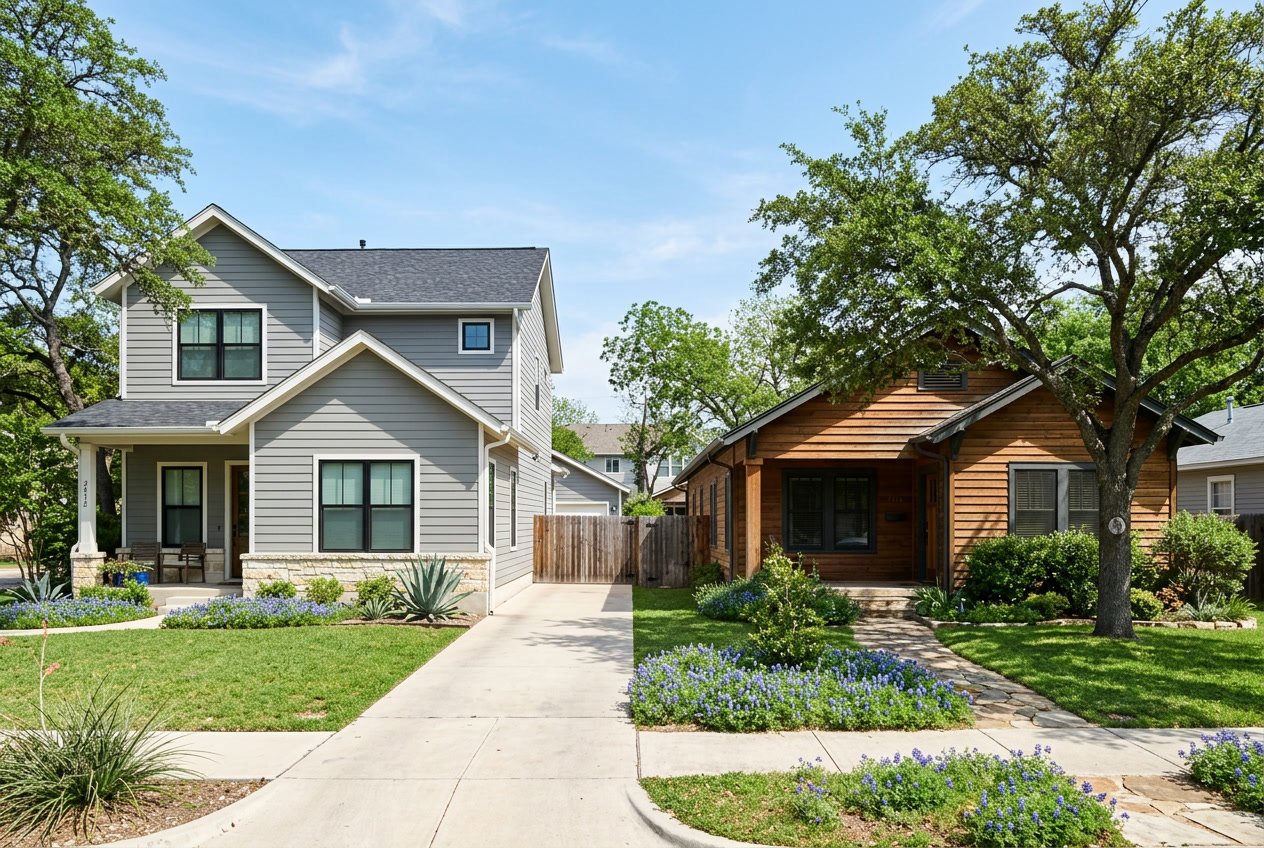
In newer Austin neighborhoods, homeowners often blend materials—fiber cement on lower walls and wood accents on porches or eaves. That mix lets you use fiber cement for durability and wood for striking focal points, such as an entryway or soffits.
You can match styles from modern ranch to Hill Country by varying siding profiles and trim details. Historic and eclectic Austin homes benefit from wood’s ability to be carved, beveled, or custom-milled.
But if you want low maintenance and a broad palette of factory-made textures, fiber cement offers predictable results and easier replacement. Consider which surfaces get the most sun and how often you want to maintain them when choosing between the two.
Cost, Environmental Impact, and Installation
You will compare upfront price, long-term costs, and the environmental trade-offs for fiber cement and wood siding. You will also learn what hiring a pro in Austin usually involves and when vinyl or other siding materials might change your budget.
Material and Installation Costs
Fiber cement typically costs $6–$10 per sq ft for materials, while common wood options like cedar run about $5–$9 per sq ft. Expect labor for fiber cement to be higher because the boards are heavy and need special cutting tools.
Installation labor for fiber cement often adds $2–$8 per sq ft. Wood siding is lighter and usually cheaper to install, but you must budget for regular repainting or sealing every 5–10 years.
Over 20–30 years, wood’s maintenance (paint, caulk, insect treatment) can push its total cost above fiber cement. Vinyl siding may start lower in cost than both, but it offers different durability and aesthetic trade-offs you should weigh.
Sustainability and Eco-Friendliness
Wood siding is renewable when sourced from certified forests. It stores carbon and is biodegradable at end of life.
However, frequent repainting and chemical treatments for pests or rot reduce its environmental benefits. Fiber cement uses cement and sand, which have higher embodied energy in manufacture.
Its long life (30–50 years) and low need for chemicals can offset that initial impact. If you plan to keep siding for decades, fiber cement can be a lower-impact choice than repeatedly replacing or treating wood.
Vinyl siding has low natural resource use but can be hard to recycle and may emit additives during manufacture.
Professional Installation Considerations
You should hire contractors experienced with the specific material you choose. For fiber cement, look for crews with fiber cement installations on their resume and references.
They should use proper cutting tools, dust control (silica dust is a hazard), and fasteners rated for Austin’s humidity and heat cycles. For wood siding, choose a carpenter who knows local species, flashing, and ventilation details to avoid moisture problems.
Ask for estimates that separate material, labor, and permit costs. If you consider vinyl or other siding materials, request sample panels and warranty terms.
Verify contractor licenses, insurance, and written timelines before signing.
Frequently Asked Questions
This FAQ covers cost drivers, lifespan and weather resistance, routine upkeep, pest and rot protection, environmental effects, and how long installation takes for both materials in Austin.
What factors influence the cost difference between fiber cement and wood siding in Austin?
Material choice drives most of the cost. Wood species such as cedar or redwood cost more than fiber cement boards.
Labor and installer experience affect price. Skilled carpenters for wood trim and profiles can raise costs, and fiber cement needs special tools and fasteners that influence labor rates.
Project size, trim details, and required repairs change total cost. Historic-style profiles, custom trim, and damaged sheathing add to both materials’ expenses.
How do the durability features of fiber cement compare with wood siding in Austin’s climate?
Fiber cement resists moisture, sun, and wind better than most wood types common in the area. It holds paint longer and is less prone to swelling or warping from humidity.
Wood can last decades with strict maintenance and quick repairs. Without that care, heat, humidity, and storms in Austin speed up rot and paint failure.
What maintenance requirements can homeowners expect with fiber cement vs. wood siding?
Fiber cement needs occasional washing and repainting about every 10–15 years in typical Austin exposure. Check caulk and flashings after storms and touch up any nailed or cut edges to prevent rust stains.
Wood requires repainting or restaining roughly every 5 years and more frequent inspections for cracks, insect damage, and water intrusion. You must repair or replace damaged boards quickly to avoid spread.
Which siding material offers better resistance to common pests and rot in Austin, Texas?
Fiber cement resists termites, carpenter ants, and fungal rot because it contains cement and sand. It also tolerates impact and bird pecking better than soft woods.
Wood is vulnerable to termites, dry rot, and wood-boring insects unless you use naturally resistant species or preservatives. Regular treatments and quick repairs reduce risk but do not eliminate it.
Are there any significant environmental impacts to consider when choosing between fiber cement and wood siding?
Wood is renewable and stores carbon, especially when sourced locally. However, transported lumber raises the carbon footprint. Some wood treatments can add chemical concerns.
Fiber cement uses clay, sand, and cellulose fibers. It can have an environmental edge for durability and low replacement frequency.
Manufacturing and transport of fiber cement still produce emissions. Check product sourcing and embodied energy if that matters to you.
How does the installation process and time compare for fiber cement siding versus wood siding in Austin?
Both materials usually require professional installation.
Fiber cement is heavier and needs cutting with dust-control tools. Expect slightly longer install time and contractors who use specific fasteners and flashings.
Wood is lighter and can be faster to install if carpenters are experienced. Custom milling, paint or stain application, and precise flashing for water management can add time.
Both require proper site prep and moisture barriers for best performance.