Austin’s hot sun, sudden storms, and big temperature swings demand siding that lasts and protects. You want a material that resists heat, UV damage, moisture, and holds up with low upkeep — choices like fiber cement, high-grade vinyl, insulated systems, and properly installed metal often meet those needs.
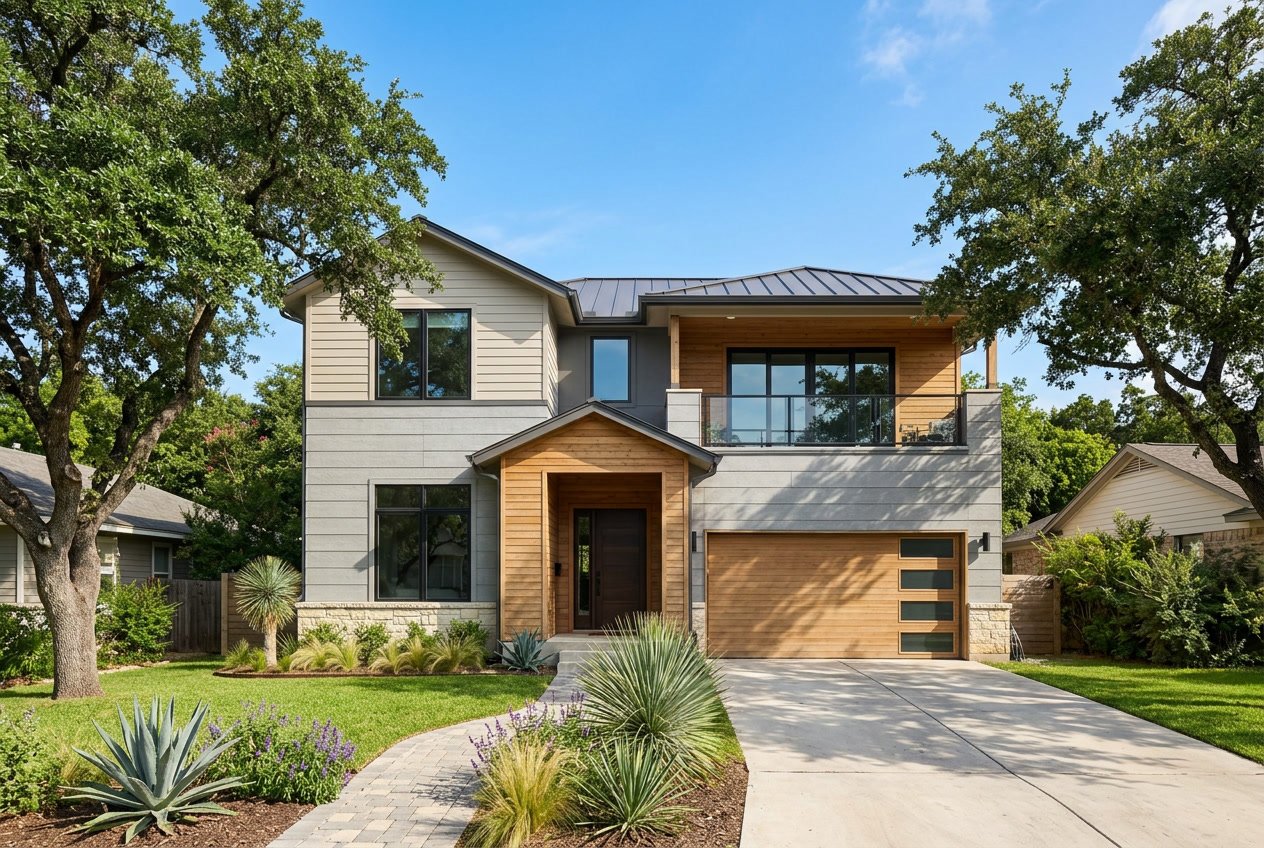
This post breaks down which siding types perform best in Austin’s climate, what to expect for upkeep and lifespan, and why professional installation matters for lasting results. Use this guide to match your budget and style with siding that truly fits Central Texas weather.
Key Takeaways
- Choose siding for heat resistance, moisture control, and UV stability.
- Durable materials with proper installation reduce future repairs.
- Maintenance needs and cost vary by material, so match choice to goals.
Key Factors When Choosing Siding for Austin
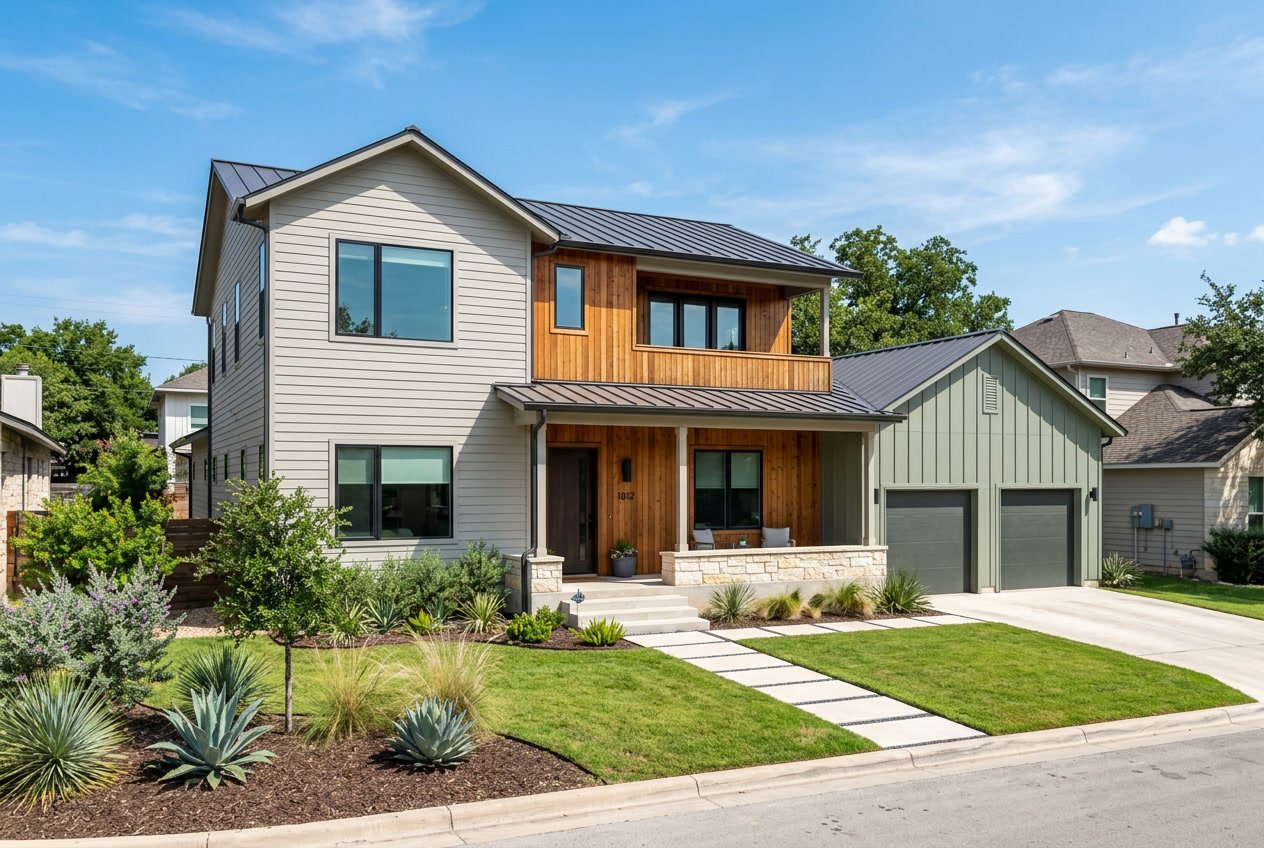
Pick siding that stands up to heat, sun, storms, and humidity while improving energy performance and curb appeal. Focus on materials that resist UV damage, limit moisture intrusion, and add measurable value to your home.
Impact of Austin’s Climate on Siding Performance
Austin gets extreme heat, strong UV, sudden hail, and humid spells. You need siding that resists fading, warping, and moisture-driven rot.
Fiber cement and metal handle UV and heat well; they resist cracking and keep shape when temperatures swing above 100°F. Engineered wood and treated wood can match traditional looks but need good maintenance to avoid moisture damage.
Hail and storms mean impact resistance matters. Brick veneer and impact-rated fiber cement or metal reduce repair frequency after storms.
Also check fastener quality and installation details—poor fastening lets wind and water enter gaps, causing hidden damage. Pest pressure in Central Texas makes non-organic or treated materials preferable.
Vinyl resists insects but can warp in intense sun unless higher-grade, insulated types are used. Choose siding tested for local conditions and installed with proper flashing and ventilation.
Energy Efficiency and Insulation Considerations
Your siding affects energy bills when it pairs with proper insulation and house wrap. Insulated vinyl and siding systems with foam backing add R-value and cut cooling costs in hot months.
Fiber cement has lower inherent R-value, so add continuous exterior insulation or a well-installed air barrier to reduce heat transfer. Reflective paints and light colors lower solar heat gain.
A lighter exterior can shave cooling load in Austin’s long summers. Seal gaps at windows, doors, and joints to stop air leakage; even the best siding won’t help if seams are open.
Ask contractors about whole-wall performance—R-value, air infiltration rates, and continuous insulation plans. Consider energy rebates or credits for upgrades that meet local efficiency programs.
Proper installation matters as much as material choice for real energy savings.
Curb Appeal and Home Value Enhancement
Your siding choice directly shapes curb appeal and resale value. Materials like fiber cement, engineered wood, and brick veneer appeal to buyers seeking durability and low maintenance.
Vinyl can be cost-effective but choose premium profiles and colors to avoid a cheap look. Architectural match matters.
Pick profiles and textures that fit your neighborhood—historic areas favor wood-look fiber cement or real wood, while modern builds suit metal or smooth fiber cement. Consistent trim, color contrast, and quality finishes make homes look updated and well cared for.
Budget for long-term value, not just upfront cost. Higher-quality siding may raise appraisal value and reduce future repair costs.
Top Siding Materials for Austin’s Weather
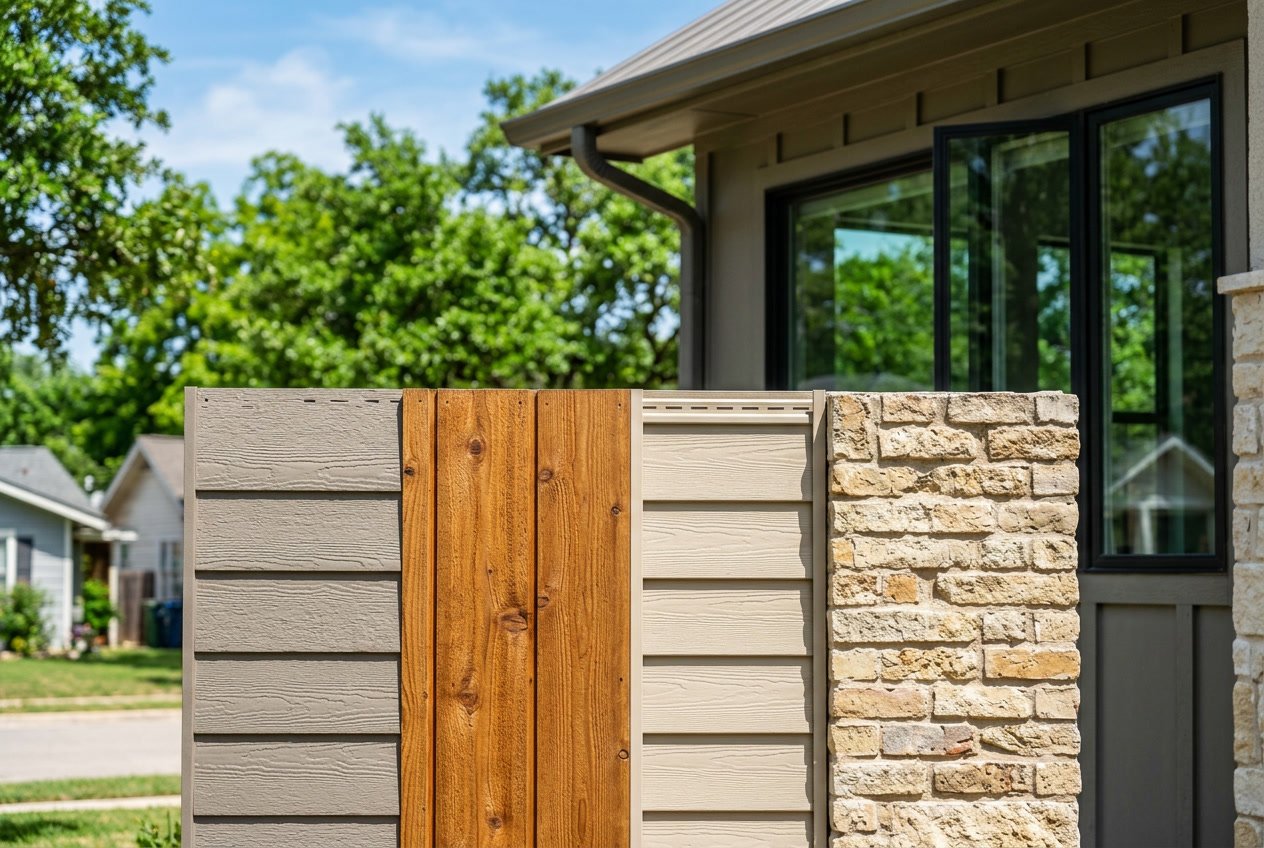
You need siding that resists heat, sun damage, moisture, and wind while keeping maintenance low and curb appeal high. The options below focus on durability, appearance, and real-world performance in Central Texas conditions.
Fiber Cement Siding: Durability and Weather Resistance
Fiber cement blends cement, sand, and cellulose fibers to create a dense, stable panel that resists warping and rot. It holds paint well, so color lasts longer under strong UV exposure.
This siding is noncombustible and pest-resistant, so it performs well during storms and in hot, dry spells. It can mimic wood or stucco, giving you premium siding looks without the same upkeep.
Expect professional installation to reduce cracking risk and to maintain warranty coverage. Maintenance is simple: periodic washing and repainting every 10–15 years, depending on finish and exposure.
Weight and hardness mean you may pay more up front than vinyl, but you gain long-term stability and fewer repairs.
Engineered Wood Siding: Style and Modern Performance
Engineered wood uses plywood or high-density fiberboard treated with resins to resist moisture and insects. It gives the natural grain and warmth of wood but with improved dimensional stability for Austin’s heat cycles.
If you want a wood look with better durability, this is a strong choice. Manufacturers often apply factory finishes that include UV inhibitors and water repellents.
That reduces onsite sanding and recoating needs. Engineered wood is also lighter than fiber cement, which can lower installation labor costs.
You should inspect caulking and paint every few years and replace damaged boards promptly to avoid moisture intrusion. For a premium siding appearance, choose higher-grade profiles and professional installation to protect finish and fit.
Metal Siding: Longevity and Heat Reflection
Metal siding, usually aluminum or steel, delivers strong wind resistance and long service life. It won’t rot, termites won’t eat it, and factory coatings can reflect solar heat to help keep your attic cooler.
That can slightly reduce cooling demands in Austin’s hot summers. Choose panels with high-quality baked-on finishes and a corrosion-resistant base if you’re near humid zones.
Metal can dent from impact, so heavier gauges resist damage better. For modern or industrial styles, metal provides a clean, low-maintenance option.
Installation details matter: proper flashing and a ventilated cavity prevent condensation issues. Expect minimal painting needs over decades if you pick a premium, fade-resistant coating.
Vinyl and Wood Siding: Cost, Maintenance, and Suitability
Vinyl usually costs less up front and needs less routine care, while wood costs more but can raise resale value and match historic styles. Both materials react differently to Austin’s heat, sun, occasional storms, and humidity, so weigh price, upkeep, and appearance when planning siding replacement.
Vinyl Siding: Advantages and Climate Limitations
Vinyl siding typically runs $2–$3 per square foot for materials, making it the cheapest common option for siding replacement. You save on initial cost and on painting, since vinyl doesn’t need regular repainting.
Clean with a hose or mild detergent once a year to remove pollen and dust common to Austin. Heat and sun matter.
Prolonged Texas sun can fade or warp lower-quality vinyl, so pick fade-resistant, thicker panels (look for higher gauge). Strong storms or hail can crack vinyl, so inspect after severe weather.
Vinyl offers low maintenance and good moisture resistance, but it won’t provide the natural insulation or the resale lift that wood can.
Wood Siding: Timeless Appeal and Upkeep
Wood siding costs about $2–$6 per square foot for materials and often raises curb appeal and resale value. You get an authentic grain and can choose styles like clapboard, shingles, or board-and-batten to match Austin’s older neighborhoods.
Paint or stain every 3–7 years to protect wood from sun and humidity. Wood demands more maintenance than vinyl: regular inspections, painting, and prompt repairs where water or termites appear.
Proper flashing, drainage, and a well-ventilated installation reduce rot in humid months. If you prefer a natural look and are willing to plan maintenance into your budget, wood can be a strong choice for siding replacement in Austin.
Siding Replacement and Installation Best Practices in Austin
Pay attention to material choice, moisture control, and thermal movement. Proper flashing, fastener spacing, and contractor credentials make the biggest difference in how long your siding lasts in Austin’s heat and storms.
Professional Siding Installation for Lasting Results
Hire a licensed contractor who documents permits, insurance, and local code compliance. Professionals will remove old siding as needed, install a continuous weather-resistive barrier, and fit flashing at rooflines, windows, and penetrations to stop wind-driven rain.
Ask the installer to use fasteners and spacing specified by the siding manufacturer to allow for thermal expansion. For vinyl and metal, leave expansion gaps; for fiber cement, follow torque and shank requirements.
Insist on sealed joints and painted or factory-finished trim where edges are exposed. Verify ventilation behind claddings when required and confirm trim sealants are UV-rated.
Get a written warranty that lists workmanship and the manufacturer warranty transferability.
When and Why to Consider Siding Replacement
Replace siding when you see widespread cracking, rot, large areas of buckling, or repeated water stains inside your walls. Small repairs can work short-term, but failing substrate or continuous moisture means replacement will save money over time.
Consider replacement to upgrade to more heat- and moisture-resistant materials like fiber cement or metal if your current siding is wood or old vinyl. Use replacement to add continuous exterior insulation or to improve energy performance during re-cladding.
Plan replacement before major storms or after storm damage to avoid secondary water issues. Get at least three written estimates that itemize materials, flashing, and removal costs so you can compare Austin siding contractors fairly.
Frequently Asked Questions
These answers focus on materials, costs, upkeep, and performance for Austin’s heat, sun, humidity, and storms. Expect specific recommendations like fiber cement, engineered wood, metal, and when vinyl or stucco may work.
What materials offer the best durability for siding in Austin’s variable climate?
Fiber cement (e.g., James Hardie) ranks highest for long-term durability. It resists rot, pests, and UV fade better than wood or standard vinyl.
Engineered wood (like LP SmartSide) offers good durability with lower maintenance than natural wood. Metal panels and masonry (brick, stone, stucco) also hold up well when installed correctly.
Which siding options are most resistant to high heat and humidity typical of Austin?
Fiber cement and metal resist heat and humidity without warping or swelling. Both stay stable under prolonged sun and sudden moisture.
Vinyl can soften or warp under intense sun, so choose high-quality, heat-rated vinyl if you consider it. Engineered wood with proper coatings handles humidity better than raw wood.
How does the cost of siding materials vary for homes in Austin?
Vinyl is usually the lowest-cost material up front. Fiber cement and engineered wood sit in the mid-price range.
Metal, natural wood, and high-end masonry (stone, brick) cost more for materials and installation. Factor in life-cycle costs: cheaper materials may need more repairs and replacements.
What are the maintenance requirements for different siding materials in Austin’s weather?
Fiber cement needs periodic repainting every 10–15 years depending on finish, and occasional caulking checks. It resists rot and pests, so you avoid frequent repairs.
Engineered wood needs paint or stain every 7–12 years and inspections for moisture at seams. Vinyl requires the least upkeep but may need replacement of warped sections after extreme heat.
Metal can dent and may need repainting if finish fades. Masonry and stucco need the least regular maintenance but watch for cracks after settling or storm damage.
Can certain siding materials improve energy efficiency in Austin homes?
Yes. Siding combined with proper insulation or foam-backed panels can lower heat gain.
Fiber cement with an insulated sheathing layer improves thermal performance. Metal and vinyl perform better when paired with continuous insulation.
Masonry adds thermal mass that helps moderate indoor swings, especially when combined with proper attic and wall insulation.
What siding options are recommended for Austin homes prone to storm and wind damage?
Fiber cement and metal panels perform well under wind and impact when installed with correct fastening and flashing.
Masonry and brick are high-resistance choices for wind and debris.
Avoid low-grade, thin vinyl in high-wind zones because it can crack or tear.
Make sure any siding installation includes reinforced attachment, proper flashing, and attention to eaves and corners to lower storm damage risk.