Siding Buying Guides in Austin, TX
Professional Siding Buying Guides in Austin, TX — Licensed, Insured & Locally Owned
Navigate Austin’s siding market with expert buying guides from Barton Creek Siding Experts. Compare materials, costs & local factors. Call (512) 634-8683 today.
- Service area
- Austin, TX & nearby
- Phone
- (512) 634-8683
- Hours
- Mon-Sun: 7:00 am – 7:00 pm
- Estimates
- Free, no obligation
Choosing the right siding for your home is one of the most significant exterior investments you will make as a homeowner. A siding buying guide helps you evaluate materials, costs, contractors, and long-term performance before spending a single dollar. For Austin, TX homeowners, this process carries unique importance because the Central Texas climate — with its scorching summers, intense UV exposure, sudden hailstorms, and occasional ice events — places demands on exterior cladding that simply do not apply in other parts of the country.
At Barton Creek Siding Experts, we have built our reputation serving communities across the Austin metro, from Zilker to West Lake Hills, from Dripping Springs to Circle C Ranch. Our team understands the specific material performance requirements, building code considerations, and neighborhood aesthetic standards that Austin homeowners face. Whether you are shopping for vinyl siding, fiber cement, James Hardie products, or board and batten, this comprehensive buying guide — and our local expertise — will help you make a confident, well-informed decision.
Call us today at (512) 634-8683 to discuss your siding project with an Austin specialist.
Understanding Siding Buying Guides in Austin
A siding buying guide is a structured decision-making framework that walks homeowners through every variable involved in selecting, purchasing, and installing exterior cladding. These guides evolved in the mid-20th century as the residential construction market expanded rapidly and homeowners faced an increasing array of material options — from traditional wood and aluminum to modern vinyl, engineered wood, and fiber cement composites.
At their core, siding buying guides address four fundamental questions: What material best suits my climate and home structure? What is the realistic total cost of installation and long-term maintenance? Which contractor qualifications should I verify? And how do I evaluate warranties and product guarantees? Answering these questions correctly before committing to a purchase prevents costly mistakes that can include premature material failure, improper installation, voided manufacturer warranties, and code violations.
Read moreShow less
In the Austin area, siding buying guides are particularly valuable because the local housing stock is extraordinarily diverse. The city includes post-war bungalows in South Lamar dating to the 1940s, sprawling ranch-style homes in Oak Hill and Bear Creek built through the 1970s and 1980s, and the wave of new construction that has transformed neighborhoods like Circle C Ranch and Village at Western Oaks since the 1990s. Each era of construction presents different substrate conditions, structural considerations, and aesthetic requirements that affect which siding material is appropriate.
Austin’s explosive population growth — the city added more than 170,000 residents between 2010 and 2020 — has fueled a parallel surge in siding replacement and installation projects. As older homes age and new construction accelerates throughout communities like Bee Cave, Lakeway, and Shady Hollow, the need for accurate, locally relevant buying guidance has never been greater. Understanding the interplay between climate, material science, and neighborhood character is the foundation of every effective siding purchasing decision in Central Texas.
Learn more about our professional siding installation services in Austin
Why Siding Buying Guides Are Essential for Austin, TX Homeowners
Austin’s climate is classified as a humid subtropical zone (Köppen Cfa), but experienced residents know the reality is far more extreme than that label suggests. The city averages 228 sunny days per year, with summer temperatures routinely exceeding 100°F and UV index ratings frequently hitting 11 or higher during July and August. This intense solar radiation degrades many siding materials — particularly lower-grade vinyl — through a process called thermal expansion and UV-induced fading that can warp panels, crack seams, and leach color within just five to seven years without proper material selection.
The February 2021 Winter Storm Uri brought unprecedented ice and sub-zero wind chills to Austin, exposing a harsh truth: homes sided with materials that cannot handle freeze-thaw cycles suffered significant cracking, delamination, and water intrusion. Neighborhoods like Lost Creek (78746) and Rollingwood reported widespread siding damage following that event, driving a 40% spike in siding replacement inquiries across the Austin metro in the spring and summer of 2021. Choosing materials with appropriate freeze-thaw ratings — something a proper siding buying guide addresses explicitly — would have mitigated thousands of dollars in damage for many homeowners.
Read moreShow less
Hail is another critical factor. Travis County averages three to five significant hail events per year, and the storms of March 28, 2022 produced hailstones measuring 1.75 inches in diameter across South Austin ZIP codes including 78704 (Zilker, South Lamar) and 78745, causing millions of dollars in insured siding losses. A buying guide helps homeowners understand impact resistance ratings — particularly the Class 4 impact resistance standard — so that replacement siding provides meaningful protection against future hail events, and potentially qualifies homeowners for insurance premium discounts.
The expansive clay soils prevalent throughout the Austin area — particularly the black clay formations of the Blackland Prairie that extend through eastern and central Austin — cause seasonal foundation movement that can stress exterior cladding. Homes in older neighborhoods like Downtown Austin and South Lamar that sit on pier-and-beam foundations may experience subtle seasonal racking that creates gaps at siding joints if materials with insufficient flexibility are selected. Understanding this soil dynamic is something generic, non-local buying guides simply cannot address adequately.
Austin’s tree canopy — particularly the dense live oaks, cedar elms, and juniper that characterize neighborhoods like Barton Creek, West Lake Hills, and Bear Creek — introduces additional moisture and biological growth considerations. Shaded north-facing walls in these wooded neighborhoods accumulate moisture that accelerates mold, mildew, and algae growth on wood and some fiber cement products. A locally informed siding buying guide accounts for vegetation proximity and recommends appropriate material treatments or species of fiber cement with enhanced moisture resistance.
Finally, many Austin neighborhoods — especially those in the West Lake Hills, Bee Cave, and Lakeway areas — operate under strict HOA design guidelines and municipal aesthetic standards that govern acceptable siding colors, profiles, and materials. Without a guide that addresses these local regulatory considerations, homeowners risk expensive material change-outs after installation.
Explore our siding replacement services for Austin homeowners
Free, no-obligation estimates
Talk to Barton Creek Siding Experts
Tell us what you need and we’ll take it from there.
Signs You Need Siding Guidance — and Possibly New Siding
Visual and Structural Warning Signs
- Fading or chalking: Significant color loss or a powdery chalk residue on your siding surface indicates UV degradation, common in Austin’s intense sun exposure.
- Warping or buckling panels: Panels that bow outward or pull away from the wall indicate thermal stress failure, especially in west- and south-facing elevations.
- Cracks or splits: Hairline or visible cracks — particularly common after freeze events like Winter Storm Uri — allow water infiltration that leads to structural damage.
- Rot or soft spots: Pressing on wood or engineered wood siding and finding soft, spongy areas signals active moisture damage.
Interior and Performance Indicators
- Rising energy bills: A sudden or gradual increase in summer cooling costs can indicate compromised siding insulation value — especially critical during Austin’s 100°F+ summers.
- Mold or mildew inside walls: Musty odors or visible mold near exterior walls suggest water is penetrating failed siding.
- Paint peeling from inside: Moisture infiltrating through damaged siding often causes interior paint to bubble or peel.
Urgency Indicators
- Visible gaps at seams or corners exceeding ¼ inch require immediate attention before Austin’s next storm season.
- Siding older than 20–25 years that has never been replaced warrants a professional inspection regardless of visible symptoms.
Schedule a professional siding inspection in Austin today
Our process
Our Siding Buying Guide Consultation Process
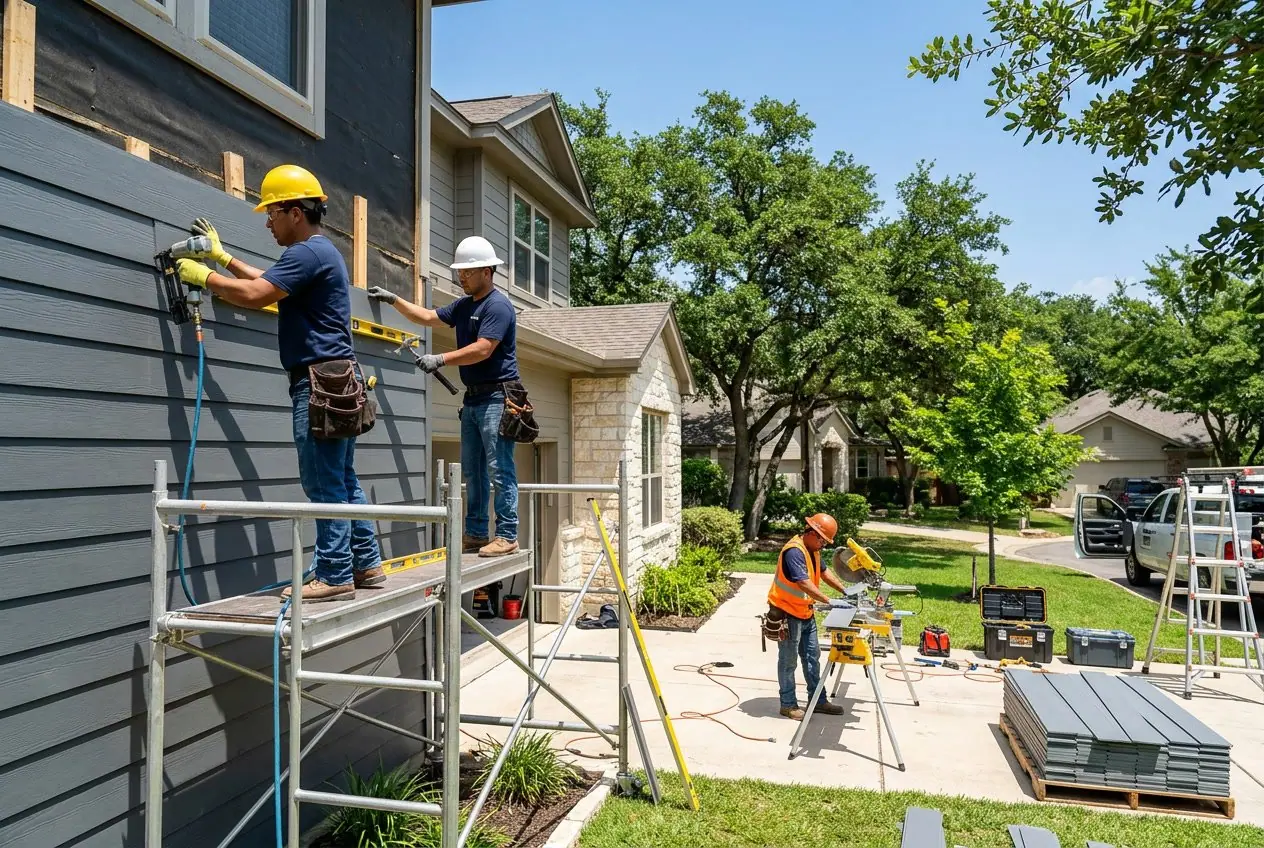
At Barton Creek Siding Experts, we have developed a structured consultation process that transforms the overwhelming experience of siding selection into a clear, confident decision. Here is how we guide Austin homeowners from confusion to completion:
- 01
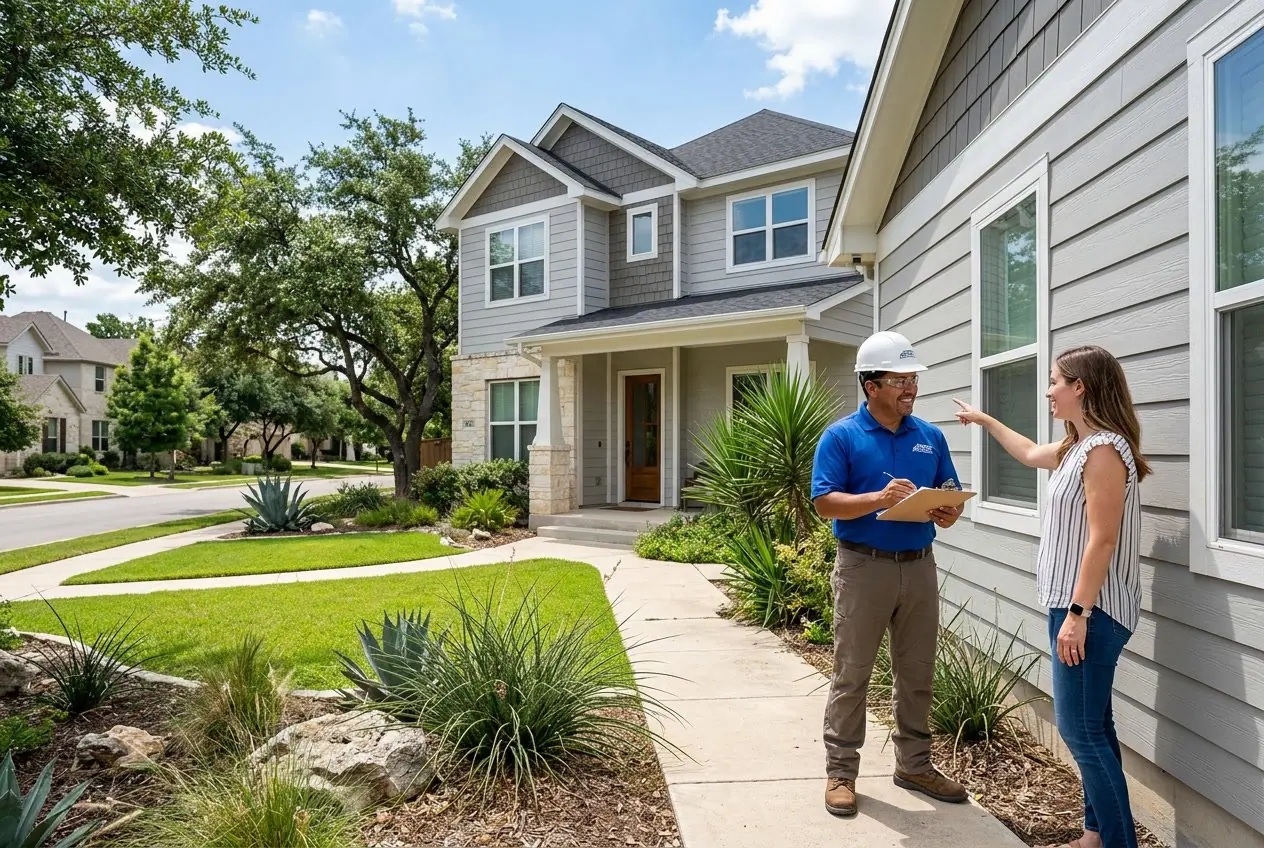
Initial Home Assessment (1–2 Hours)
Our consultant visits your home and conducts a comprehensive exterior evaluation. We document existing siding condition, measure total square footage, identify substrate materials, assess drainage patterns, and photograph all elevations. For homes in wooded ar
- 02
Climate and Exposure Analysis (Same Visit)
We assess your home’s solar orientation, proximity to vegetation, and elevation — factors that are highly variable across the Austin metro. A home in Dripping Springs on an exposed limestone ridge faces dramatically different conditions than a shaded creekside
- 03
Material Matching and Samples (3–5 Days)
Based on your assessment results, we present two to four recommended siding materials with physical samples. We provide side-by-side performance data on UV resistance, impact ratings, moisture resistance, and Austin-specific maintenance requirements for each o
- 04
HOA and Code Review (2–3 Days)
We research any applicable HOA guidelines (common in West Lake Hills, Lakeway, and Circle C Ranch) and Travis County or City of Austin building code requirements relevant to your project, ensuring your chosen material will receive approval without complication
- 05
Detailed Written Estimate (Within 48 Hours)
We provide a comprehensive written estimate including material costs, labor, permit fees, and project timeline — with no hidden fees.
- 06
Scheduling and Material Ordering (1–2 Weeks)
Once approved, we schedule your project around Austin’s weather patterns, avoiding peak storm season windows when possible, and order materials with delivery confirmation.
- 07
Installation and Final Walkthrough
Our crew completes installation per manufacturer specifications, followed by a detailed walkthrough where we explain maintenance requirements specific to your chosen material and Austin’s climate conditions.
Siding Selection Methods and Approaches
Performance-First Selection
This approach prioritizes measurable performance metrics: impact resistance class, R-value, moisture absorption rate, and UV stability. It is the recommended method for homes in exposed areas of Lakeway, Bee Cave, and Dripping Springs where weather extremes are pronounced. James Hardie fiber cement products frequently win this analysis in Austin due to their Class 4 impact resistance and non-combustible composition — an important factor given Central Texas wildfire risk.
Aesthetic and Neighborhood Harmony Approach
Some neighborhoods — particularly historic or architecturally cohesive areas like Rollingwood, West Lake Hills, and parts of South Lamar — require siding choices that conform to established neighborhood character. This method begins with an architectural review and HOA compliance check before material performance is evaluated.
Budget-Optimized Selection
For homeowners with defined budget constraints, we work backwards from total project budget to identify the highest-performing material within that range. Premium vinyl siding products — not to be confused with entry-level vinyl — often deliver excellent performance-per-dollar for Austin homeowners prioritizing value.
Lifecycle Cost Analysis
This method evaluates total 30-year cost of ownership, including installation, maintenance, repainting, and expected replacement cycles. Fiber cement typically outperforms vinyl on a 30-year lifecycle analysis when Austin’s UV and hail exposure are factored into maintenance cost projections.
Insurance Optimization Approach
For homeowners who have filed hail damage claims — particularly common in ZIP codes 78704, 78745, and 78749 following recent storm events — we work with insurance adjusters to identify siding materials that qualify for Class 4 discount credits with major Texas insurers.
Discover why James Hardie siding is a top choice for Austin homes
Siding Cost Information for Austin, TX Homeowners
Understanding realistic cost ranges is one of the most critical components of any siding buying guide. Austin’s construction market carries a cost premium relative to national averages, driven by high demand, labor market competition, and material supply chain dynamics. Here are current, representative cost ranges for the Austin metro:
Material Cost Ranges (Installed, Per Square Foot)
- Vinyl Siding: $5.00–$10.00 per square foot installed. Entry-level vinyl begins around $5.00, while premium insulated vinyl reaches $8.00–$10.00.
- Fiber Cement Siding: $10.00–$16.00 per square foot installed. Standard fiber cement planks fall in the $10.00–$12.00 range; James Hardie ColorPlus products reach $13.00–$16.00.
- James Hardie Siding (Full System): $12.00–$18.00 per square foot installed, reflecting the premium HardieWrap weather barrier, trim integration, and factory finish.
- Board and Batten Siding: $9.00–$15.00 per square foot installed depending on material (vinyl vs. fiber cement vs. engineered wood).
Read moreShow less
Typical Total Project Costs in Austin
- Small home (1,200–1,500 sq ft): $9,000–$18,000
- Medium home (1,800–2,400 sq ft): $14,000–$30,000
- Large home (3,000+ sq ft): $25,000–$55,000+
Austin-Specific Cost Factors
Permit fees in the City of Austin typically add $150–$500 to project costs. Homes on steep limestone lots — common in Barton Creek, West Lake Hills, and Oak Hill — may incur scaffolding surcharges of $500–$2,000. HOA approval processes in communities like Circle C Ranch or Lakeway can add 1–3 weeks to project timelines but rarely add direct cost.
Need repair instead of full replacement? Explore our siding repair services
Austin Neighborhoods We Serve
Barton Creek and West Lake Hills (78746)
These affluent hillside communities feature luxury homes built predominantly from the 1980s through the 2000s on heavily wooded lots. The dense tree canopy creates chronic north-wall moisture problems, making moisture-resistant fiber cement the dominant choice. HOA design standards in both areas require material and color pre-approval.
South Lamar and Zilker (78704)
One of Austin’s most eclectic neighborhoods, South Lamar and Zilker contain a rich mix of 1940s–1960s pier-and-beam bungalows alongside modern infill construction. Older homes here often have original wood siding over aging sheathing, requiring careful substrate assessment before new siding is installed.
Circle C Ranch and Shady Hollow
These planned communities in Southwest Austin, developed primarily in the 1990s and early 2000s, feature large suburban homes with substantial siding square footage. Many homes are approaching their first full siding replacement cycle, making them a primary market for fiber cement upgrades from original vinyl.
Dripping Springs and Bee Cave
These fast-growing communities west of Austin feature new construction alongside older rural homesteads. Wildfire interface considerations make non-combustible fiber cement a particularly important recommendation for homes in these areas.
Siding Maintenance Tips for Austin Homeowners
- Annual pressure washing: Austin’s airborne cedar, oak pollen, and dust accumulate heavily on siding. Rinse all elevations each spring — especially after cedar fever season (December through February) — using a 1,200–1,500 PSI pressure washer at a 45-degree angle.
- Inspect caulking after major storms: After significant hail or wind events, check all caulked joints at corners, windows, and trim for cracking or separation.
- Trim vegetation back 18 inches: Austin’s aggressive live oak and cedar growth means branches and leaves frequently contact siding. Maintain an 18-inch clearance to reduce moisture and abrasion damage.
- Check for pest entry points: Carpenter ants and wasps commonly exploit small siding gaps in Central Texas. Seal any gaps greater than ⅛ inch promptly.
- Repaint wood and fiber cement on schedule: In Austin’s UV environment, painted fiber cement should be recoated every 7–10 years. James Hardie ColorPlus factory finishes are warranted for 15 years.
- Post-freeze inspection: Following any below-freezing temperature event, inspect all siding seams and trim joints for cracking or separation.
- Clean gutters to prevent splash-back: Clogged gutters cause water to overflow and saturate siding at the eave line, accelerating moisture damage particularly on north and east-facing walls.
Learn more about our professional siding maintenance programs in Austin
Why Choose Barton Creek Siding Experts
Barton Creek Siding Experts is a locally operated siding company with deep roots in the Austin, TX community. We are not a national franchise or out-of-state contractor chasing storm work — we are your neighbors, serving homeowners from Dripping Springs to Downtown Austin, from Rollingwood to Sunset Valley.
Our team has hands-on experience with every major siding product category relevant to Central Texas homes: vinyl siding installation, fiber cement siding installation, James Hardie siding installation, board and batten siding installation, and full siding repair, replacement, and inspection services. We understand Austin’s building codes, its soil conditions, its storm history, and its HOA landscape in a way that contractors from outside the region simply cannot replicate.
We provide thorough written estimates with no hidden fees, transparent material sourcing from reputable manufacturers, and honest guidance that matches the right product to your specific home — not the product with the highest margin. When you work with Barton Creek Siding Experts, you get a partner who will still be here in Austin for your next project and ready to stand behind the work we do today.
Call (512) 634-8683 to speak with an Austin siding specialist.
Call (512) 634-8683 to speak with an Austin siding specialist.
FAQ
Frequently Asked Questions: Siding Buying Guides in Austin, TX
What is the best siding material for Austin’s climate?
For most Austin homeowners, James Hardie fiber cement or high-quality fiber cement from comparable manufacturers offers the best overall performance. It resists UV fading in Austin’s intense sun, earns Class 4 impact resistance against hailstorms, tolerates freeze-thaw cycles introduced by events like Winter Storm Uri, and does not rot in the moisture-heavy conditions found in wooded neighborhoods like Barton Creek and Bear Creek. Premium vinyl is a viable second choice for budget-conscious homeowners who select products rated for high UV and impact environments.
How much does new siding cost in Austin, TX?
Costs vary significantly by material and home size. In the current Austin market, vinyl siding installation runs approximately $5.00–$10.00 per square foot installed, while fiber cement ranges from $10.00–$16.00 per square foot. A typical 2,000-square-foot Austin home might expect a total investment of $16,000–$28,000 for a full fiber cement siding replacement, depending on material grade, substrate condition, and site access factors.
Do I need a permit to replace siding in Austin?
Yes, the City of Austin generally requires a building permit for full siding replacement projects. Permit fees typically range from $150–$500 depending on project valuation. Barton Creek Siding Experts manages the permit application process on your behalf as part of our installation service.
How long does a siding installation take in Austin?
For a typical single-family home in the Austin metro, siding installation takes three to seven business days from start to final inspection. Larger homes in communities like Lakeway or West Lake Hills with complex roof lines, multiple stories, or significant trim work may require eight to twelve days. Material lead times, permit processing, and HOA approval can add one to three weeks before installation begins.
Can I get insurance coverage for hail-damaged siding in Austin?
Many Austin homeowners successfully file insurance claims for hail-damaged siding following major storm events. After the March 2022 storms that affected ZIP codes including 78704 and 78745, insurance-funded siding replacements were common throughout South and Central Austin. We work directly with insurance adjusters to document damage and ensure your claim accurately reflects replacement scope and current material costs.
What siding colors are popular in Austin neighborhoods?
Austin’s aesthetic is eclectic. Neutral warm tones — warm grays, creamy whites, and earthy tans — are popular across suburban communities like Circle C Ranch and Shady Hollow. Bolder architectural colors, including deep blues, charcoals, and sage greens, are increasingly common in South Lamar, Zilker, and Downtown Austin infill projects. HOA communities in West Lake Hills and Rollingwood typically restrict palettes to earth tones — always verify with your HOA before finalizing a color.
How do I evaluate siding contractor qualifications in Austin?
Verify that any siding contractor operating in Austin carries current Texas contractor registration, general liability insurance (minimum $1 million per occurrence recommended), and workers’ compensation coverage. Request references from completed projects in your specific neighborhood when possible. Manufacturer certifications — such as James Hardie Preferred Contractor status — indicate verified installation training that protects your product warranty.
How does Austin’s cedar fever season affect siding?
Austin’s infamous mountain cedar pollen season (typically December through February) deposits thick layers of yellow-green pollen on all exterior surfaces, including siding. While pollen itself does not damage siding, it retains moisture against the surface when wet, potentially accelerating biological growth on textured surfaces. An annual spring pressure washing after cedar season ends is a simple, effective preventative step for all Austin homeowners.
Get Your Austin Siding Buying Guide Consultation Today
You do not have to navigate Austin’s complex siding market alone. Whether you are replacing storm-damaged cladding after a Travis County hailstorm, upgrading an aging 1970s ranch home in Oak Hill, or planning a complete exterior transformation for your Lakeway property, Barton Creek Siding Experts has the local knowledge and hands-on experience to guide every step of your decision.
Our consultations are thorough, honest, and tailored to Austin’s specific climate, code, and neighborhood conditions. We serve homeowners throughout Austin, Barton Creek, West Lake Hills, Dripping Springs, Bee Cave, Rollingwood, Zilker, South Lamar, Circle C Ranch, Shady Hollow, Bear Creek, Lost Creek, Sunset Valley, Buda, Lakeway, and surrounding communities.
Call Barton Creek Siding Experts today at (512) 634-8683 to schedule your siding consultation and take the first step toward a more beautiful, better-protected Austin home.
Get in touch
Find siding help near you
Request a free estimate online or give us a call — our team will follow up quickly.
- Call us(512) 634-8683
- Visit7500 Rialto Blvd suite 250 #07, Austin, TX 78735
- HoursMon-Sun: 7:00 am – 7:00 pm