Looking for top-rated siding contractors near you in Austin, TX? You want a team that knows local weather, local codes, and local materials, so your home stays protected and looks great.
Choose contractors with strong local reviews, proper licenses, and experience with popular Austin materials like fiber cement and energy-efficient options to get lasting value.
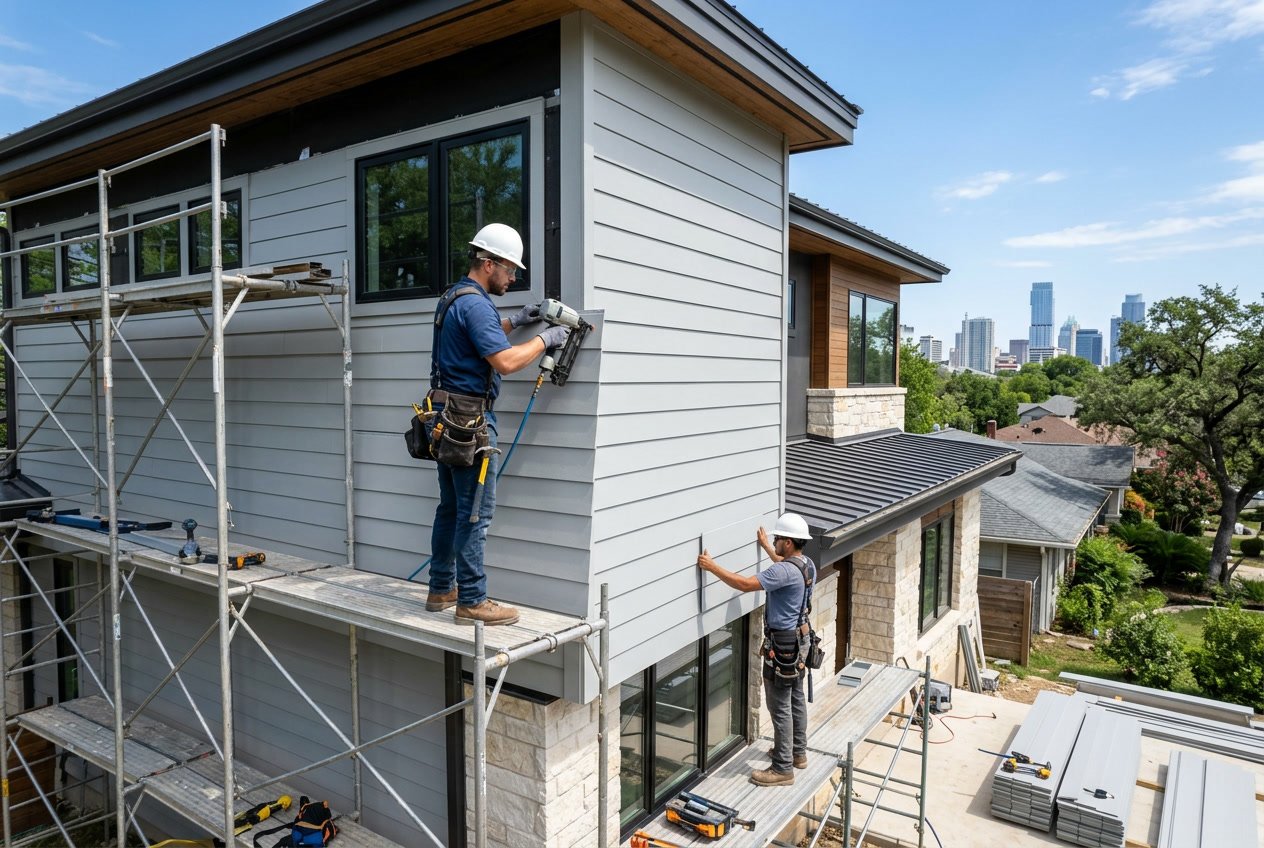
This guide helps you find trusted pros, compare siding types and services, and weigh cost versus long-term benefits. Expect clear tips on vetting companies, what to ask during estimates, and which siding materials match Austin’s climate and style.
Key Takeaways
- Focus on local experience, licensing, and customer feedback when choosing a contractor.
- Match siding material to Austin’s climate and your long-term maintenance plans.
- Compare detailed estimates to balance upfront cost with lasting value.
Choosing the Best Siding Contractors in Austin, TX
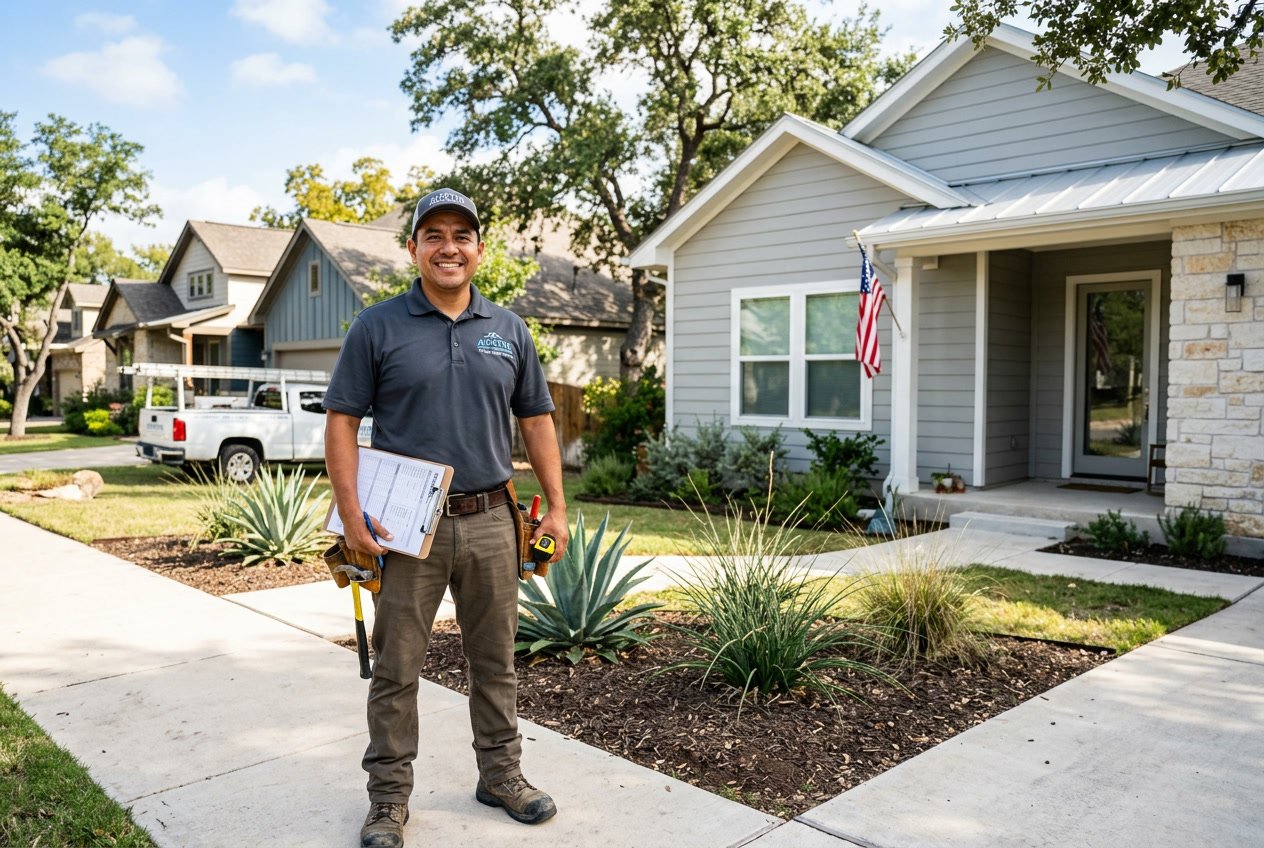
You should focus on proven experience, local credentials, and clear customer feedback when picking a siding contractor. Prioritize companies that show work examples, hold proper licenses, and respond quickly with written estimates.
How to Identify Top-Rated Siding Companies
Look for contractors who show a portfolio of recent Austin jobs. Check for photos of finished siding and before-and-after shots so you can judge workmanship and materials like fiber cement or vinyl.
Ask for references from nearby projects so you can call homeowners in your neighborhood. Verify that the contractor gives a detailed written estimate. It should list materials, brands (for example James Hardie), labor, cleanup, and projected timeline.
A top-rated local siding contractor will explain warranties and change-order rules up front. Use local business lists like YP and Angie’s List, but confirm details on the contractor’s own site or by phone.
That extra step helps you avoid outdated or paid listings.
Importance of Local Experience and Credentials
Choose a siding contractor with specific Austin experience. Local crews know Texas weather, common moisture issues, and code requirements for Travis County.
That knowledge reduces surprises during install. Check for licensing, insurance, and BBB or city trade registrations.
Licensed contractors protect you if damage or accidents occur. Insist on a certificate of insurance and write the contractor’s license number in your contract.
Local experience also ties to supplier access. Contractors based in Austin often work directly with local distributors and can source replacement boards or matching trim faster than out-of-town crews.
Comparing Reviews, Ratings, and Search Results
Read multiple review sources, not just one site. Combine YP, Yelp, Expertise, and Google reviews to get a broad view.
Look for trends: repeated praise for punctuality or repeated complaints about delays. Weigh star ratings against written feedback.
A 4.5-star average with detailed comments about communication and cleanup beats a 5-star listing with no reviews. Pay attention to responses from the contractor—they show how they handle problems.
Use search results to shortlist candidates, then call each one. Ask the same three questions — timeline, warranty, and past local jobs — and compare answers side-by-side to make a clear choice.
Types of Siding and Materials for Austin Homes
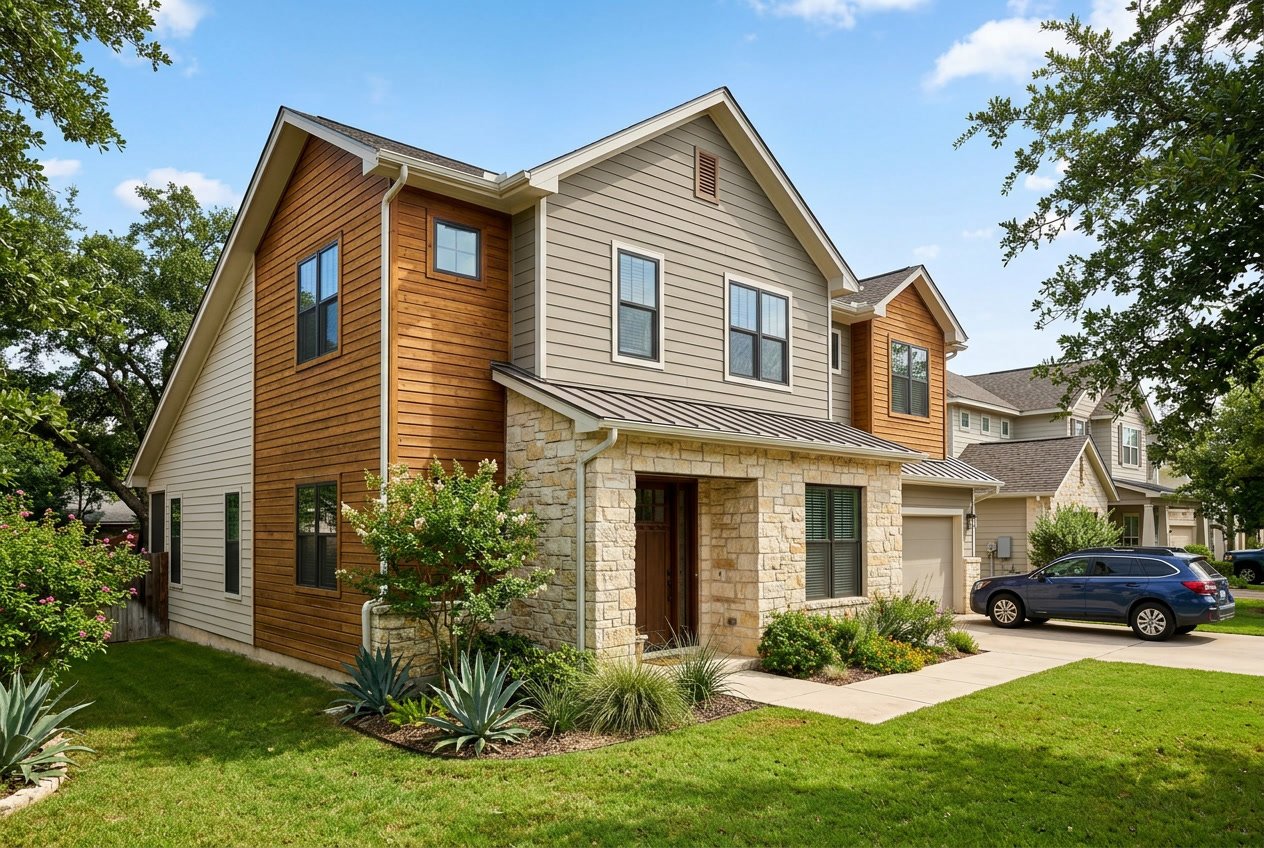
You need siding that stands up to heat, humidity, and occasional storms while matching your budget and style. Below are practical options, key benefits, and what to expect for installation and maintenance.
Fiber Cement Siding and Its Advantages
Fiber cement siding, like James Hardie siding, mixes cement, sand, and cellulose fibers. It resists rot, termites, and warping, so it holds up in Austin’s heat and humidity better than many wood products.
You’ll get good fire resistance and strong color retention. Expect higher upfront material and installation costs, but lower long‑term maintenance.
Professional siding installation matters: proper flashing, sealing, and trim work prevent moisture issues and protect warranties. If you want a wood look without constant painting, fiber cement gives you that option.
It’s heavier than vinyl, so installers need the right tools and experience to fit and fasten panels correctly.
Popular Siding Materials: Vinyl, Wood, and More
Vinyl siding stays popular because it’s low cost and low maintenance. It resists pests and doesn’t need painting, but extreme heat can cause fading or slight warping over many years.
Choose thicker panels and UV‑resistant finishes for Austin. Wood siding looks warm and classic.
Cedar and redwood offer natural decay resistance, but you must plan for regular painting or staining and termite checks. Wood can raise resale value when kept in good shape.
Metal siding and engineered wood (like modern composite boards) give durability and modern looks. Metal is fire‑resistant and low maintenance.
Engineered wood can mimic real wood with less rot risk. Ask your siding installer about product warranties and local performance history.
Climate Considerations for Siding Choices
Austin’s climate means you must prioritize moisture control and UV resistance. Pick materials that resist swelling and rot, and insist on a well‑installed weather barrier during siding installation.
Insulation and ventilation behind the siding improve energy efficiency. Consider adding a foam backer or continuous insulation if you want lower cooling costs in summer.
Also check hail and wind ratings for products. High winds and occasional hailstorms can damage thin materials, so choose siding with proven impact resistance and install it with secure fastening patterns recommended by the manufacturer.
Comprehensive Siding Services and Related Exterior Solutions
This section explains the siding options, the step-by-step installation and replacement work, and the common exterior upgrades contractors offer. You’ll learn how contractors handle material choice, timing, cost drivers, and linked services like roofing, windows, and gutters.
Siding Installation and Replacement Process
Contractors start with a full inspection of your exterior to find rot, water damage, and insulation gaps. Expect a written estimate that lists material (vinyl, fiber cement/Hardie, wood, or stone veneer), labor hours, and disposal fees.
Prepping includes removing old siding where needed, repairing sheathing, and installing a weather-resistant barrier and flashing. Proper flashing and a drainage plane prevent leaks around windows and at rooflines.
Installation typically follows manufacturer spacing and fastener specs. For fiber cement, crews cut boards with special blades and use corrosion-resistant nails.
For vinyl, they leave expansion gaps. Final steps include trim, caulking around penetrations, painting or finishing if required, and a cleanup.
Ask for a written warranty and product certificates before work begins.
Additional Services: Roofing, Windows, and Gutters
Many siding contractors also handle roofing, window replacement, and gutter work so you get coordinated exterior solutions. Roofing services cover shingle replacement, underlayment upgrades, and flashing work where roof meets siding.
This reduces risk of water intrusion at those junctions. Window replacement work includes measuring, installing new frames or retrofitting existing openings, and sealing with proper flashing tape.
New windows improve energy performance and reduce drafts. Gutter and downspout services include sizing to match your roof run, adding leaf guards, and installing splash blocks or extensions to move water away from foundations.
Coordinating these trades saves time and limits rework on overlapping details.
Exterior Remodeling and Home Upgrades
Contractors can combine siding with broader exterior remodeling like trim replacement, porch and deck siding, and exterior painting or CoolWall-type coatings that reflect heat. You can upgrade to fiber cement or engineered wood for longer life and better curb appeal.
Exterior remodeling often includes addressing underlying home construction issues—rot repair, sheathing replacement, and insulating behind new siding. That work improves durability and energy efficiency.
Ask for project timelines, staging plans, and how crews protect landscaping and outdoor fixtures. A clear scope and phased schedule help you avoid surprises and keep the project on budget.
Cost, Value, and Long-Term Benefits
You will see costs that vary by material, labor, and the condition of your walls. Investing in higher-quality siding can lower future repairs, cut energy bills, and boost curb appeal for resale.
Average Siding Costs in Austin, TX
Expect typical project quotes in Austin to range by material and home size. Vinyl siding often runs $4–$8 per square foot installed.
Fiber cement usually costs $7–$12 per square foot. Engineered wood sits between $6–$10.
These ranges include basic labor but not major repairs. Older homes in central Austin or on hilly lots may add $1–$3 per square foot for demolition, disposal, or repairing water damage.
If you want added insulation (rigid foam or insulated siding), budget another $1–$3 per square foot. Get at least three quotes — include local firms like Texas Home Improvement or Tex Land Construction when comparing prices and warranties.
How Siding Enhances Curb Appeal and Home Value
New siding changes how buyers see your home the moment they pull up. Clean, uniform siding reduces perceived maintenance risk and can raise resale value by thousands depending on material and neighborhood.
In Austin neighborhoods with strong curb appeal, tasteful fiber cement or high-end vinyl often gives the best buyer return. Use consistent trim, quality paint or factory color, and proper flashing to avoid visible gaps or stains.
Contractors experienced with Austin weather — including firms known locally, such as Tex Land Construction — help you choose colors and textures that match neighborhood standards and boost listing photos.
Warranty, Maintenance, and Longevity of Siding
Look for manufacturer warranties and a written installer warranty. Vinyl warranties commonly cover fading or cracking for 20–40 years; fiber cement often carries 25–50 years.
Installer workmanship warranties usually run 1–10 years. Ask Texas Home Improvement or any contractor for a copy of both warranties before you sign.
Maintenance needs differ by material. Vinyl requires occasional washing and fastener checks.
Fiber cement needs repainting every 10–15 years but resists rot and insects. Engineered wood needs periodic sealing but less than natural wood.
Keep gutters clear and trim landscaping away from siding to extend life and protect your warranty.
Frequently Asked Questions
This section answers practical questions about siding choices, timing, contractors, selection criteria, maintenance, and local rules specific to Austin and Central Texas. You will find clear, actionable details you can use when planning a siding project.
What are the best types of siding materials for Austin’s climate?
Fiber cement resists heat, moisture, and pests. It holds paint well and can mimic wood grain.
Vinyl is low‑maintenance and affordable. Choose thicker, UV‑resistant vinyl rated for Texas sun to avoid fading or warping.
Engineered wood gives a wood look with better rot and insect resistance than natural wood. It still needs periodic painting or sealing.
Metal siding (aluminum or steel) stands up to hail and sun. Look for coatings that resist corrosion and reflect heat.
How long does siding installation typically take for an average-sized home?
Most average single‑family homes take about 3 to 7 days for full siding replacement. Factors include house size, number of stories, and complexity of trim or windows.
Removal of old siding can add a day or two. Weather delays or custom work may extend the schedule.
Can you recommend some top-rated siding contractors in the Austin area?
Look for contractors listed on local directories like Yelp, Angi, BBB, and Houzz for current ratings and reviews. These sites show customer feedback, photos, and contact info.
Also consider firms ranked by local editorial lists or directories that update for 2026. Check licenses, insurance, and proof of recent Austin projects before hiring.
What should I look for when choosing a contractor for siding replacement?
Verify a current Texas contractor license and proof of insurance. Ask for at least three local references and recent project photos.
Request a written estimate that lists materials, labor, cleanup, and warranty terms. Confirm the warranty covers both materials and workmanship.
Check how the contractor handles old siding disposal and site protection. Ask about daily cleanup.
Clear communication and a written timeline reduce surprises.
How often should siding be replaced or maintained in Central Texas?
Inspect siding at least once a year, especially after storms. Look for cracking, warping, loose panels, and faded paint.
Vinyl and metal can last 25–40 years with little maintenance. Fiber cement and engineered wood often last 30–50 years with proper care.
Paint or seal wood and engineered wood every 5–10 years as needed.
Are there any local regulations in Austin regarding siding installation I should be aware of?
Check Austin Energy and the City of Austin permit portal for permit requirements on exterior work. Replacing siding sometimes needs a building permit, especially if you change wall openings or insulation.
If you live in a historic district or under an HOA, review local design rules and approval steps before work begins. Ask your contractor to pull permits and provide documentation.