You can find vinyl siding in Austin at major supply stores, local siding specialists, and national brands that serve the area. For the best mix of selection, price, and professional service, check big-box suppliers like Lowe’s, local installers such as Titan Siding or Ace Siding, and manufacturers with local dealers for warranties and color options.
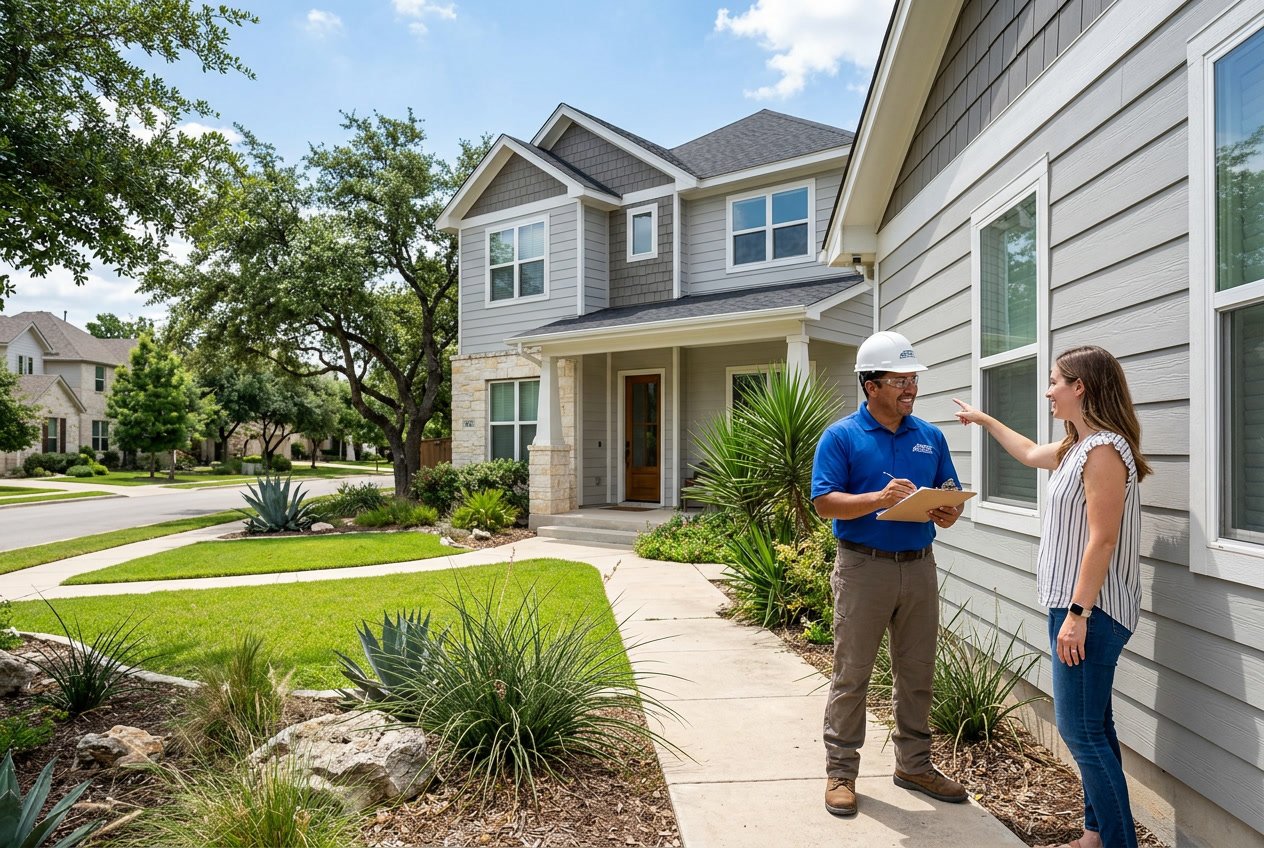
This guide helps you compare where to buy vinyl siding, what to ask about warranties and financing, and how to match styles and materials to your home. Use the tips here to save time and avoid costly mistakes when picking products and contractors.
Key Takeways
- Look at big suppliers, local contractors, and manufacturer dealers to compare options.
- Match siding type and color to your home and confirm warranty details.
- Get quotes for materials and installation, and ask about payment or financing options.
Best Places to Buy Vinyl Siding in Austin
You can shop locally for contractor-grade siding, visit big-box stores for wide selection and pickup, or order specialty brands online for delivery to Austin. Consider price, available profiles, color matching, and whether you need installation help.
Top Local Suppliers
Local suppliers often carry contractor-grade vinyl siding and can help match color and profile to your home exterior. Look for companies that stock brands like James Hardie alternatives and high-quality vinyl profiles, and that offer on-site color samples so you can see finishes in Austin sunlight.
Ask about cut-to-length services, delivery to your job site, and whether they provide leftover panels for future repairs. Local suppliers may also connect you with installers who know Austin building codes and typical weather issues like high heat and humidity.
Check reviews for response time and whether they handle warranty paperwork.
Major Retailers and Showrooms
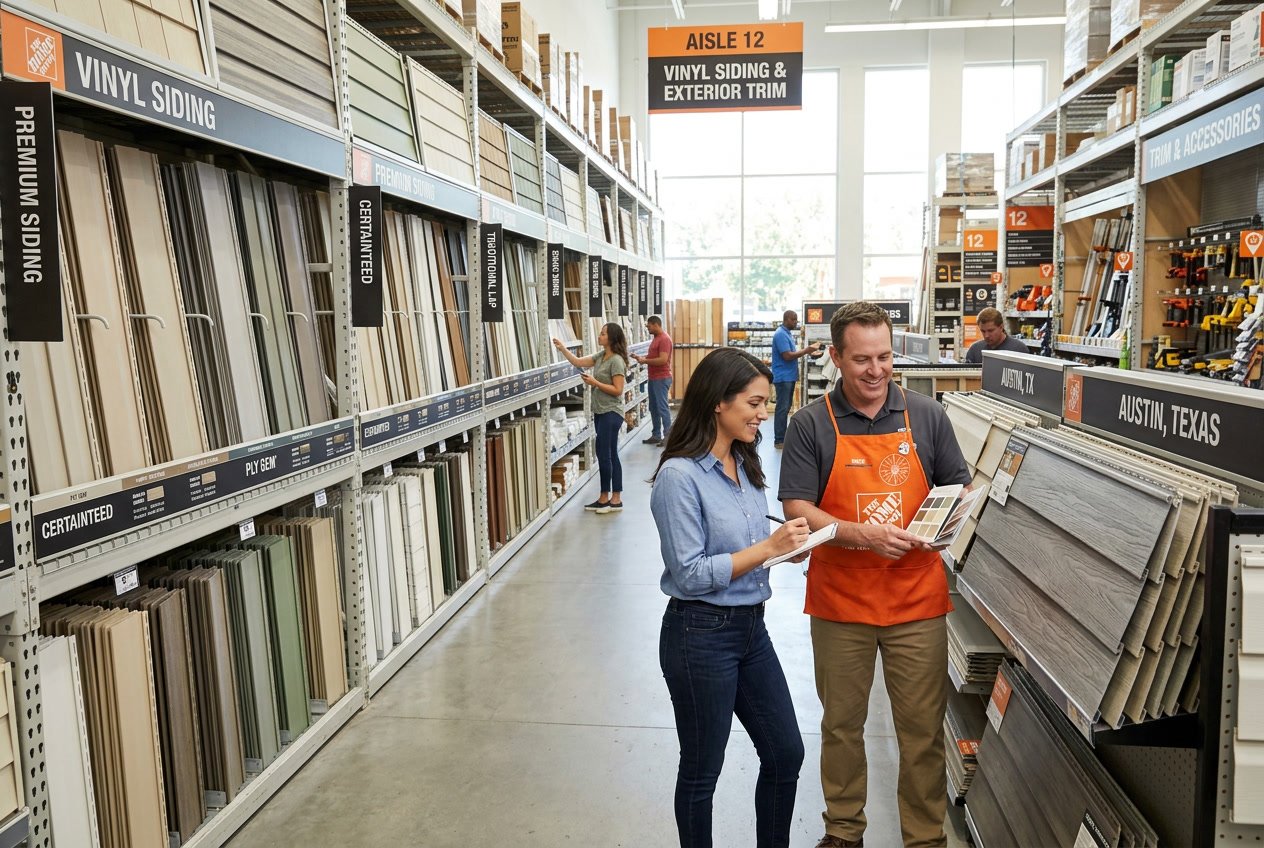
Big-box stores such as Lowe’s and The Home Depot in Austin carry a broad range of vinyl siding brands, colors, and accessory pieces. You can order online and pick up in store, or use their delivery services for larger orders.
These retailers often show full displays so you can compare lap, panel, and shingle styles side-by-side. Showrooms and larger local chains may offer visualizer tools, free estimates, and installation services.
They are a good option if you want one-stop shopping: materials, trim, fasteners, and insulation. Watch for seasonal sales and bulk discounts to lower your per-foot cost.
Online Siding Providers Serving Austin
Online suppliers expand your choices to specialty vinyl siding and premium color lines that local stores may not stock. Many offer free color sample kits, shipping to Austin, and clear return policies.
Use sites with product specs, UV-resistance data, and customer photos to evaluate durability for Texas sun. If you order online, confirm lead times and delivery to your address or contractor.
Compare warranties and whether the manufacturer handles claims directly. For complex installs, coordinate with your contractor so they receive materials in the right sequence and avoid delays on your home exterior project.
Choosing the Right Vinyl Siding for Your Home
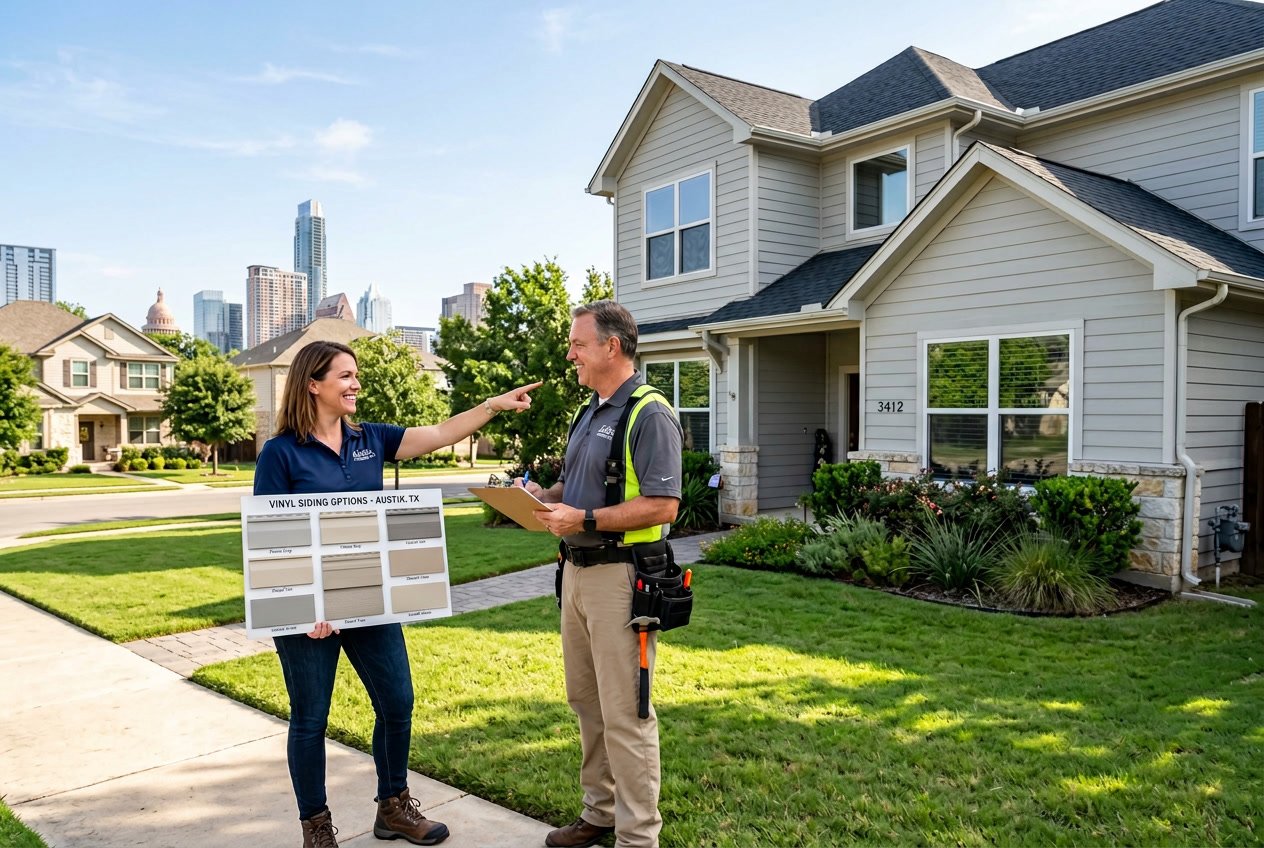
You’ll need to match siding type, color, and quality to Austin’s heat, storms, and your home’s style. Focus on durability, ventilation, and how the siding will age in sun and humidity.
Types and Styles of Vinyl Siding
Vinyl siding comes in several profiles that change your home’s look and performance. Common choices are:
- Lap (beaded or Dutch lap): Horizontal boards that mimic traditional wood. Good for most Austin homes and sheds rain well.
- Shake and shingle: Imitates cedar shake for a craftsman or cottage look. Expect a higher price and more accent use.
- Board-and-batten: Vertical panels that give a modern farmhouse feel. Use on full walls or as an accent.
- Insulated panels: Foam-backed panels add R-value and reduce heat transfer and noise.
Pick a profile that fits your roofline and trim. Measure exposure to sun on south- and west-facing walls when choosing thicker or insulated options.
Color and Texture Options
Color choice affects heat absorption and curb appeal. Lighter colors reflect heat and help keep attic and wall temperatures lower in Austin summers.
Dark colors absorb more heat but can be used on shaded facades or accents. Textures include smooth, low-gloss, and wood-grain.
Wood-grain hides minor dents and looks more natural, while smooth is modern and easier to clean. Check fade warranties and request color samples in direct sunlight.
Match trim and soffit colors for a cohesive look, and consider UV-resistant coatings if your house gets long sun exposure.
Premium vs Standard Vinyl Siding
Standard vinyl panels are thinner and cost less. They work well on budget projects and simple replacements.
Expect basic durability, a limited warranty, and fewer color or texture options. Premium siding offers thicker vinyl, better impact resistance, and options like foam insulation or advanced UV stabilizers.
These products resist warping in high heat and often carry longer warranties. Choose premium if your home faces severe sun, wind, or hail, or if you want a higher-end appearance that still lowers maintenance needs.
Ask suppliers about local performance data and warranty terms before you buy.
Vinyl Siding Installation and Services in Austin
You will learn how to choose contractors, what to expect during installation, when to repair or replace siding, and how vinyl compares with fiber cement.
How to Select Siding Contractors
Check licenses and local reviews for Austin-area contractors. Look for a Texas Residential Construction Commission (TRCC) or city license where required, and read recent customer feedback on projects like full installs or hail repairs.
Ask for three written bids that list materials, labor, warranties, and cleanup. Confirm the vinyl brand, profile, and whether insulated siding or house wrap is included.
Request proof of insurance, a worker’s comp policy, and references from homes in similar neighborhoods (East Austin, West Lake Hills, Mueller). Verify timelines, change-order rules, and permit handling.
Get a clear warranty: material, installation, and labor durations. If you plan insurance claims after storm damage, choose a contractor experienced with insurance estimates and documentation.
Siding Installation Process
A standard vinyl siding install starts with an on-site inspection to check sheathing, flashing, and trim. Contractors remove old siding as needed, install weather-resistant barrier and flashing, and correct any rotted sheathing before new panels go up.
Panels are hung with slotted nails to allow movement; proper expansion gaps and lighter colors reduce heat-related buckling in Austin. Insulated vinyl adds foam backing that improves rigidity and energy performance but raises cost and installation time.
Expect a 3–7 day timeline for most single-family homes, longer for large or complex roofs and elevations. Final steps include trim sealing, cleanup, and a walk-through to document expansion clearance and fastener placement for warranty compliance.
Vinyl Siding Replacement and Repairs
Repair small hail cracks or split panels by replacing affected sections and resealing trim. For isolated damage, partial replacement limits cost and preserves matching profiles when you can source the same color and embossed texture.
Replace full elevations or old, warped siding when you see widespread buckling, moisture stains, or repeated heat warping. Upgrading to insulated vinyl or changing to a lighter color can reduce future thermal movement and lower cooling loads.
For storm claims, photograph damage, get an itemized contractor estimate, and keep receipts. Hire contractors who coordinate with adjusters and use matching trim, house wrap, and flashing to prevent water intrusion after repairs.
Comparing Vinyl Siding and Fiber Cement Siding
Vinyl costs less per square foot and installs faster, which often makes it the budget-friendly choice for Austin projects. It resists rot and needs little painting, but it can warp in extreme heat and crack from large hail.
Fiber cement is heavier, more impact resistant, and holds paint longer. It performs better against hail and UV but costs more and requires skilled installers to prevent moisture problems at seams and joints.
Choose vinyl if you want lower cost, fast installation, and low maintenance. Choose fiber cement if you need higher impact resistance, longer life under UV and hail exposure, and are willing to pay more and accept occasional repainting.
Pricing, Financing, and Warranties
Expect vinyl siding prices, common payment choices, and warranty types you’ll see from Austin suppliers and installers. Know typical cost ranges, how financing works, and what warranties cover so you can compare bids and protect your investment.
Average Costs in Austin
Vinyl siding in Austin commonly ranges from about $6 to $12 per square foot installed. Lower-end vinyl materials and basic labor often land near $6–$8 per sq ft, while thicker or premium profiles push toward $10–$12 per sq ft.
For an average 2,000–2,500 sq ft home, that means roughly $12,000 to $30,000 total, depending on trim, removal of old siding, and any sheathing repair. Ask each contractor for a line-item estimate showing material, labor, removal, disposal, and permit costs.
Get at least three bids so you can compare price per square foot and specific brand names. Remember seasonal demand and project complexity (stories, trim detail, windows) can raise the final cost.
Financing and Payment Plans
Many Austin siding companies and big retailers offer multiple payment options. You’ll commonly find:
- Zero-interest promotional plans for limited terms from retailers or financing partners.
- Low-interest loans through home improvement lenders or third-party platforms.
- In-house financing with monthly payment plans from some contractors.
Ask about credit requirements, down payments, and whether prequalification affects your credit score. Check the total cost over the life of the loan, not just the monthly payment.
Also confirm timing: some contractors require a deposit (often 10–30%) and final payment after completion and inspection.
Product and Installation Warranties
You should get two warranty types: product warranty from the vinyl manufacturer and labor/workmanship warranty from the installer. Manufacturer warranties often cover fading, cracking, and defects and can range from 20 years to lifetime for premium vinyl.
Read exclusions—wind, hail, and improper installation are commonly limited. Installer warranties vary.
Local Austin contractors may offer 5–25 year workmanship warranties; some provide lifetime labor guarantees. Make warranty terms part of your contract.
Insist on written warranty details: what’s covered, who pays shipping or removal, and how claims are handled. Keep receipts and photos to speed any future claim.
Frequently Asked Questions
This section gives specific, local answers about where to buy vinyl siding, delivery options, color trends, manufacturers serving Austin, and simple cost math. Use these points to compare suppliers, plan a purchase, and estimate materials and labor.
Where can I find a reputable vinyl siding supplier in Austin, TX?
Look at local building-supply stores and siding specialty dealers in Austin and nearby suburbs. Lowe’s on Brodie Lane and independent siding suppliers in Barton Creek and Mueller are common choices.
Check customer reviews on Yelp and local directories. Ask for proof of liability insurance, manufacturer certifications, and a written warranty before you buy.
Are there any online stores offering vinyl siding delivery to Austin?
Yes. Major retailers like Lowe’s and specialty siding suppliers offer delivery to Austin addresses.
Some manufacturers and regional distributors also ship panels and accessories directly to job sites. Confirm delivery lead times and freight costs before ordering.
Ask if the supplier will palletize and protect materials for Texas weather and road handling.
What are the current popular vinyl siding colors available in Austin?
Light neutral colors sell well because they reflect heat; popular choices include beige, light gray, and warm off-white. Mid-tone grays and muted tans also remain common, especially for modern and transitional homes.
Avoid very dark colors on south- or west-facing walls, since they absorb more heat and can raise the risk of warping.
Can you list the top vinyl siding manufacturers servicing the Austin area?
Look for national brands with regional distribution: CertainTeed, James Hardie (for fiber cement alternatives), and Alside often service Austin through local dealers. Regional distributors also carry brands like Mastic and Royal Building Products.
Ask suppliers which manufacturer warranties apply in Texas and how claims are handled locally.
How do I calculate the cost of vinyl siding for my home in Austin?
Measure the exterior wall area in square feet by multiplying the length and height of each wall. Subtract the areas for windows and doors.
Multiply the net square footage by the installed price per square foot to estimate total cost.
Use a local installed price range of roughly $7–$12 per square foot as a starting point. Add costs for removal of old siding, trim work, and any insulation or house wrap you plan to install.
What should I consider when looking for cost-effective vinyl siding options?
Factor material cost, installation quality, and expected lifespan—not just the lowest price.
Insulated vinyl costs more up front but can lower cooling loads in Austin’s heat.
Compare quotes that include removal, disposal, flashing, and trim.
Check local warranty terms and whether the installer is certified by the manufacturer.