
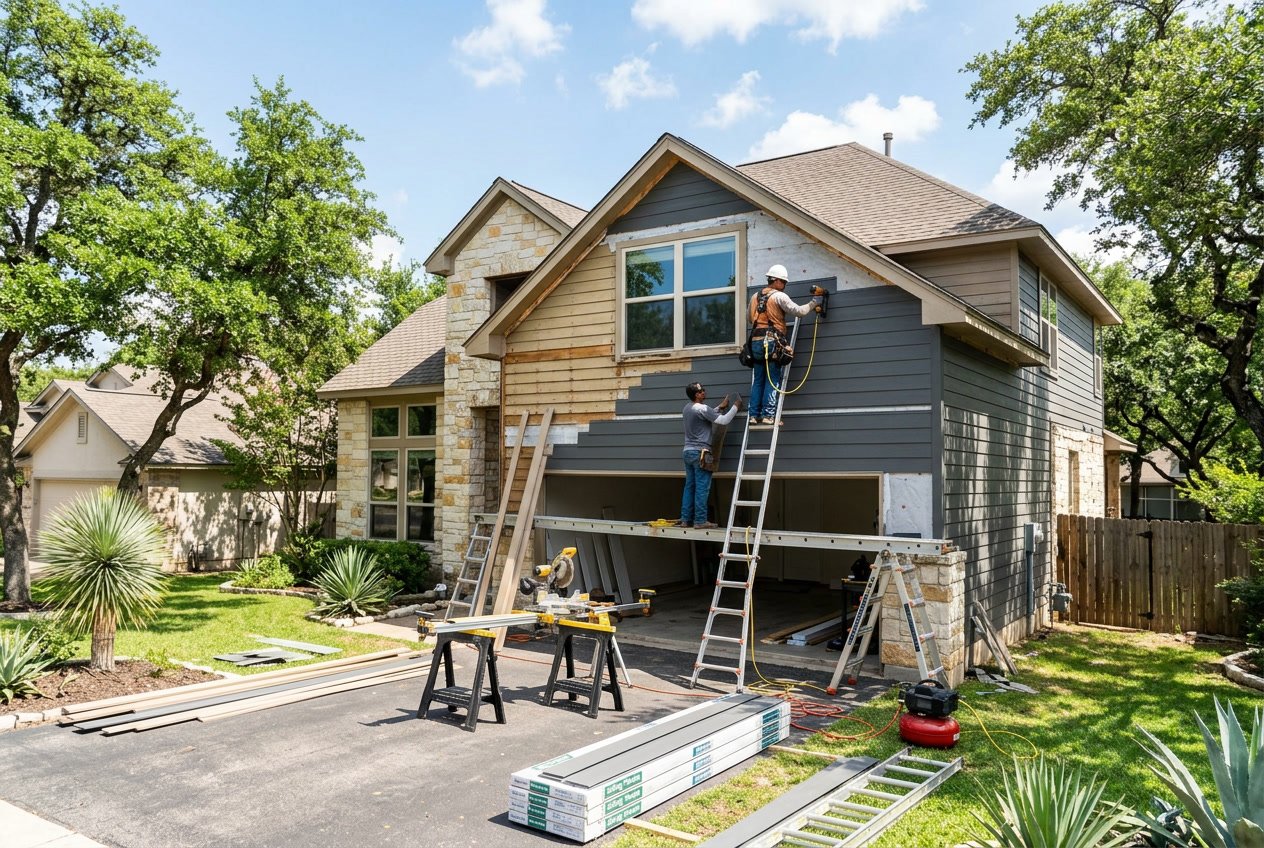
You want a clear answer fast: for a typical 2,000 sq. ft. home in Austin, expect about 2–4 weeks from first estimate to final cleanup, with the actual installation often taking 1–2 weeks.
Plan extra days for material delivery, weather delays, and any hidden repairs found under old siding.
Knowing the likely timeframe helps you schedule visitors and coordinate other projects.
You’ll learn which materials and house factors speed things up or slow them down, so you can pick the right contractor and timing for your neighborhood.
Key Takeaways
- Expect a 2–4 week total project timeline for an average Austin home.
- Weather, materials, and hidden damage often change the schedule.
- Good planning and the right contractor keep the job on track.
What to Expect During a Siding Replacement in Austin
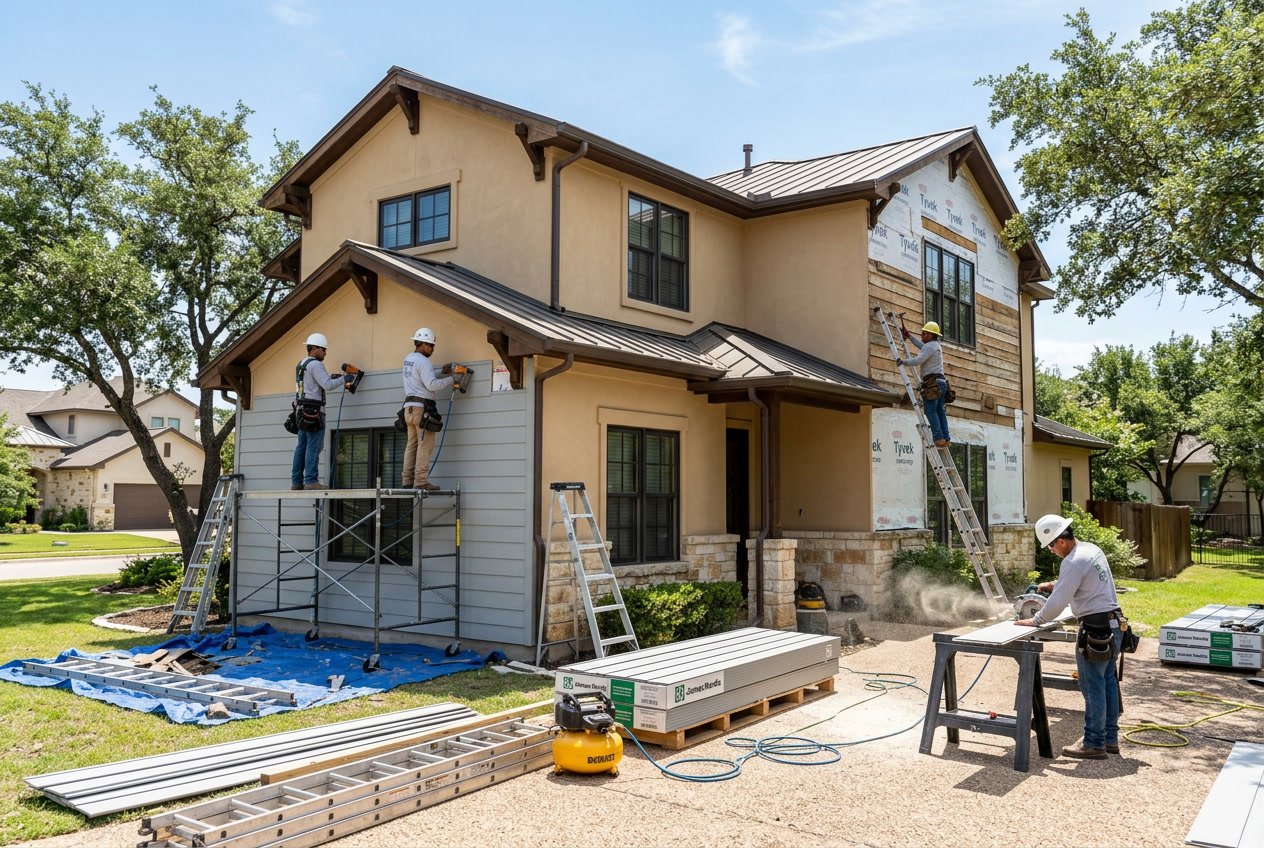
You will see a clear sequence of steps, planned timing, and specific contractor tasks.
Expect inspections, permit checks, a coordinated schedule with roof or trim work, and focused cleanup each day.
Overview of Typical Project Timeline
A typical residential siding replacement in Austin runs from 5 days to 3 weeks, depending on house size and hidden damage.
Small single-story homes with no sheathing repairs often finish in about a week.
Larger homes, multi-story jobs, or projects that find rotten sheathing or need permit waits can stretch to 2–3 weeks.
Work usually follows this order: final measure and materials delivery, tear-off, sheathing inspection and repair, weather barrier and flashing, siding installation, trim and caulking, then paint or finish.
Weather delays, material lead times, and city permit processing are the most common causes of extra days.
Your siding contractor should give a written schedule and update you if repairs add time.
Essential Phases: Consultation to Completion
Start with a consultation and written estimate that lists materials, labor, warranty, and timeline.
Contractors will inspect for hidden rot, insulation needs, and flashing details during this visit.
After you accept the bid, expect permits (if required) and a material order; vinyl arrives quickly, fiber cement and engineered products may take longer.
On-site, crews set up protection for landscaping and windows.
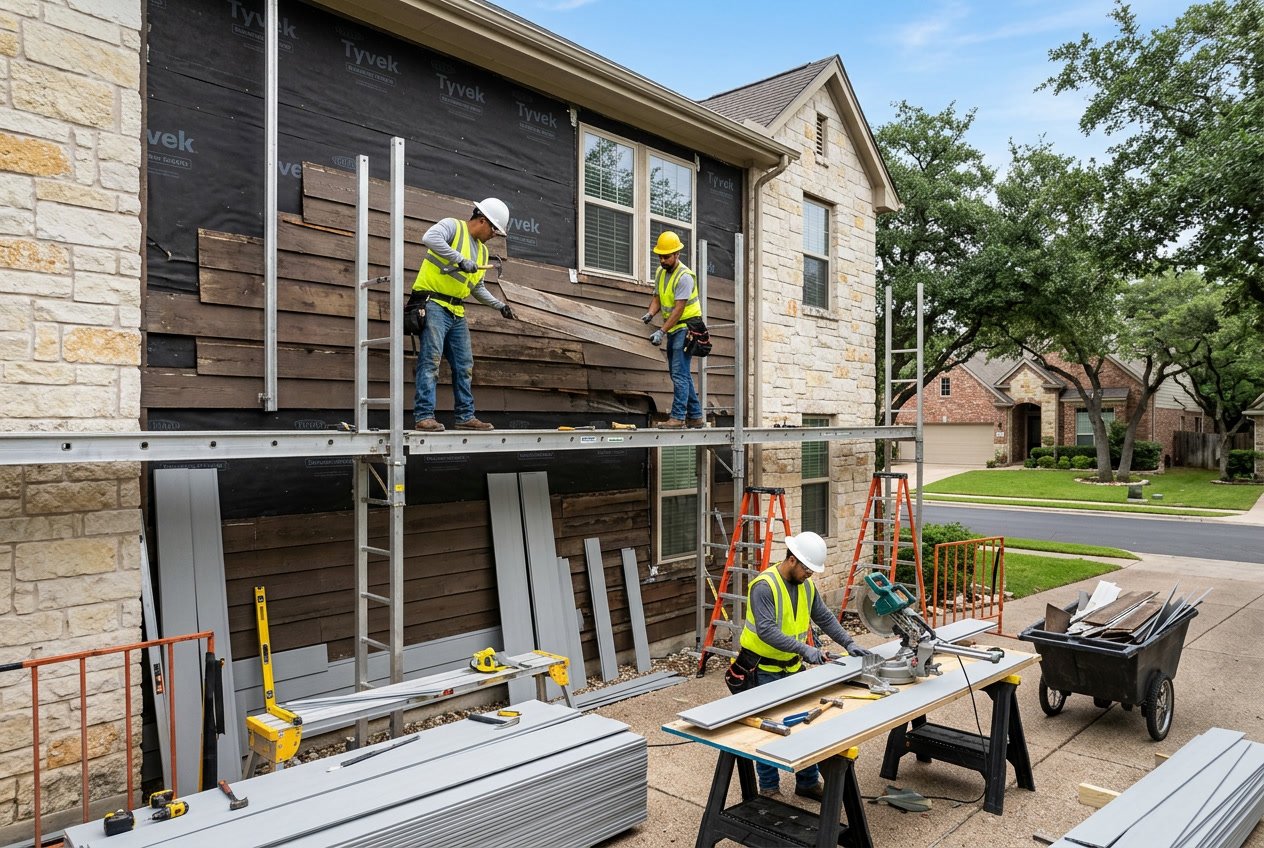
The tear-off phase exposes the sheathing; if rot or mold appears, the contractor will quote repairs before proceeding.
Next, crews install a weather barrier, flashing, and trim, then the siding panels or boards.
Final steps include trim painting or finish, gutter reattachment if removed, and a walkthrough to confirm nail patterns, seams, and caulk lines meet the spec.
Key Roles of Siding Professionals
Your siding contractor manages scheduling, permits, and quality control.
A project lead coordinates crews, inspects repairs, and keeps you informed about timeline changes.
Installers do the physical work: tear-off, sheathing repair, flashing, and siding installation following manufacturer instructions.
A separate estimator or salesperson should produce the detailed scope and warranty terms.
If you hire subcontractors for trim painting or roofing, the siding contractor often coordinates timing.
Ask for credentials, proof of insurance, and references.
You should expect daily cleanup, protected walkways, and a final inspection report showing installed material types, fastener spacing, and any warranty registrations.
Critical Factors Impacting Siding Replacement Duration
Several key elements determine how long your siding project will take: the total siding area and home layout, the siding materials you choose and their lead times, and Austin’s weather windows.
Each factor affects labor time, repair needs, and scheduling.
Home Size and Siding Area Considerations
The total siding area directly sets how many panels and how much labor you need.
A single-story, 1,200 sq ft home with about 1,800 sq ft of wall siding typically takes less time than a two-story 2,800 sq ft home that may require 3,500+ sq ft of siding.
More square footage means more cutting, fastening, and finishing around corners and openings.
Complex rooflines, bay windows, many gables, or numerous small windows increase cutting and trim work.
If you plan window replacement at the same time, expect extra time for removing and flashing around openings.
During your siding consultation, ask for an itemized siding area measurement and a clear plan for trim and flashing to avoid surprise delays.
Material Selection and Availability
Your siding material controls both on-site installation speed and delivery lead time.
Vinyl installs fastest because it’s lightweight and easy to handle.
Fiber cement (including Hardie siding) takes longer: panels are heavier, need precise cutting, and often require two installers per piece.
If you pick Hardie or fiber cement, build extra days for cutting, priming exposed edges, and slower fastening.
Custom colors, specialty profiles, or backorders add lead time.
Ask contractors during consultation about current material stock and typical lead times.
If you choose to replace windows too, coordinate material deliveries so siding and window crews arrive in the same window to avoid rework and extended schedules.
Weather and Seasonal Timing
Austin’s spring storms and summer heat affect installation pace and crew safety.
High heat can slow crews—fiber cement adhesives and paints also cure differently in hot weather.
Rain delays most siding work because wet sheathing can hide damage and prevent proper sealing.
Plan installations in late spring or fall when you usually get more stable, mild weather.
Contractor scheduling matters during peak seasons.
Late winter and early spring are busy, so lead times for experienced crews lengthen.
Confirm weather contingency days in your contract and ask how crews handle sudden rain or a multi-day heatwave to keep your timeline realistic.
Detailed Siding Replacement Process Steps
This section walks you through the specific actions, decisions, and checks you’ll see during a siding replacement.
It focuses on timelines, who does what, and the key water-management and structural points that affect schedule and cost.
Initial Siding Consultation and Estimates
Your contractor will start with an on-site consultation to measure, inspect, and document existing conditions.
Expect a visual check for rot, insect damage, flashing condition, window and door trim, and roofline interfaces.
The inspector will note siding type, layers to remove, and any visible water stains behind trim or soffits.
You’ll receive a written estimate that lists material types (vinyl, fiber cement, engineered wood, or natural wood), labor hours, disposal fees, and an estimated start date.
Ask for a breakdown of water-management details: new house wrap, flashing upgrades, and drip edges.
Get the proposed crew size and a timeline for material delivery, since backorders on fiber cement can delay start dates.
Siding Removal and Structural Assessment
On demo day, crews remove old siding in sections to control dust and debris.
If you have multiple layers, removal takes longer and can reveal hidden issues like rot, mold, or damaged sheathing.
Crews will flag any structural repairs and provide a change-order estimate before proceeding.
You should watch for replaced sheathing, sealed seams, and termite or water-damage documentation.
Proper water management begins at this stage: installers will check existing flashing at windows, doors, and roof junctions.
If they find compromised flashing or rotted framing, plan for 1–5 extra days depending on the scope and permit needs.
Professional Siding Installation Overview
Installers first apply or repair the weather-resistive barrier (house wrap) and install or upgrade flashing around all penetrations.
This layer controls water and air infiltration, so make sure your contract specifies material type and number of taped seams.
Crews then fasten siding panels or boards per manufacturer specs, keeping nailing patterns, expansion gaps, and corner trim consistent.
Expect the crew to work in zones — starting from one elevation and moving around the house — to keep alignment tight.
For fiber cement, count on slower cuts and handling; vinyl moves quicker because of larger panels.
Your contractor should show you sample fasteners, corner details, and how they seal transitions to windows, doors, and trim to protect against water intrusion.
Inspection, Finishing, and Jobsite Cleanup
After siding goes up, crews install trim, soffit details, and any required drip edges or kick-out flashing.
They will caulk joints at windows and doors and apply sealants where siding meets different materials.
Final painting or touch-ups happen now if you chose a product that requires finish work.
Your contractor conducts a walk-through and a final inspection checklist covering flashing, fastener placement, and finish quality.
Ask for photos of hidden work—like replaced sheathing or new flashing—and keep warranty documents.
Crews then remove scaffolding, haul away debris, and clean landscaping and gutters.
Confirm post-job care instructions for caulk cure time and when to replace disturbed mulch or plants.
Cost and Value Insights for Austin Siding Projects
Expect price ranges tied to material and scope, clear impacts on curb appeal and resale, and contractor choices that affect warranty and long-term performance.
Typical Siding Replacement Cost Ranges
In Austin, full James Hardie fiber cement re-sides commonly run about $1,500–$2,500 per square (one square = 100 sq ft) installed.
That translates to many full-house jobs falling between roughly $30,000 and $50,000 for a two-story home when the scope includes tear-off, new sheathing, WRB, trim, and paint.
Lower bids often cut scope items such as tear-off, new sheathing, specialized WRB, flashing, or paint.
Ask for a line-item quote showing: labor, tear-off, sheathing, WRB type, flashing, trim, paint, and warranty.
If a total price sits well below $1,500/sq, question what’s missing.
Impact on Curb Appeal and Home Value
Replacing siding with a quality product and correct installation improves curb appeal immediately.
Better curb appeal can shorten listing times and support higher offers.
In Austin’s market, buyers notice clean lines, consistent paint, and tight trim.
Choose materials and colors that match neighborhood standards and energy goals.
Fiber cement with professional paint holds appearance longer than cheap cladding, reducing repaint cycles and maintenance costs.
Document the installation and warranty for buyers — that paperwork can increase buyer confidence and perceived value.
Choosing a Contractor for Best Results
Select a siding contractor with local Austin experience, full written scopes, and a workmanship warranty.
Prefer contractors who specify WRB brand (e.g., Hardie Wrap), installation standard (preferred vs allowed), and include painting in the base price.
On-site assessments matter.
Require a pre-tear-off estimate and a documented tear-off assessment before approving substrate corrections.
Check at least three references and photos of completed Austin projects.
A clear contract with line-item pricing for substrate corrections prevents surprise change orders and protects your budget.
Frequently Asked Questions
You will find clear, practical answers about how long siding work takes in Austin, what affects schedules, and the steps crews follow.
Expect timelines for typical homes, vinyl installs, weather impacts, and differences between new builds and replacements.
What is the average duration for a siding replacement project in a residential home?
Most single-family homes in Austin finish siding replacement in about 5 to 10 business days.
Smaller cottages or partial re-sides can take 2–4 days, while larger homes often run 10–14 days.
Contractor experience, crew size, and prep work change those ranges.
If the job includes insulation, trim repairs, or painting, add 2–5 extra days.
How long does it generally take for professionals to install vinyl siding on a typical house in Austin?
Professional crews typically install vinyl siding on a standard 1,500–2,500 sq ft house in 3 to 7 days.
Vinyl panels go up faster than fiber cement, since cutting and fastening moves quickly and there’s less curing time.
If the crew also replaces trim, windows, or adds house wrap and insulation, expect the job to take toward the upper end of that range.
What factors can affect the timeline of a siding replacement in the Austin area?
Weather delays from heavy rain or extreme heat can pause work for days.
Permits, HOA approvals, and material lead times also add calendar days before crews arrive.
Hidden damage to sheathing, rot, or required structural repairs lengthen projects.
Crew size, contractor scheduling, and whether you bundle roof or trim work will change total time.
What are the steps involved in the siding replacement process and how do they dictate the project timeline?
Work usually follows this sequence: permit and site prep, old siding removal, framing and sheathing repair, weather barrier and insulation, new siding installation, trim and finishing, and cleanup.
Each step must finish before the next begins. Delays in removal or repairs push back the rest.
Permits and inspections can add waiting periods between steps. If crews find rot, they stop removal to fix framing, which adds time.
Can weather patterns specific to Austin, TX impact the scheduling and completion of a siding replacement?
Yes. Austin spring storms and sudden heavy rain can halt exterior work for a day or more.
Summer heat slows crews and can force shorter work windows to protect installers and materials.
Plan projects for spring or early fall when temperatures and rain chances are lower. Leave extra buffer days in your schedule for unexpected weather.
Is there a difference in completion time between siding a new house and replacing siding on an existing home?
Yes. New construction siding usually goes faster because walls are square and sheathing is new.
There’s no demolition in new construction. A typical new-build siding install may take 2–5 days for a similar-sized house.
Re-siding an existing home adds time for removal and cleanup. Possible repairs may also be needed.
Expect replacements to take 3–10+ days depending on discovered damage and the amount of prep work.