
Most Austin siding projects for an average 2,000–2,500 sq ft home take about 2–4 weeks from first estimate to final cleanup. The actual installation usually finishes in 3–7 days depending on material and home complexity.
Plan for extra time if you have older siding to remove, structural repairs, or weather delays during spring storms or summer heat.
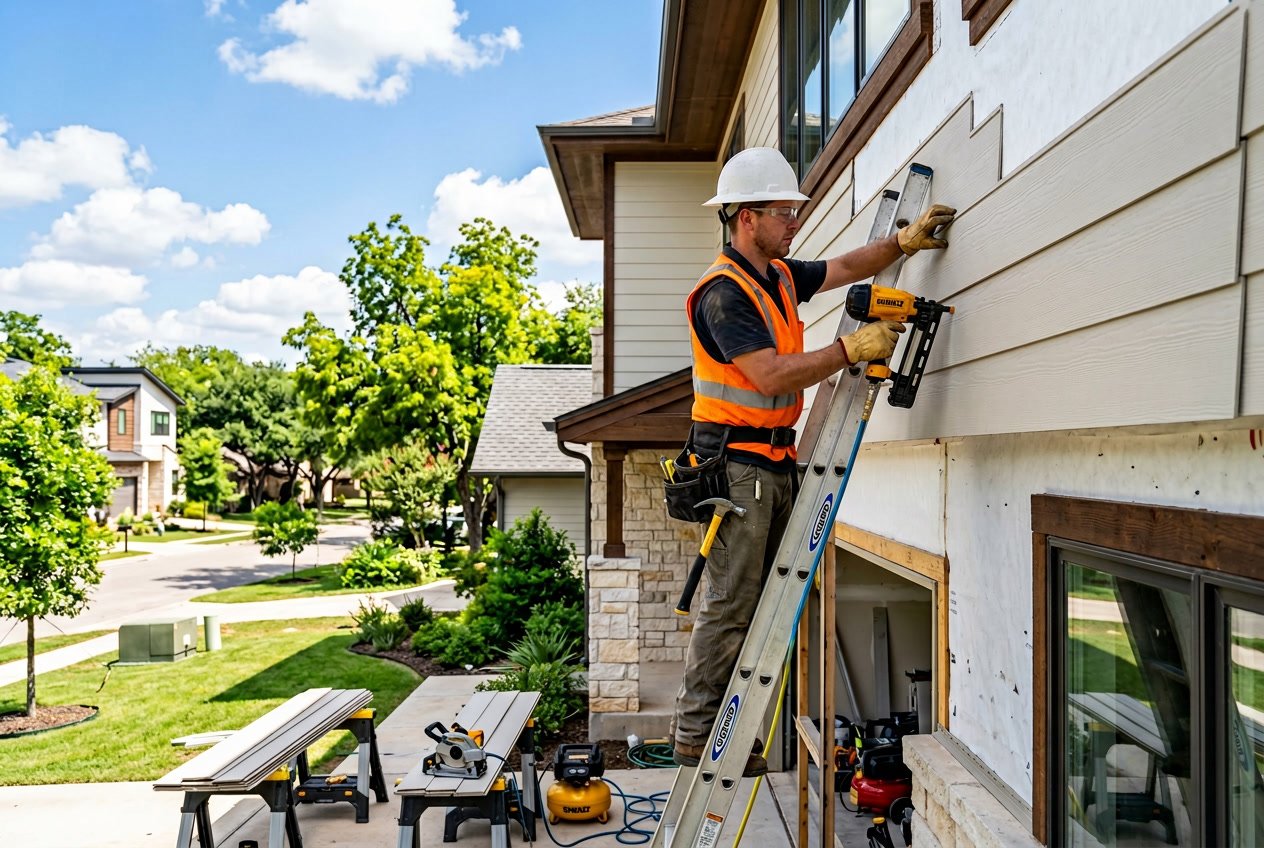
You’ll save time by choosing a local contractor with experience in Austin homes. Decide on materials and colors up front, and clear space around your house for scaffolding.
Keep an eye on material lead times too. Heavier options like fiber cement often add days compared with vinyl.
Key Takeaways
- Expect about 2–4 weeks total for a typical siding project in Austin.
- Material choice and existing damage are the biggest timeline drivers.
- Good planning and a local, experienced crew speed up the job.
How Long Does Siding Installation Take in Austin?
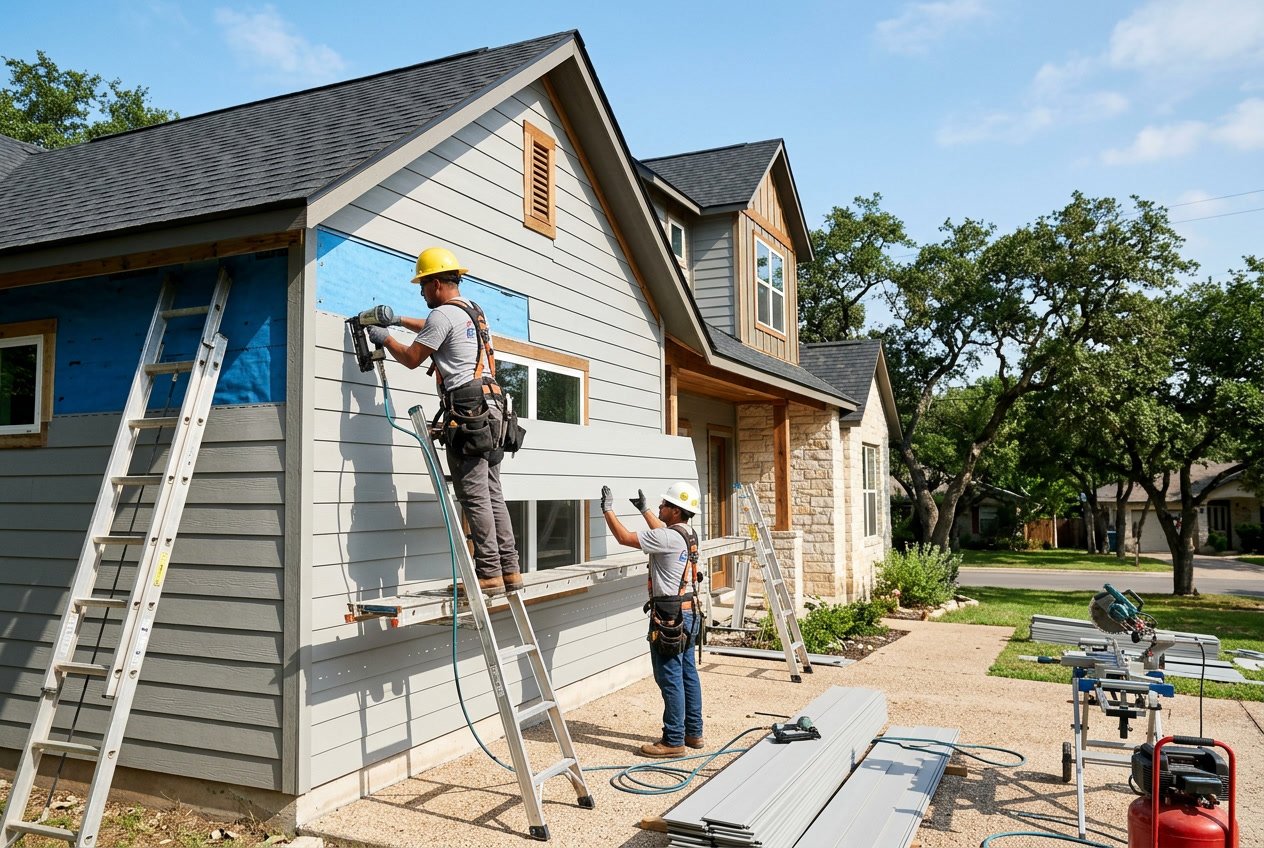
Timelines vary by home size, material, and whether old siding must come off. Typical projects in Austin usually finish within days to a few weeks, with weather and repairs as the main causes of delay.
Average Duration for Residential Siding Projects
Most single-family homes in Austin take about 3–14 days for the actual siding installation work. Simple ranch-style or one-story homes with vinyl siding often finish near the low end (3–7 days).
Larger two-story homes, or those using fiber cement or natural wood, commonly run 10–14 days or more. Include time for measurement, material delivery, trim work, and cleanup when planning.
If you add permit or HOA approvals and potential repairs under the siding, expect the full project timeline from estimate to final inspection to reach 2–4 weeks.
Key Factors That Affect Siding Installation Time
Material choice matters: vinyl installs fastest. Engineered wood and fiber cement take longer, and natural wood often needs the most time.
House complexity also impacts duration — many gables, dormers, or decorative trim add cutting and fitting time. Existing siding condition can add days.
Removing old siding may reveal rot or framing issues that require repair. Crew size and experience change speed too — larger, specialized teams complete work faster.
Delivery delays for popular materials or custom colors can push your start date back a week or more.
New Installations vs. Siding Replacement
New construction siding installs faster because crews work on fresh substrate with no demolition. You typically see a smoother 3–10 day install depending on material and home size.
Replacement projects take longer because you must remove old siding, dispose of debris, and repair any hidden damage. Expect 1–3 extra days for removal on average, and add additional days if rot, insulation, or sheathing repairs appear.
Austin-Specific Considerations
Austin weather affects pace. Summer heat can shorten daily work hours for safety, adding 1–3 days to a project.
Spring storms and heavy rain pause work until surfaces dry, causing unpredictable delays during March–May. Local supply and demand matter after storms.
Backorders for fiber cement or specialty trims can add 1–2 weeks. Many Austin neighborhoods require HOA approval or historic review; plan 2–4 weeks for approvals in those areas.
Choose a contractor familiar with Austin siding norms to keep your timeline realistic.
Step-by-Step Siding Installation Process
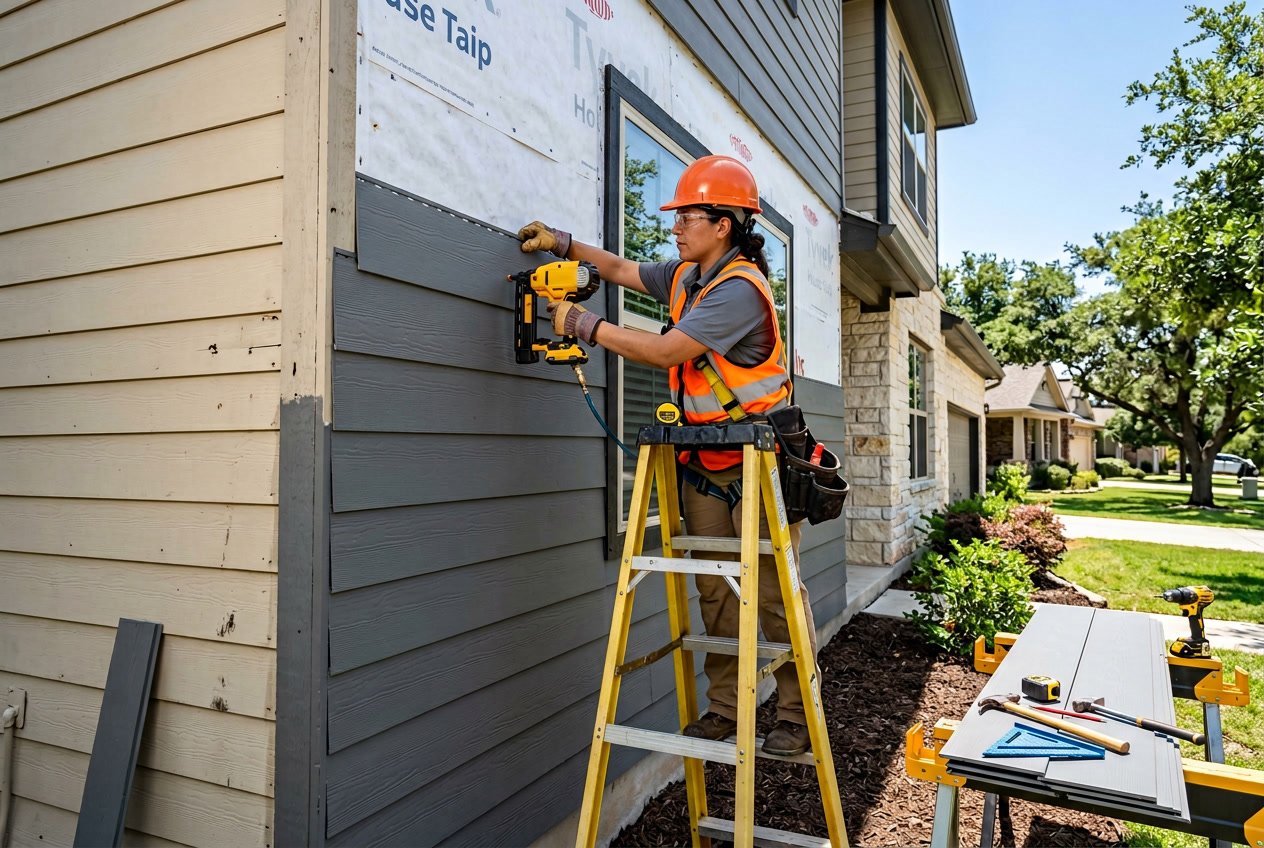
This section shows what you can expect at each major stage: the estimate and planning, preparing your walls and weather barrier, removing old siding and fixing damage, and the actual professional installation.
Consultation and Free Estimate
You meet with siding contractors to get a free consultation and estimate on your Austin home. The contractor measures exterior square footage, notes window and door openings, and inspects trim, soffits, and fascia.
Expect a written quote that lists materials, labor, permit fees, and an estimated start date. Bring photos of problem areas and a clear list of desired materials—vinyl, fiber cement, or engineered wood—so the estimator can give accurate pricing and lead times.
Ask about warranties, crew size, and how they handle permits in Austin. A thorough consult often takes 30–90 minutes and shortens delays later.
Site Preparation and Weather Barrier
Crew access and surface prep speed the job and protect your home from moisture. You should clear walkways, move vehicles, and cover landscaping within a 10–15 foot working zone.
The crew will install scaffolding or ladders and lay down drop cloths and ground protection to catch debris. Technicians remove trim as needed, check for rot, and install a house wrap or other weather barrier.
They tape seams and flash around windows and doors to create a continuous moisture barrier. Proper flashing and sealing at rooflines and foundations reduce water intrusion and prevent future repairs.
Removal of Existing Siding and Repairs
If you have old siding, contractors will strip it off to inspect the sheathing beneath. Removal for an average 2,000–2,500 sq ft home commonly takes 1–3 days.
As they peel siding, crews look for rot, mold, or warped sheathing. Documented damage gets repaired before new siding goes up.
Repairs include replacing sheathing, sistering studs, or adding furring strips for level surfaces. You should get an itemized list and cost for repairs in writing.
Doing repairs now avoids callbacks and ensures the new siding lies flat and lasts longer.
Professional Siding Installation
The crew installs the chosen material using manufacturer-approved fasteners and spacing. For vinyl, expect interlocking panels and trim work; fiber cement requires cutting, priming, and corrosion-resistant fasteners.
Install time varies: a typical single-family home often finishes in 7–14 days, depending on crew size and weather. Installers work from the bottom up, fit trim around windows and doors, and seal joints with recommended caulk.
They perform alignment checks and secure corners and soffit connections. After installation, crews remove debris, conduct a final inspection with you, and explain warranty papers and care instructions.
Siding Materials and Their Impact on Timeline
Different siding materials change how long your project takes. Some need extra cuts, heavier handling, or more finishing work.
Your choice affects crew size, tools, and weather sensitivity.
Fiber Cement Siding Installation Time
Fiber cement siding (like James Hardie) is durable but slower to install. Boards are heavier and need precise cutting to fit around windows, corners, and trim.
Expect 25–40% more labor time than vinyl for the same wall area. Installers must use special blades, pre-drill fasteners, and often apply sealant or paint touch-ups after fitment.
If your house has multiple stories or lots of trim, plan for more time. Also factor in extra time for substrate checks and any repairs to sheathing discovered during tear-off.
Typical residential siding installation with fiber cement on a 2,500 sq ft home often runs 4–7 weeks.
Vinyl Siding Installation Time
Vinyl siding installation moves fastest for most homes. Panels are lightweight, require fewer precise cuts, and snap or nail into place quickly.
For a 1,500–2,500 sq ft home, expect about 1–3 weeks from tear-off to cleanup with a standard crew. Vinyl installation still needs house wrap, flashing, and careful nailing at starter strips and corners.
Complex rooflines or many windows add time, but not nearly as much as heavier materials. If you choose high-end vinyl or added insulation, add a few days for thicker panels and foam-backed systems.
Wood and Other Siding Options
Wood siding and specialty products sit between vinyl and fiber cement in time and care. Natural wood requires precise cutting, priming or staining, and careful flashing to prevent water damage.
Expect installation times similar to or slightly longer than vinyl when you count finish work. Engineered wood and specialty panels need proper fastening and trim detail.
Custom profiles, intricate trim, or on-site painting increase labor and staging time. If you want a painted finish or extensive trim, add several days for drying and touch-ups.
Make sure your siding installation services include moisture flashing and a final inspection.
Maximizing Curb Appeal and Project Success
Focus on material, color, and trim choices that match your neighborhood and home style. Coordinate siding work with window or roof projects to reduce costs, limit disruption, and ensure a uniform exterior finish.
Enhancing Your Home’s Aesthetics
Pick a siding material and color that match your house age and neighborhood. For example, fiber cement in muted gray or beige fits modern Austin homes, while natural wood or painted lap siding suits historic neighborhoods like Hyde Park.
Use two complementary colors: a main body color and a contrasting trim for windows, eaves, and doors to make details pop. Think about texture and scale.
Wider boards create a modern look; narrower clapboard feels traditional. Add accents such as board-and-batten on a gable or shiplap in an entryway to raise curb appeal.
Keep landscaping and porch lighting in mind — they frame the new siding and complete the look.
Coordinating Siding with Windows and Roofing
Plan window replacement and roof work at the same time as siding to avoid repeated scaffolding and extra teardown. If you replace windows, align trim profiles and flashings so the new siding integrates cleanly and water shedding works correctly.
This prevents gaps, mismatched flashings, and extra caulking later. Match siding thickness to window and door trim depth to keep proportions balanced.
When coordinating with roofing, verify gutter placement and roof-to-wall flashings before siding goes up. That prevents rework and keeps your home watertight during and after installation.
Choosing the Right Siding Contractor in Austin
Select a contractor with local experience and crew availability during your chosen season. Ask for references from recent Austin projects and photos of finished work in neighborhoods like Tarrytown or Allandale.
Confirm they handle permits, HOA approvals, and coordinate with window or roof trades when needed. Request a written scope with timelines, material brands (e.g., fiber cement, vinyl), trim details, and cleanup plans.
Check for proof of insurance and a clear process for addressing hidden repairs found during teardown. A contractor who communicates daily and provides a single point of contact will keep the project on schedule and protect your curb appeal investment.
Frequently Asked Questions
You will find clear timeframes, cost estimates, and practical limits for siding work in Austin. Expect answers that use local climate and common materials to set realistic expectations.
What is the typical duration for a full siding replacement on a residential home?
A full siding replacement on a typical single-family home in Austin usually takes 1 to 2 weeks. Larger homes, complex trim work, or hidden damage can push the job to 3 weeks or more.
What factors impact the timeline for installing siding on a property in Austin?
Weather delays from heavy rain or storms slow work.
Material choice matters: fiber cement and wood often take longer than vinyl or composite.
Hidden damage, like rotten sheathing or poor flashing, adds repair time.
Permits, scheduling crews, and delivery timing also change the schedule.
How much time is needed to install vinyl siding on an average-sized home?
You can expect 3 to 7 days for vinyl siding on an average-sized home (about 1,500–2,000 sq ft). Prep work, trim, and window flashing are included in that window.
What are the expected costs for replacing siding on a 2,000 square foot house in Austin, TX?
Typical total costs range from about $8,000 to $25,000 depending on material and labor.
Vinyl usually sits at the lower end, fiber cement and wood sit higher.
Ask contractors for itemized quotes that show materials, labor, trim, and permit fees.
Can a house remain unprotected without siding, and for how long is this advisable?
Leaving a house without siding exposes it to moisture, pests, and energy loss.
You should limit exposure to days or a few weeks and protect sheathing with a weather-resistant barrier if work will take longer.
How long is newly installed siding expected to last in Austin’s climate?
Vinyl siding often lasts 20 to 40 years with normal care.
Fiber cement can last 30 to 50 years.
Well-maintained wood siding might last 20 to 40 years.
Heat, sun exposure, and moisture cycles affect longevity.
Plan maintenance every few years.