
Austin’s heat, storms, and high pollen levels mean your siding faces more wear than in many other places. You can keep siding looking good and lasting longer by using gentle cleaning methods, checking for damage regularly, and choosing materials that handle sun, moisture, and pollen well.
A simple routine of twice-yearly cleanings, quick spot repairs, and oxygen-bleach treatments for mold and mildew will protect your siding and cut down on costly repairs.
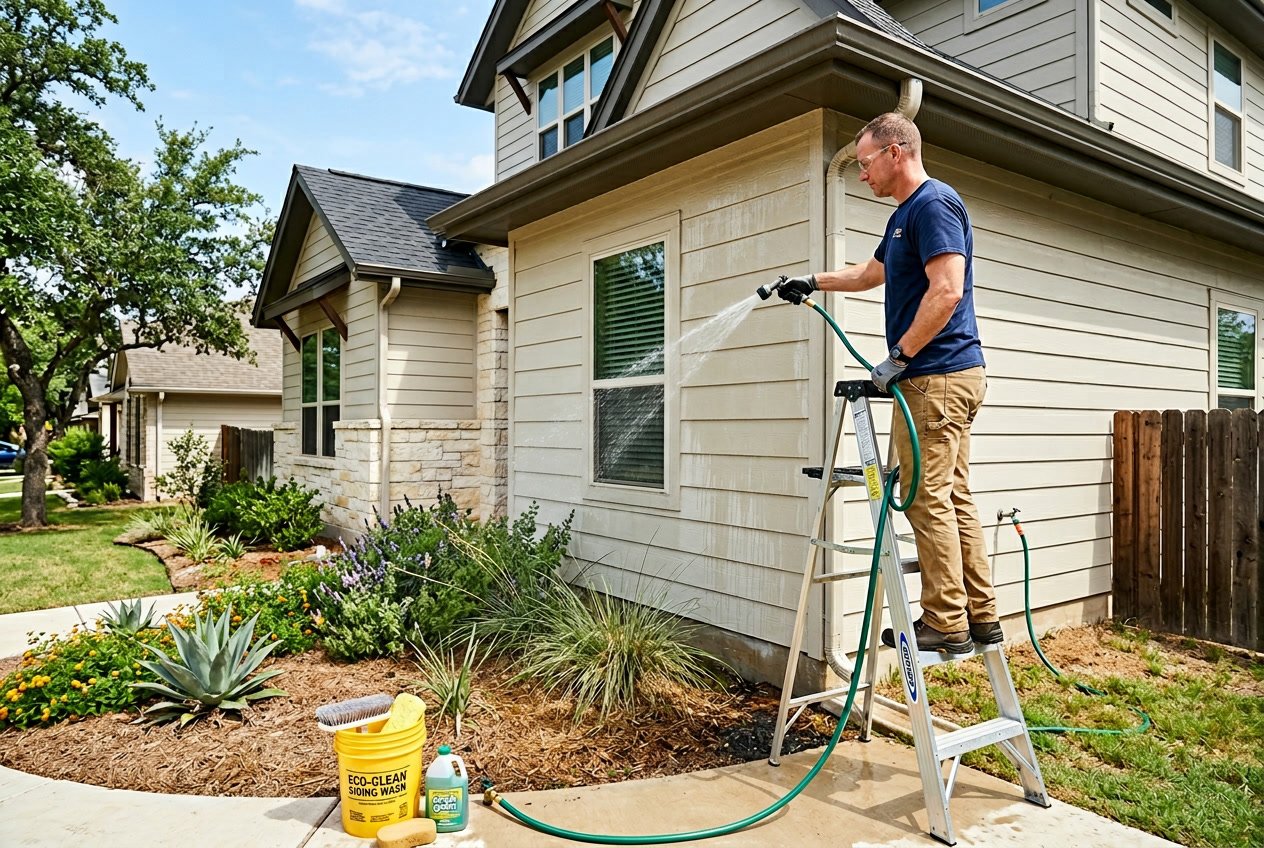
This article shows practical, safe steps you can use on vinyl, fiber cement, wood, stone, and metal siding. You’ll learn how to clean without causing damage, what to watch for during inspections, and when replacement makes more sense than another scrub.
Key Takeaways
- Clean siding twice a year and after heavy pollen or storms.
- Use gentle cleaners and low-pressure rinses to avoid damage.
- Inspect often and choose durable materials suited for Austin.
Understanding Austin’s Climate and Siding Vulnerabilities
Austin’s weather includes long, hot summers, humid springs, and periodic storms with heavy rain and hail. These conditions affect siding differently depending on the material, maintenance, and installation quality.
How Texas Weather Impacts Siding Materials
Texas heat and UV exposure fade and weaken paints and some synthetics over time. If you have vinyl siding, expect color fade, slight warping, and increased brittleness after many sun-exposure cycles.
Keep panels shaded where possible and inspect seams for gaps that let wind or pests enter. Fiber cement siding resists rot and UV better than wood and vinyl, but repeated wet-dry cycles can cause hairline cracks or loose caulk joints.
For wood siding, heat and sun dry the wood and make it prone to splitting and paint failure. Regular sealing and repainting matter a lot.
Metal and stone veneers handle heat well but still suffer when fasteners loosen from thermal expansion. Check fasteners and flashings after seasonal temperature swings.
Common Issues: Moisture, Heat, and Storm Damage
Humidity and heavy rain drive moisture into seams, under flashing, and behind trim. If water reaches the substrate, you could get wood rot, mold growth, and compromised insulation.
Look for soft spots, bubbling paint, and dark streaks on siding as early warning signs. Heat causes expansion and contraction that stresses panels and caulk lines.
That leads to gaps at corners, around windows, and where siding meets trim. Those gaps let wind-driven rain in during storms.
Hail and high winds can dent vinyl, chip fiber cement edges, or loosen nails. After storms, walk the perimeter and note missing pieces, cracked panels, or loose trim so you can repair before water infiltrates.
Energy Efficiency and Siding Performance
Siding affects your home’s thermal envelope and can lower cooling costs when installed with proper insulation and tight seams. Vinyl alone offers little R-value; adding a foam-back or continuous insulation board behind the siding improves energy performance noticeably.
Fiber cement provides durability but has modest insulating value unless paired with a thermal layer. If you rely on siding to reduce heat gain, focus on reflective paint finishes, proper attic ventilation, and insulated sheathing.
Seal gaps around windows, doors, and penetrations to prevent air leaks. That simple step preserves conditioned air and reduces your AC runtime in Austin’s long summers.
Essential Siding Maintenance for Austin Homes
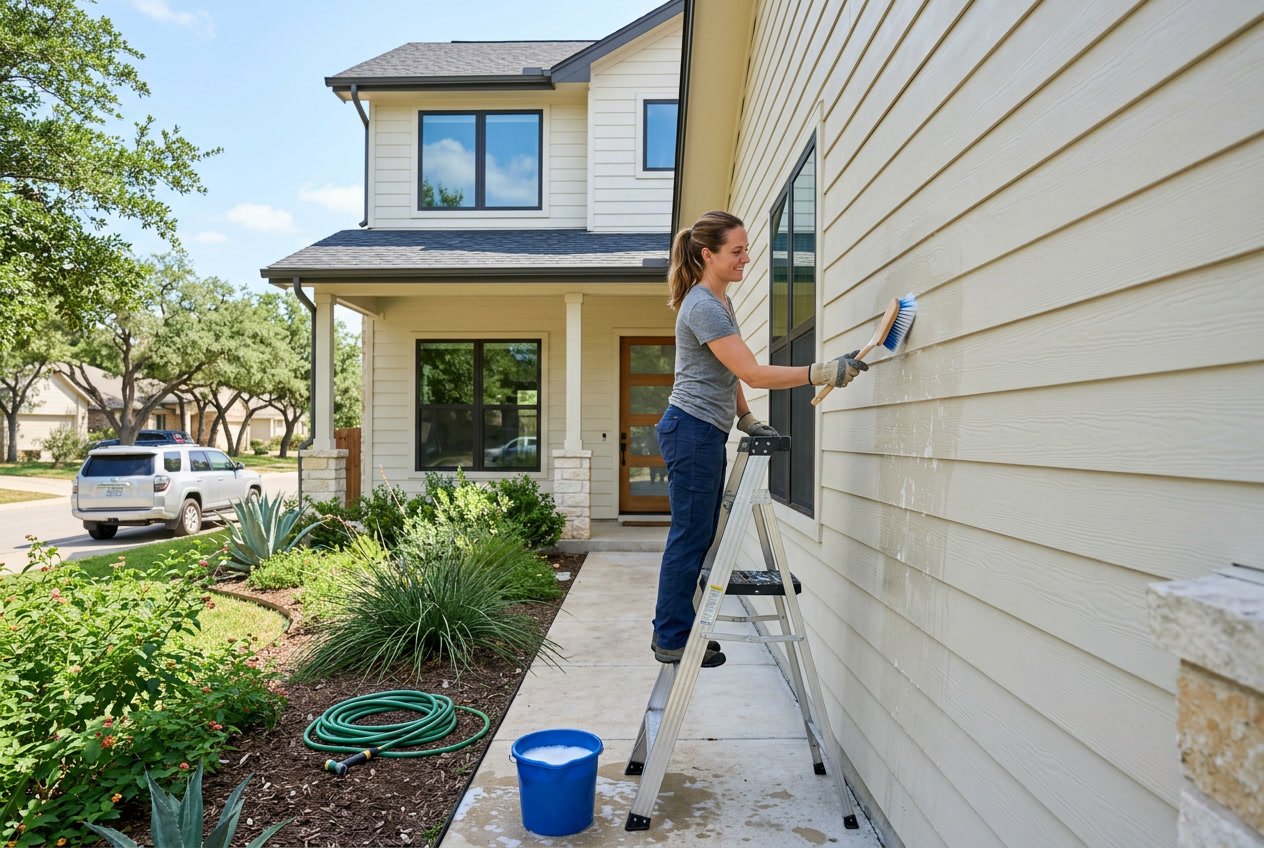
Keep siding clean, check it often, and fix small problems before they grow. Focus on regular inspections, prompt repairs for cracks or warping, and preventive steps that protect vinyl and fiber cement siding from heat, humidity, and pollen.
Routine Inspections: Detecting Damage Early
Inspect your siding at least twice a year and after big storms. Walk the perimeter and look for loose panels, cracked caulk, or nail pops.
Pay special attention to seams, window and door edges, and the bottom edges where moisture collects. Use a ladder safely to check higher areas or hire a pro for hard-to-reach spots.
For fiber cement siding, look for hairline cracks and chipped paint. For vinyl siding, look for buckling, warping, or gaps that let water in.
Take photos and note locations so you can track changes over time. Write down any stains or mold you find.
In Austin, pollen and humidity speed mildew growth. Early detection means you can clean or repair before rot or insulation damage happens.
Repairing Cracks, Warping, and Fading
Repair small cracks and gaps the same day you find them. Fill hairline cracks in fiber cement with manufacturer-approved sealant and repaint as needed.
Replace any fiber cement panel that is split or has deep cracks. For vinyl siding, remove warped or buckled panels and replace them; do not try to reshape with heat.
Tighten or replace fasteners to stop movement. Re-caulk joints around windows and doors with exterior-grade silicone to prevent water intrusion.
Address fading with manufacturer-approved paint or coatings for fiber cement. Vinyl that has faded beyond repair should be replaced.
If you notice mold underneath siding or soaked sheathing, consider siding replacement to fix hidden moisture damage.
Preventive Measures for Long-Term Protection
Set a cleaning schedule: hose down siding twice a year and use a mild detergent or oxygen bleach for mildew. Avoid high-pressure washers on fiber cement and most vinyl—they can force water behind panels.
Keep gutters clean and direct runoff away from the foundation. Trim trees and shrubs so branches don’t rub or trap moisture against siding.
At vulnerable points—like rooflines and porch beams—install flashing or drip edges to divert water. When planning upgrades, choose materials suited for Austin.
Fiber cement resists heat and won’t warp. Vinyl is low-maintenance but needs proper installation.
Consider professional inspections during routine cleanings to catch issues early and extend siding life.
Safe and Effective Siding Cleaning Techniques
Focus on the right cleaner, the correct pressure, and the proper tools for each siding type. Use gentle methods first, treat mildew quickly, and protect nearby plants and finishes.
Best Practices for Different Siding Materials
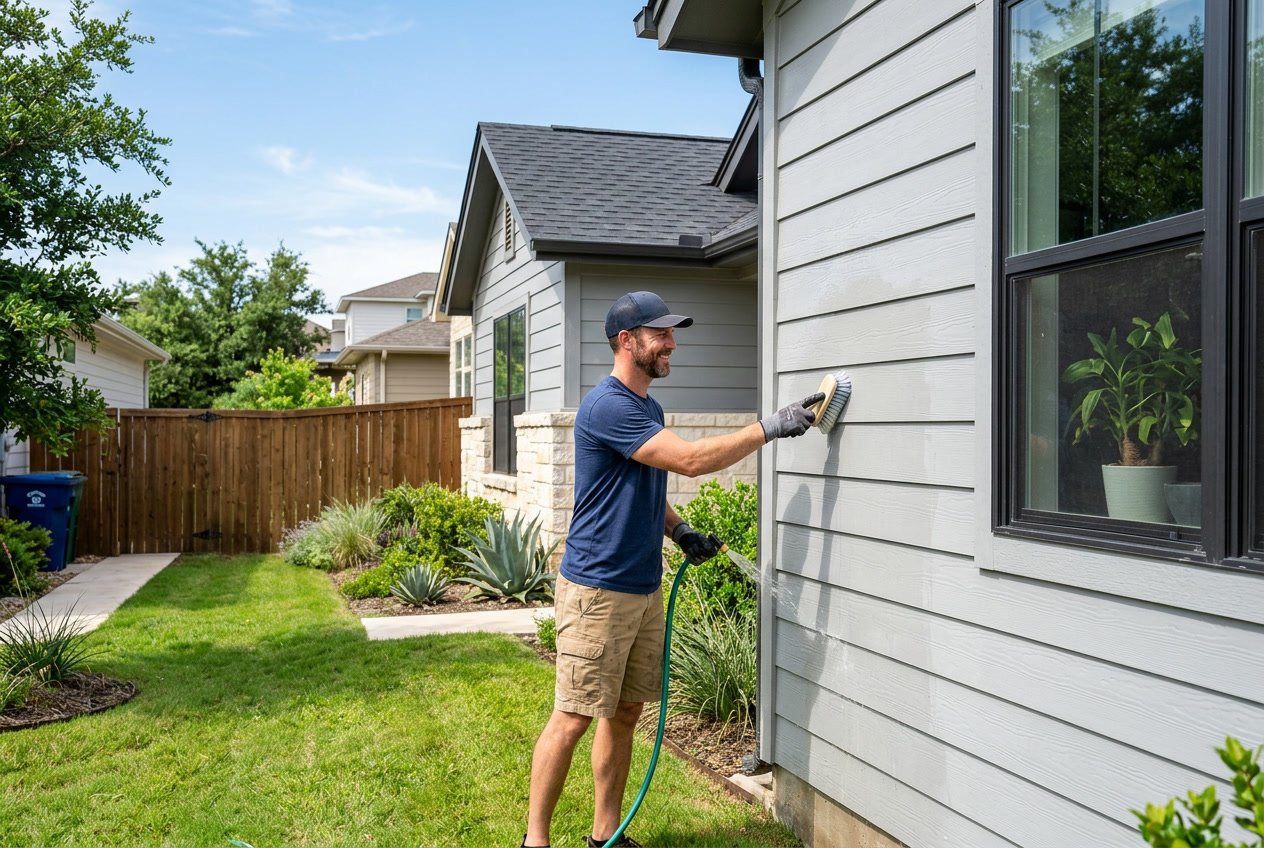
Vinyl siding cleans well with a soft brush and a solution of warm water and mild dish soap. Rinse top to bottom to avoid streaks.
Avoid high-pressure washers near seams and embossed textures to prevent water intrusion. Fiber cement siding tolerates stronger cleaners but can chip if scrubbed too hard.
Use a soft-bristle brush and a non-abrasive cleaner. Spot-test stains in an inconspicuous area before full application.
Wood siding needs extra care to avoid raising the grain or stripping paint. Use a low-pressure rinse, mild detergent, and a soft brush.
Repair cracks and repaint or reseal any exposed wood after cleaning to prevent moisture damage. For all materials, remove vegetation and grill splatter before cleaning.
Wear gloves and eye protection. Keep ladders stable and avoid cleaning from above the roofline.
Choosing Cleaning Solutions for Austin’s Climate
Austin’s heat and humidity promote mildew, pollen, and dust buildup, so pick cleaners that kill mildew without harming plants. A mix of 1 gallon water, 1/2 cup dish soap, and 1 cup white vinegar works for light mildew on vinyl and fiber cement.
Rinse thoroughly. For tougher stains, use an oxygen-based bleach (follow label rates) on fiber cement and vinyl.
Do not use chlorine bleach on bare wood or colored finishes; it can fade paint and kill landscaping. Always spot-test.
Avoid harsh solvents and wire brushes on any siding. Use plant-safe runoff practices: wet surrounding soil, cover sensitive plants with plastic, and rinse plants after cleaning.
Soft Washing and Low-Pressure Methods
Soft washing uses low pressure (under 500 psi) and a chemical solution to remove biological growth. It’s the safest option for vinyl and painted fiber cement because it cleans without forcing water behind siding.
Use a wide spray nozzle and keep the wand 3–6 feet from the surface. Move horizontally in overlapping strokes to avoid streaks.
For wood siding, use even gentler pressure and shorter contact time with chemicals. Rent or hire equipment rated for soft wash, or use a pump sprayer for small areas.
If you must use a pressure washer, set to the lowest effective psi and never direct the spray into seams, corners, or trim joints.
Selecting and Upgrading Siding for Austin’s Weather
Austin’s heat, strong sun, and occasional storms demand siding that resists UV, thermal cycling, and impact. Choose materials and installation methods that reduce heat gain, stop moisture entry, and lower long-term maintenance.
Evaluating Siding Materials for Durability
Look for materials rated for UV resistance and thermal stability. Fiber cement stands out for Austin: it resists fading, won’t warp in heat, and takes impact from hail and debris better than many options.
Expect higher upfront cost but lower repainting and repair needs. Vinyl siding costs less and is low maintenance, but thin or dark vinyl can soften and warp on south- or west-facing walls.
If you pick vinyl, choose thicker (profiled) panels and light colors with UV-stable formulas. Also consider metal panels for modern homes where dent resistance and fire resistance matter.
Check manufacturer specs for wind ratings, hail impact class, and warranty terms. Match material to your home style and the level of upkeep you’ll commit to.
Professional Siding Installation Considerations
Proper installation affects performance as much as material choice. Hire a contractor with a Texas license, local Austin references, and manufacturer certification for the product you choose.
These credentials reduce the risk of voided warranties and installation errors. Insist on a full-weather barrier, correct flashing around openings, and proper nailing patterns.
For fiber cement, expect treated starter strips and spacing to allow thermal movement. For vinyl, ensure proper furring and clearance at windows to prevent buckling.
Request a written scope showing materials, fastener types, ventilation details, and clean-up. Get a timeline and payment schedule that avoids full upfront payments.
Verify workers’ comp and liability insurance before work begins.
When to Replace Siding for Optimal Performance
Replace siding when you see repeated cracks, large areas of warp, persistent water stains inside, or rising energy bills tied to wall heat gain. Small cosmetic issues don’t always require replacement, but structural damage from moisture or rot does.
For fiber cement, replace if you find deep cracks or ongoing moisture intrusion at joints. For vinyl, replacement is wise when multiple panels are buckled, faded beyond restoration, or melted by sun exposure.
If you must repaint often, that signals the material may no longer be performing. Plan replacement before storms or major heat seasons.
Coordinating siding replacement with attic insulation upgrades and new flashing can cut future maintenance and energy costs. Get at least three local bids and compare warranties, not just price.
Frequently Asked Questions
These answers give clear, practical steps you can use on vinyl, fiber cement, wood, and metal siding in Austin. Follow the cleaning methods, inspection timing, and product choices below to reduce sun damage, mold, and moisture problems.
What are the best practices for protecting siding from Austin’s summer heat and UV exposure?
Keep siding shaded where you can. Trim trees and bushes so they don’t trap heat or touch siding, and use light-colored exterior paint or finishes to reflect sun and lower surface temperatures.
Apply UV-resistant paint or sealant on wood and fiber cement every 5–10 years or sooner if the finish fades. For vinyl and metal, use products labeled UV-stable and avoid dark colors that absorb more heat.
Ensure proper attic and wall ventilation to reduce heat transfer into your home. Good ventilation helps prevent warping, cracking, and faster breakdown of sealants.
How often should I inspect and perform maintenance on my siding in Austin’s variable weather conditions?
Inspect siding at least twice a year: spring and fall. Check after major storms or heat waves, and again after heavy pollen seasons.
Look for cracks, loose panels, peeling paint, and gaps at seams or trim. Also check for signs of moisture under siding like soft spots or staining.
Do small touch-ups and caulking as you find them. Tighten fasteners and replace damaged pieces right away to stop water and pest entry.
What is the most effective method for removing mold or mildew from siding in humid climates like Austin’s?
Start with a water rinse to remove loose dirt and pollen. Then apply an oxygen bleach solution (sodium percarbonate) mixed per label instructions and let it sit 5–10 minutes.
Scrub gently with a soft-bristle brush and rinse thoroughly with a garden hose. Repeat spot treatments for stubborn areas.
Dry the surface by working on shaded sections to prevent rapid evaporation. Avoid household chlorine bleach on plant beds and use protective gear when treating strong growth.
If mold is under siding or keeps returning, consider professional inspection for hidden moisture.
Are there specific cleaning solutions recommended for use on siding in the Austin area?
Use mild detergent solutions like dish soap or a commercial siding cleaner for routine cleaning. For organic stains, choose oxygen-based cleaners instead of harsh chlorine bleach.
For wood siding, use cleaners formulated for wood and follow with a reseal or stain when dry. For fiber cement, mild soap works; avoid alkaline or acidic cleaners that harm the finish.
Always spot-test cleaners in an inconspicuous area. Rinse plants and landscaping after cleaning.
Follow manufacturer instructions for any commercial product.
Which pressure washing techniques are safe and effective for Austin homes’ siding maintenance?
Use low-pressure rinse from a garden hose for most jobs. If you use a pressure washer, set it to a low PSI (typically under 1200–1500) and keep the nozzle at least 3–4 feet from the siding.
Work with a wide spray pattern and angle the stream downward to avoid driving water behind panels. Test on a small area first.
Never use high-pressure on wood, fiber cement seams, or older vinyl. Hire a pro for multi-story homes, delicate materials, or if you suspect loose flashing or damaged seals.
Can certain siding materials withstand Austin’s climate better, and how should they be maintained?
Fiber cement and quality metal siding tolerate heat and sun well and resist rot. Clean them with mild detergent and inspect caulk and flashings every few years.
Vinyl is low-maintenance but can warp in extreme heat or from dark colors. Wash vinyl with mild soap, avoid high heat from nearby grills, and keep vents clear.
Wood has strong aesthetic appeal but needs regular sealing or repainting every 3–7 years in Austin’s sun and humidity. Check for rot and insect damage and reapply protective coatings after cleaning.